
 English
  русский
  عربى
عربى Home / News / Industry News / High Chromium Steel Grades Explained: Stainless, Tool, Cast Iron, and More
High Chromium Steel Grades Explained: Stainless, Tool, Cast Iron, and More
Every crushing plant has a spare-part shelf with a story behind it. Somewhere on that shelf sits a worn-out hammer, a scored liner, or a cracked blow bar that failed far earlier than expected. The usual questions are whether the operator chose the wrong component or the foundry delivered a substandard casting. More often than not, the real issue is a mismatch between the material grade and the conditions inside the crusher.
High chromium steel is a broad family of alloys, not a single material. It includes stainless steels used for corrosion resistance, tool steels used for cutting and forming, creep-resistant steels for boilers and turbines, and white cast irons built for severe abrasive wear. Each grade exists for a reason, and each one fails when it is placed in service that exceeds what its microstructure can handle.
This article reviews the major grades of high chromium steel, explains how they differ in composition, hardness, toughness, and corrosion resistance, and gives practical guidance for selecting the right grade in crushing, grinding, and materials handling equipment.
What Is High Chromium Steel?
Chromium is added to steel for three primary reasons. First, it forms stable chromium carbides that are much harder than iron carbide, which improves resistance to scratching, gouging, and sliding abrasion. Second, it reacts with oxygen to create a thin, tightly adhered chromium oxide layer that blocks further corrosion. Third, it changes the transformation behaviour of the steel during cooling, which allows heat treatment to produce martensitic microstructures at higher hardness levels than plain carbon steel.
There is no universally accepted chromium percentage that defines the high chromium category. Stainless steels start at about 10.5% chromium, which is the minimum needed to form a continuous protective oxide film. Cast iron foundries use the term for alloys with 11% to 30% chromium, where the chromium content is chosen to control the type, shape, and volume of carbides. Tool steel standards refer to chromium contents around 12% as high chromium. For practical purposes, any iron-based alloy with more than about 10% to 12% chromium can be considered high chromium steel, but the exact grade must always be identified for a specific application.
Carbon content matters as much as chromium content. A 12% chromium steel with 0.05% carbon behaves like a soft, formable ferritic stainless steel. The same 12% chromium with 1.5% carbon becomes a hard, abrasive-resistant tool steel. With 2.5% carbon and additional molybdenum, it becomes a white cast iron that is nearly unmachinable. Chromium sets the potential, but carbon and heat treatment unlock it.
The Main Families at a Glance
Most high chromium steels fit into five families. Understanding which family a grade belongs to explains its behaviour before you look at the exact composition:
- Stainless steels, with chromium from 10.5% to 27%, are designed primarily for corrosion resistance, with hardness that ranges from soft and ductile to hardenable.
- Cold work tool steels, with chromium from 11% to 13% and high carbon, are designed for wear resistance and dimensional stability in cutting and forming tools.
- Creep-resistant 9% to 12% chromium steels are designed for high-temperature service in power generation and pressure vessels.
- High chromium white cast irons, with chromium from 11% to 30% and carbon above 2%, are designed for severe abrasive wear.
- High chromium engineering steels form a catch-all group that includes wear-resistant steels, heat-treatable alloys, and specialty grades used for shafts, valves, and crusher internals.
The rest of this article walks through each family with specific grades and typical applications so that you can match a material to the real conditions in your plant.
Stainless Steels with High Chromium Content
Stainless steels are the most widely known high chromium alloys. The chromium oxide film gives them corrosion resistance, but the crystal structure determines their mechanical properties. Five subfamilies are commonly distinguished.
Ferritic Stainless Steels
Ferritic stainless steels contain 10.5% to 27% chromium with very low carbon, usually below 0.08%. They have a body-centered cubic structure that remains ferritic at all temperatures, which means they cannot be hardened by heat treatment. They are magnetic, moderately strong, and less ductile than austenitic grades at low temperatures.
Common grades include 409 with 10.5% to 11.75% chromium, 430 with 16% to 18% chromium, and 446 with 23% to 27% chromium. Grade 430 is used for automotive trim, dishwasher interiors, and industrial cladding. Grade 446 offers the highest oxidation resistance in this subfamily and is used for furnace components and heat exchanger parts.
In crushing equipment, ferritic stainless steels appear rarely, usually for corrosion-resistant cladding and protective covers rather than wear parts. Their hardness is typically 80 to 95 HRB, which is too low for abrasive service.
Martensitic Stainless Steels
Martensitic stainless steels contain 11% to 18% chromium with higher carbon, typically 0.1% to 1.2%. The carbon makes the structure hardenable. When austenitized and quenched, they transform to martensite, then are tempered to balance hardness and toughness.
Grade 410, with 11.5% to 13.5% chromium and 0.08% to 0.15% carbon, is the baseline martensitic grade, used for valve stems, pump shafts, and fasteners. Grade 420, with 12% to 14% chromium and 0.15% to 0.45% carbon, reaches about 50 HRC and is used for cutlery, surgical instruments, and molds. Grade 440C, with 16% to 18% chromium and 0.95% to 1.2% carbon, is the highest-hardness martensitic stainless, reaching 58 to 60 HRC, and is used for bearing balls, nozzles, and valve seats where both corrosion resistance and wear resistance are required.
Martensitic stainless steels bridge the gap between corrosion resistance and mechanical wear. They are not as abrasion-resistant as high chromium cast irons, but they are much tougher than a brittle white cast iron and can be machined, welded, and polished. For components such as crusher shafts, feed chutes, and separator screens, a hardened 420 or 440C grade can be a sensible choice.
Austenitic Stainless Steels
Austenitic stainless steels contain 16% to 26% chromium and 8% to 35% nickel, which stabilizes the face-centered cubic austenite structure down to room temperature. They are non-magnetic, exceptionally tough, and easy to form and weld. They also have the highest corrosion resistance of the common stainless families.
Grade 304, with 18% chromium and 8% nickel, is the workhorse of the industry, used for food processing equipment, chemical tanks, and architectural panels. Grade 316 adds 2% to 3% molybdenum for pitting resistance in chloride environments and is standard for marine and chemical service. Grade 310, with 24% to 26% chromium and 19% to 22% nickel, resists oxidation up to about 1100 degrees Celsius and is used in furnace and heat treatment applications.
Austenitic stainless steels are not wear materials. Their hardness sits around 150 to 220 HB, so they suffer rapid abrasive wear. They are, however, frequently used in crusher plants for corrosion-resistant chutes, wash plant components, screen panels, and structural parts exposed to water and slurry. In an application where the enemy is rust rather than rock, austenitic stainless is an excellent solution.
Duplex Stainless Steels
Duplex stainless steels have a two-phase microstructure of roughly equal proportions of ferrite and austenite. They contain 20% to 27% chromium, 4% to 7% nickel, and additions of molybdenum and nitrogen. The two-phase structure gives them roughly twice the yield strength of austenitic grades and excellent resistance to stress corrosion cracking.
Grade 2205, with 22% chromium, 5% nickel, and 3% molybdenum, is the most common duplex grade, used in chemical processing, desalination, and offshore platforms. Grade 2507, with 25% chromium, 7% nickel, and 4% molybdenum, is a super duplex that performs well in highly corrosive, chloride-rich environments.
Duplex grades are not designed for severe abrasion, but their combination of strength, toughness, and corrosion resistance makes them useful for pump casings, mixer shafts, and valve bodies that handle abrasive slurries while remaining structurally reliable. In the mining industry, duplex castings are often specified when a component must survive both erosion and chloride corrosion.
Precipitation-Hardened Stainless Steels
Precipitation-hardened stainless steels combine chromium levels around 15% to 17.5% with nickel, copper, and small additions of niobium or titanium. After a solution anneal, they are aged at temperatures around 480 degrees Celsius to precipitate fine intermetallic particles, which raises yield strength to roughly 1000 MPa or more.
Grade 17-4PH, with 15% to 17.5% chromium, 3% to 5% nickel, 3% to 5% copper, and about 0.30% niobium, is the most widely used PH stainless. It reaches about 40 to 47 HRC and appears in pump shafts, turbine blades, nuclear components, and aerospace hardware. Its combination of corrosion resistance, high strength, and moderate toughness makes it a good choice for rotating components that must operate in wet environments.
For crushing applications, PH stainless is rarely used in wear parts, but it shows up in specialized equipment such as custom fasteners, hydraulic cylinder rods, and precision shafts for screeners and feeders.
High Chromium Tool Steels
Tool steels that contain 11% to 13% chromium belong to the cold work family, best known by the AISI D-series designations. D2 steel contains 1.4% to 1.6% carbon and 11% to 13% chromium. D3 steel contains 2.0% to 2.35% carbon with the same chromium range. The high carbon content generates a large volume of chromium carbides in the microstructure, which gives these steels excellent resistance to sliding abrasion and galling.
D-series tool steels are air-hardened from around 980 to 1030 degrees Celsius and tempered to hardness between 58 and 64 HRC. They retain good dimensional stability during heat treatment, which is why they are chosen for dies, punches, shear blades, slitter knives, and forming rolls. In heavy industry, D2 is commonly used for granulator knives, shredder blades, and crusher teeth that see moderate impact and strong abrasion.
The limitation of D-series tool steels is their toughness. At 60 HRC, they are brittle enough to crack under severe impact. Designers respond by using lower-hardness tempers, adding safety factors to the cross section, or switching to a different class altogether. When a tool steel grade is specified, it is usually because the part must hold an edge or a precise profile while resisting wear, not because it needs to absorb repeated heavy blows.
For crusher parts such as hammer tips and blow bars, D2 and its cast equivalents have been used with mixed results. They outperform carbon steels in pure abrasion but tend to fail earlier than high chromium cast irons when the feed contains large, dense rocks.
9 to 12 Percent Chromium Creep-Resistant Steels
High chromium steels with 9% to 12% chromium and controlled molybdenum, vanadium, niobium, and nitrogen additions occupy a specialized niche in power generation and high-temperature process equipment. They were first developed in Germany in 1912, when Krupp and Mannesmann manufactured a 12% chromium steel with 2% to 5% molybdenum for steam turbine blades. The modern grades are descendants of that early work.
The most widely specified grade is P91, also known as T91 in tubing form, which contains 9% chromium, about 1% molybdenum, 0.25% vanadium, and 0.08% niobium. It is normalized and tempered to produce a fine martensitic structure that resists creep at temperatures up to about 600 degrees Celsius. X22CrMoV12-1 is a 12% chromium variant used for turbine rotors and discs where higher oxidation resistance is needed.
These steels are not used for wear parts. Their value lies in their ability to maintain strength for decades at high temperature. In a cement plant or mining operation, they may appear in waste heat recovery boilers, preheater cyclones, and high-pressure steam piping. Choosing a creep-resistant grade instead of a standard carbon steel in those positions prevents premature failure from thermal fatigue and creep cracking.
High Chromium White Cast Irons for Abrasive Service
The most important family for crusher wear parts is high chromium white cast iron. These alloys are not steels in the strict sense, because their carbon content exceeds 2%, but they are always classified alongside high chromium steel because their metallurgy is chromium-dominated. They contain 11% to 30% chromium, 1.8% to 3.6% carbon, and optional additions of molybdenum, nickel, copper, and vanadium.
The defining feature of a white cast iron is the absence of graphite. All of the carbon is combined in carbides. In a high chromium alloy, the carbides are predominantly chromium-rich M7C3 type, which have a hexagonal crystal structure and a hardness of roughly 1200 to 1600 HV. That is significantly harder than the cementite found in ordinary white irons and close to the hardness of many natural abrasives.
The matrix around the carbides determines the toughness of the casting. In the as-cast condition, the matrix is usually austenite. After heat treatment, it can be transformed to martensite, which increases hardness and wear resistance but reduces toughness. Molybdenum, nickel, and copper are added to control the transformation because they increase hardenability and prevent pearlite formation in thick sections.
ASTM A532 classifies these alloys into several groups. Class II covers chromium-molybdenum cast irons with 11% to 15% chromium. Class III covers the 22% to 30% chromium alloys. European designations such as G-X 300 CrMo 15 3 and G-X 260 Cr 27 follow a similar logic, with numbers indicating carbon and chromium content. The hardness of heat-treated high chromium cast irons typically ranges from 450 to 700 HB, with some alloys exceeding 63 HRC.
The wear-resistance mechanism is straightforward. When abrasive particles slide across the surface, they encounter a dense network of hard carbides that resist penetration. The matrix holds the carbides in place and prevents them from breaking out. Achieving the right balance between carbide volume, matrix hardness, and toughness requires careful control of the chromium-to-carbon ratio. A higher ratio promotes M7C3 carbides, while a lower ratio produces mixed carbides that wear faster.
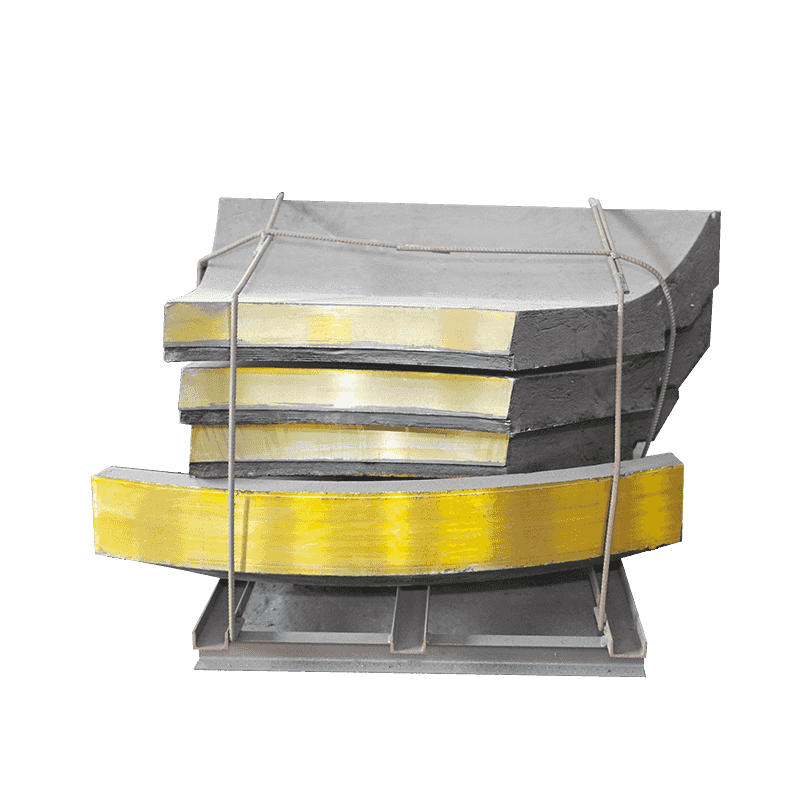
In impact crushers, high chromium white cast iron is the standard material for the high chromium plate hammer for impact crushers. A plate hammer must withstand repeated impact from feed material while resisting abrasive scratching. A 15% to 20% chromium grade with a martensitic matrix offers the best compromise. The carbide network absorbs abrasive wear, while the tempered martensitic matrix provides enough toughness to survive normal operating impacts. This is the reasoning behind our detailed guide to high chromium and manganese steel castings, which compares the two material families in depth.
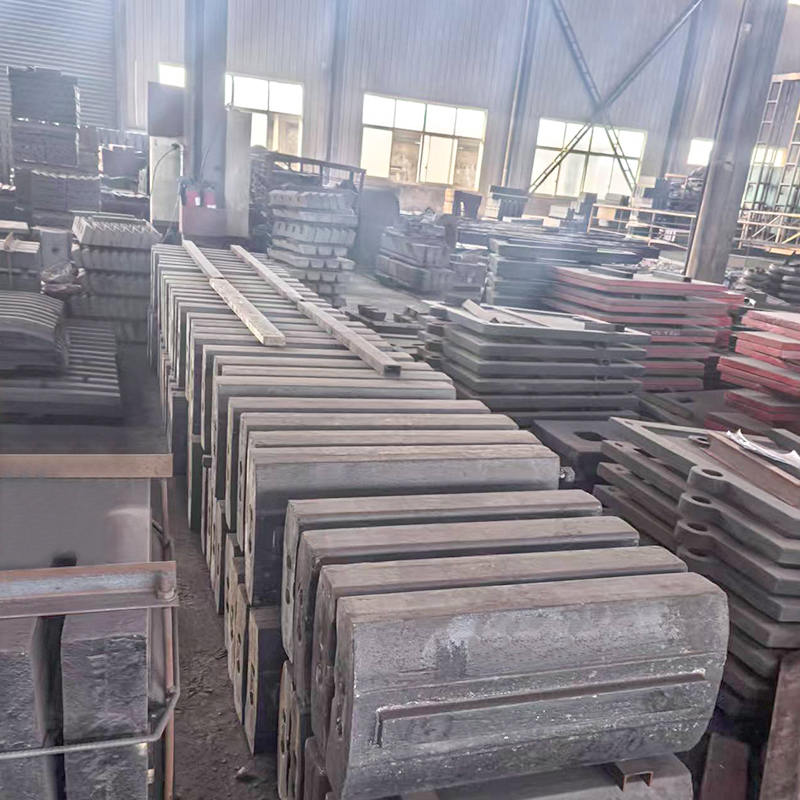 High Chrome Hammer Plate for Impact Crusher Suppliers, FactoryAs China high chromium hammer plate suppliers and hammer plate factory, Nantong Haoshun Casting Co., Ltd. provide wholesale high chrome p...View Product →
For vertical grinding mills and roller presses, high chromium grades with 20% to 28% chromium are specified for roller sleeves and table liners. The grinding bed produces high compressive stress and severe sliding abrasion, so the wear material needs both hardness and thermal stability. Higher chromium grades resist the softening that can occur when the mill operates at elevated temperature for long periods.
In vertical shaft impact crushers, material flows through the rotor and is accelerated against the crushing chamber. The feed distributor, the dividing cone, and the flow channel plates all see scouring wear from high-velocity aggregate. A high chromium alloy with 22% to 28% chromium provides the carbide density needed to slow down that erosion, while the moderate impact levels in a VSI allow a harder, slightly more brittle matrix to be used safely.
Beyond crushers, high chromium white irons are used for slurry pump impellers, hydrocyclone liners, mill liners, pug mill paddles, and chute liners. In each of those applications, the combination of hard carbides and a hard matrix reduces metal loss by abrasion and erosion. The initial cost is higher than that of a manganese steel or low alloy steel, but the longer service life often reduces the cost per tonne of material processed.
Comparison of High Chromium Steel Grades
To make the differences easier to scan, the table below summarizes the key families, their chromium and carbon contents, typical hardness, and common applications.
| Family | Chromium (%) | Carbon (%) | Typical Hardness | Key Property | Common Applications |
|---|---|---|---|---|---|
| Ferritic stainless steel | 10.5-27 | Less than 0.08 | 80-95 HRB | Corrosion resistance | Cladding, trim, heat exchangers |
| Martensitic stainless steel | 11-18 | 0.1-1.2 | 45-58 HRC | Hardenable with corrosion resistance | Cutlery, valve seats, shafts |
| Austenitic stainless steel | 16-26 | Less than 0.08 | 150-220 HB | Corrosion resistance and formability | Chutes, tanks, process equipment |
| Duplex stainless steel | 22-27 | Less than 0.03 | 250-330 HB | Strength and stress corrosion resistance | Pump casings, mixer shafts |
| Precipitation-hardened stainless steel | 15-17.5 | Less than 0.07 | 33-47 HRC | High strength | Shafts, fasteners, aerospace parts |
| D-series tool steel | 11-13 | 1.4-2.35 | 58-64 HRC | Wear resistance and edge retention | Dies, punches, shear blades |
| 9-12% chromium creep steel | 9-12 | 0.1-0.25 | 200-300 HB | Creep resistance at high temperature | Turbine rotors, boiler piping |
| High chromium white iron, Class II | 11-15 | 2.0-3.5 | 450-600 HB | Abrasion resistance | Blow bars, hammers, mill liners |
| High chromium white iron, Class III | 22-30 | 2.0-3.5 | 500-700 HB | Severe abrasion and erosion resistance | Slurry pumps, VSI wear parts |
The table shows that hardness and wear resistance generally rise with carbon and chromium content, but toughness falls. An austenitic stainless steel is tough and corrosion-resistant but too soft for abrasive wear. A Class III white iron is extremely hard but cannot survive severe impact. The selection task is always a compromise between competing properties.
Understanding Grade Designations and Standards
When a drawing calls for a high chromium casting, the grade is usually written in one of several formats. American purchasers will see ASTM A532 with a class and type, such as ASTM A532 Class III Type A. This tells the foundry the target chromium range and the minimum hardness after heat treatment. European drawings often use DIN 1695 or the newer EN 10293 designations, such as G-X 260 Cr 27 or G-X 300 CrMo 15 3. These names encode the carbon content, the chromium content, and the presence of molybdenum.
For stainless steels, the AISI and UNS systems are more common. A specification like 410, 420, 440C, 304, 316, 2205, or 17-4PH is recognized globally, and each one has an official UNS number such as S41000 or S31600. The stainless designation assumes a low carbon level unless a letter in the grade name says otherwise, so the mechanical properties come from the chromium-nickel balance and the heat treatment rather than from carbon.
For tool steels, the AISI letter-number system is standard. D2 and D3 are the most common high chromium cold work grades. The letter D refers to die steels with around 12% chromium, and the number distinguishes the carbon content and processing route. Tool steel suppliers also publish their own trade names, but the composition always maps back to the AISI designation.
Reading a grade designation correctly prevents costly mistakes. A grade named G-X 300 CrMo 15 3 is a white cast iron with about 3% carbon and 15% chromium plus molybdenum, not a stainless steel. A grade named 440C is a hardenable stainless steel, not a tool steel. When in doubt, check the chemistry against the intended application rather than relying on the name alone.
Choosing the Right Grade for Crushing and Grinding
Selection starts with the wear mechanism, not with a grade chart. Identify what is actually damaging the part before choosing the chromium level. The following decision sequence works well in practice:
- Determine whether the dominant damage is scratching abrasion, gouging, high-stress impact, erosion, corrosion, or a combination. Scratching and gouging point to carbide-rich white irons. High-stress impact points to a tougher matrix or a manganese steel alternative.
- Measure the section thickness of the component. Thick castings need higher hardenability, which means more chromium, molybdenum, and nickel. A thin liner can use a leaner alloy because cooling is faster.
- Check the operating temperature. High chromium white irons lose hardness above roughly 500 degrees Celsius, and the matrix over-tempers. For hot service, adjust the tempering schedule or use a different grade.
- Assess moisture, pH, and chloride exposure. Wet, acidic, or saline environments favour high chromium grades with molybdenum. A 27% chromium alloy with 1.5% to 2.5% molybdenum is the standard answer for abrasive slurries.
- Calculate the cost per tonne of material processed. Compare the price of the wear part with its expected life in the specific application. A higher-grade component that lasts twice as long is usually the better purchase even when the first cost is higher.
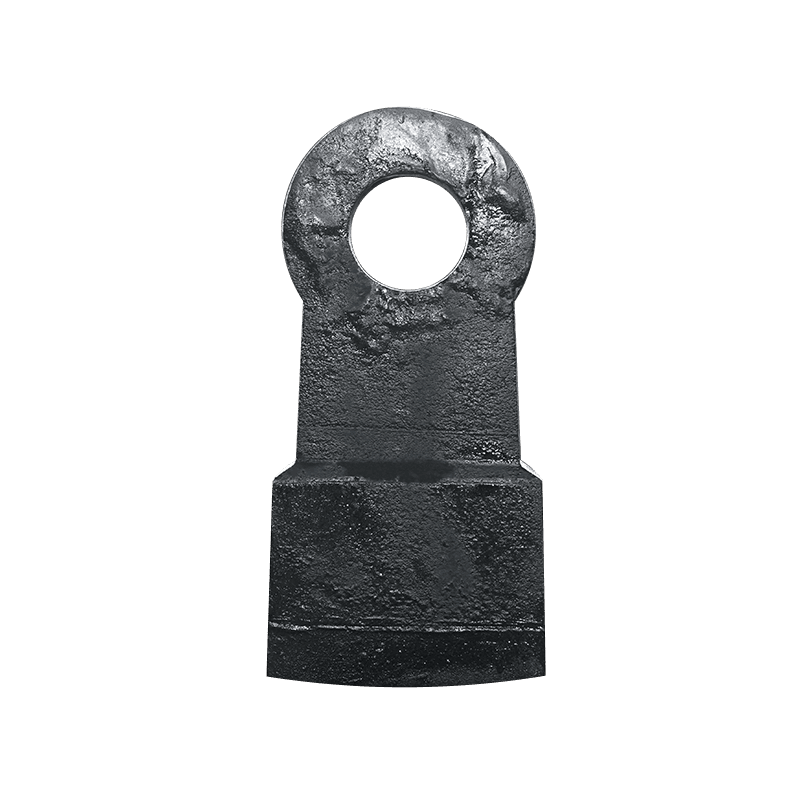
When the dominant mechanism is abrasive wear with moderate impact, high chromium white irons are usually the best economic choice. For an impact crusher processing limestone, a 15% to 20% chromium plate hammer with a martensitic matrix provides a good balance between wear life and resistance to breakage. The same grade, in hammer head form, is used on many hammer crushers feeding lime and cement plants.
When impact is severe and frequent, high manganese steel is the traditional alternative because it work-hardens under impact and becomes harder on the surface than in the core. However, high manganese steel cannot match the abrasion resistance of high chromium cast iron in low-impact, sliding-abrasion conditions. Many plants run both materials, choosing high manganese for the primary crusher and high chromium for the secondary and tertiary stages.
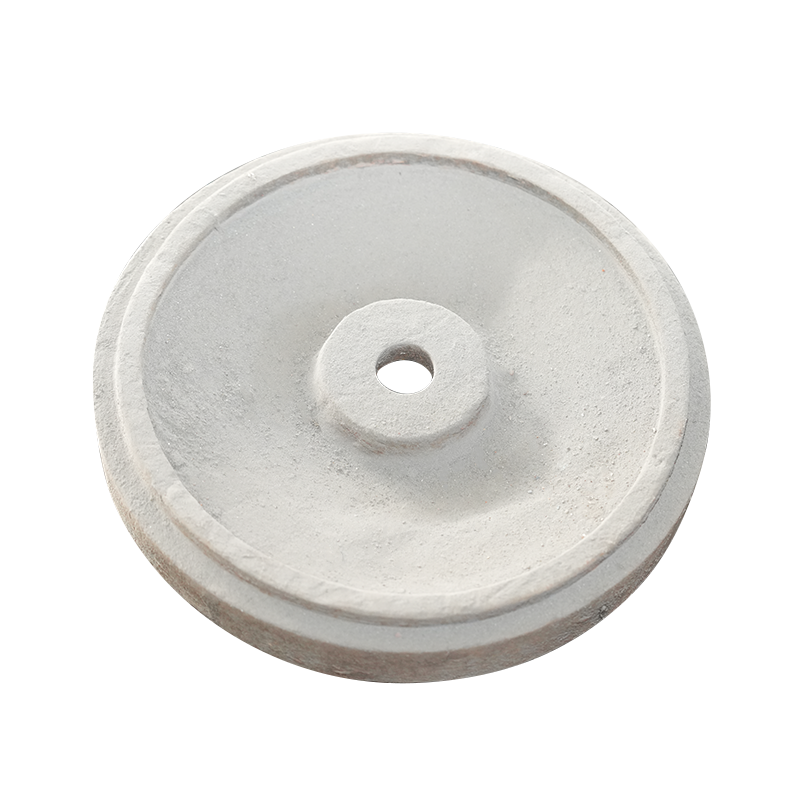
For vertical grinding mills, the high chrome roller sleeve for vertical grinding mills is produced from a chromium-molybdenum white iron that keeps its hardness at operating temperature and resists the severe abrasion of grinding raw material against a metal bed. The roller sleeve must be thick enough to support the grinding load, wear evenly, and avoid spalling at the edges. A 20% to 25% chromium grade with a martensitic matrix gives the best service life in most cement and mineral grinding operations.
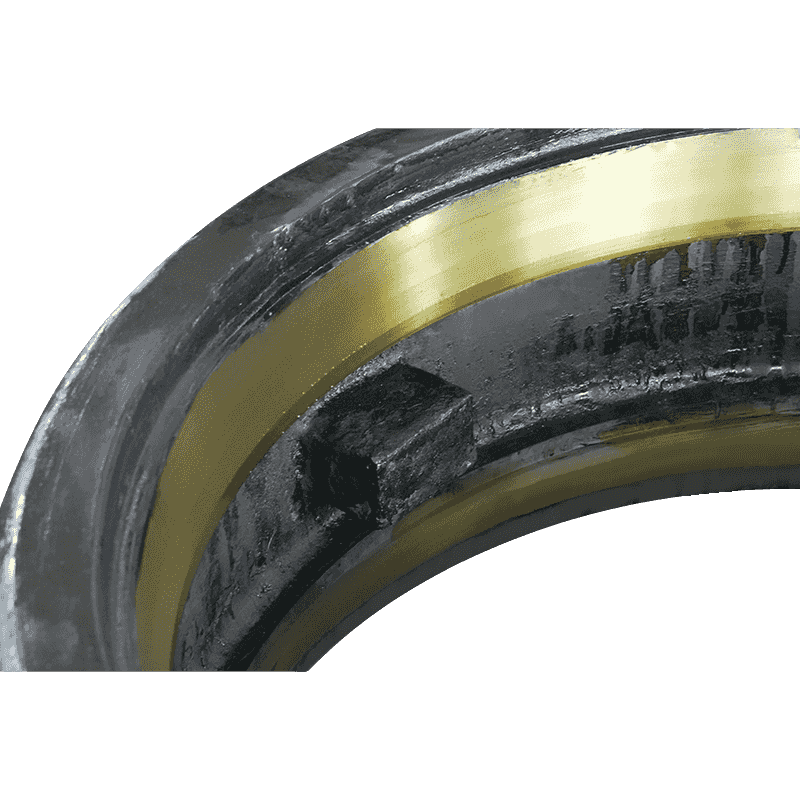 Wholesale High Chrome Roller Sleeve for Impact Crusher Suppliers, Factory - NantNantong Haoshun Casting Co., Ltd is China wholesale High Chrome Roller Sleeve for Impact Crusher suppliers and factory, The fine surface ...View Product →
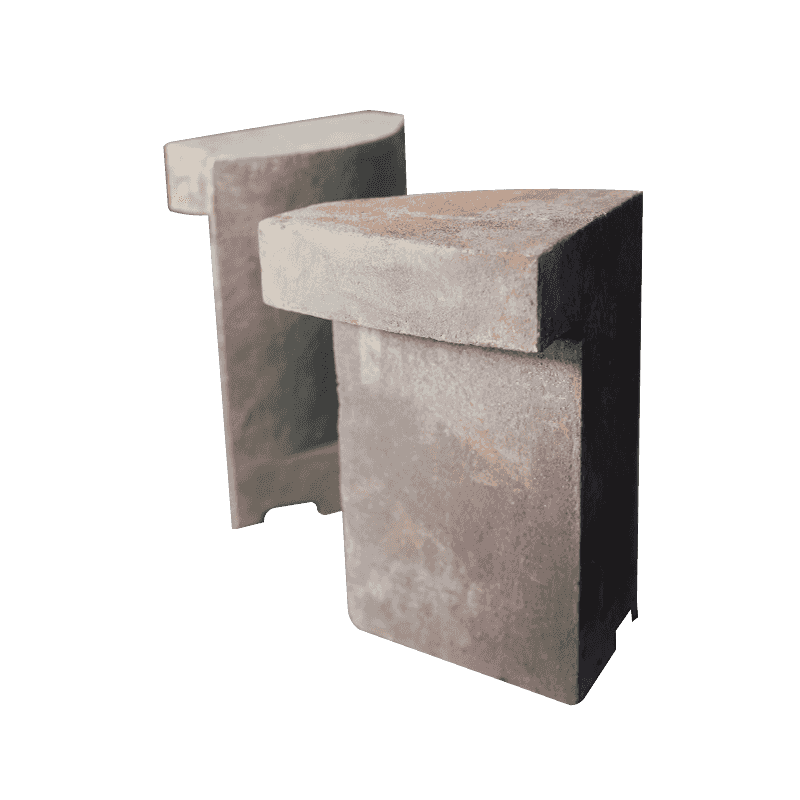
In vertical shaft impact crushers, the material flows through a rotor and strikes the crushing chamber with high velocity. The high chromium dividing cone for vertical shaft impact crushers sits in the centre of the feed distribution system, where it splits the incoming flow into the rotor. That component experiences continuous scouring wear, so a 22% to 28% chromium grade with maximum carbide density is appropriate. The same alloy family is used for flow channel plates and peripheral protective plates around the crushing chamber.
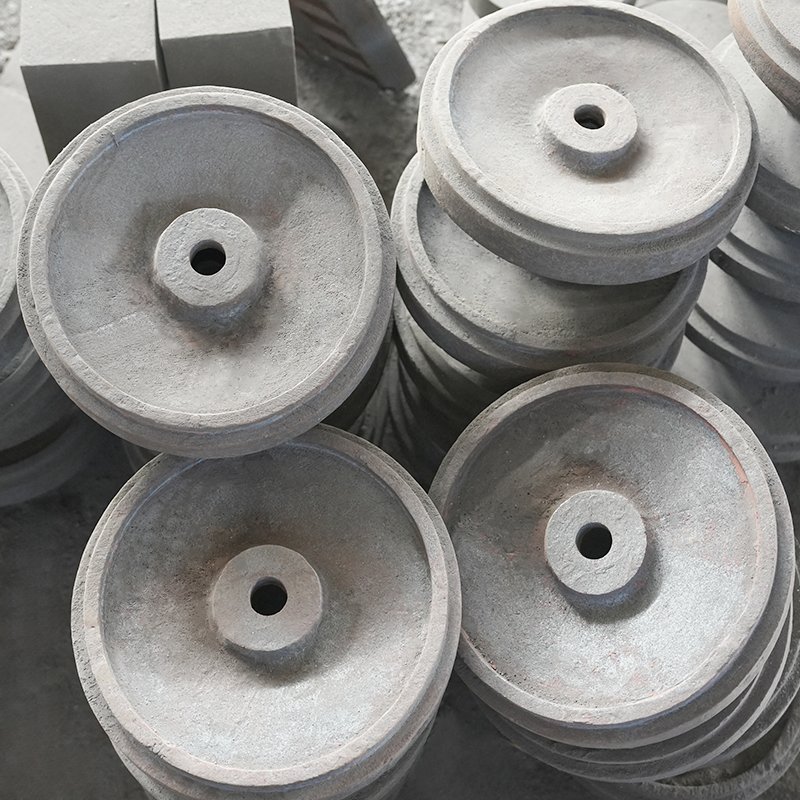 Wholesale Vertical Shaft Impact Crusher High Chrome Dividing Cone Suppliers, FacNantong Haoshun Casting Co., Ltd is China wholesale Vertical Shaft Impact Crusher High Chrome Dividing Cone suppliers and factory, The ad...View Product →
When the part is thick and the operating cycle includes frequent interruptions, the alloy must have enough hardenability to avoid pearlite in the centre. A 100 mm thick plate hammer cannot be cooled fast enough to form martensite unless the alloy contains sufficient chromium, molybdenum, and nickel. Choosing a 15% chromium grade without molybdenum for a very thick section risks a soft pearlitic core that wears rapidly after the hard shell is lost.
Production economics also matter. High chromium cast irons are expensive to melt, difficult to machine, and cannot be welded. If a part requires significant machining after casting, a tool steel or martensitic stainless may be more practical despite lower raw wear resistance. If the part wears out before the planned maintenance interval, it is worth paying for a higher chromium grade even if the initial cost increases.
Heat Treatment and Casting Quality
The grade alone does not determine performance; the casting process and heat treatment do. A high chromium white iron only reaches its potential when the microstructure is correct. The foundry must control the chemistry within tight ranges, pour the melt cleanly without slag inclusions or gas porosity, and cool the casting so that carbide distribution is uniform.
Heat treatment follows a defined sequence. The casting is austenitized in the range of 950 to 1050 degrees Celsius, then quenched or air-blasted to transform the matrix to martensite. A tempering step between 200 and 500 degrees Celsius relieves internal stress and adjusts the hardness-toughness balance. The result is verified by hardness testing and, where required, by metallographic inspection of carbide size and matrix structure.
Poor heat treatment is the most common cause of premature failure. A low austenitizing temperature leaves the matrix soft. Too slow a quench produces pearlite. Excessive tempering reduces hardness. In each case, the documented grade and final hardness may look correct on paper while the actual wear resistance falls well below expectation.
At Nantong Haoshun Casting, the production of high chromium wear parts follows these principles. With more than two decades of experience in producing crushing and grinding wear parts, the company controls each heat cycle and verifies hardness on every batch. The plant produces high chromium plate hammers, hammer heads, roller sleeves, liners, and VSI protection components across the alloy range described in this article. Close attention to melting practice, pouring temperature, and heat treatment keeps the carbide structure consistent from one batch to the next, which is the difference between a wear part that lasts one month and one that lasts a full campaign.
Putting It All Together
High chromium steel is not a single grade but a family of materials engineered for different combinations of abrasion resistance, toughness, corrosion resistance, and elevated-temperature strength. Stainless steels protect against corrosion. Tool steels hold edges and resist galling. Creep-resistant grades serve high-temperature plants. High chromium white cast irons deliver the longest service life in abrasive crushing and grinding applications.
The practical takeaway is that grade selection should be based on the wear mechanism, the section thickness, the operating environment, and the cost per tonne of production. A martensitic stainless steel, a D2 tool steel, and a 25% chromium white iron may all be called high chromium, but they are not interchangeable.
If you are replacing wear parts for an impact crusher, hammer crusher, vertical shaft impact crusher, or grinding mill, the answer to which high chromium grade is right for your operation depends on exactly what is happening inside the machine. Once the feed size, impact energy, moisture, and maintenance interval are defined, the metallurgy becomes much easier to choose. You can review the complete product catalog for high chromium wear parts at Nantong Haoshun Casting to see how these grades are applied in real crushing components.
Previous Post
What Are the Two Types of Cone Crushers? Spring and Hydraulic Cone Crushers
Next Post
Which Metal Is Best for Casting? A Practical Buyer's Guide to Wear Parts
Related Products

-
- Phone:
-
+86 182 6058 7168
+86 (0)513 6890 5666
-
- Email:
- [email protected]
-
- Address:
- Wanghao Industrial Park, Haimen City, Nantong City, Jiangsu Province, China
-
- Media:

