 English
  русский
  عربى
عربى Home / News / Industry News / What Are the Two Types of Cone Crushers? Spring and Hydraulic Cone Crushers
What Are the Two Types of Cone Crushers? Spring and Hydraulic Cone Crushers
Anyone who has watched a set of coarse manganese jaws crush granite knows that the real battle is not in the first break but in the secondary and tertiary stages where the product is shaped. That is where cone crushers dominate. And every cone crusher, whatever the label on the nameplate, belongs to one of two mechanical families: spring-loaded cone crushers and hydraulic cone crushers. The distinction is not cosmetic. It changes how the machine reacts to uncrushable material, how often you stop to adjust the closed side setting, and how much you pay for wear parts and downtime.
The Two Families of Cone Crushers
There are several ways to classify cone crushers—by chamber shape, by feed size, by drive configuration. At the plant level, however, the two types that matter most are the spring cone crusher and the hydraulic cone crusher. The spring type is essentially a fixed-shaft crusher with coil springs holding the adjustment ring. The hydraulic type uses hydraulic cylinders to both adjust the discharge setting and protect the crusher against overload. Everything else—the crushing chamber geometry, the eccentric drive, the lubrication system—is built around that core difference.
1. Spring Cone Crusher (Symons Type)
A spring cone crusher, commonly referred to as a Symons-type cone crusher, consists of a main frame, a cone-shaped crushing head, a concave bowl liner, and coil springs that hold the upper assembly to the frame. The crushing head gyrates inside the concave, compressing rock fed into the top of the chamber. When a piece of tramp iron or an uncrushable object enters the chamber, the bowl assembly lifts against the springs, allowing the object to pass. Afterward, the springs return the assembly to its original position.
Because this design has relatively few moving parts, it is exceptionally dependable and easy to troubleshoot. In many plants, a mechanic with basic hand tools can replace the springs or adjust the setting without special diagnostic equipment. Spring cone crushers also have a lower purchase price than comparable hydraulic models, which makes them attractive for operations with limited capital.
Advantages
- Low initial investment and simple construction.
- Proven field reliability across many decades of use.
- Easy to repair with basic skills and tools.
- Well understood by most crushing equipment suppliers.
Limitations
- The discharge setting can only be changed when the crusher is stopped.
- Spring pressure is set manually, so the machine cannot adjust to changing feed conditions.
- Less productive per unit of installed power at very high throughputs.
- Relies on operator attention to detect an overload before it causes a stall.
Spring cone crushers are still a sensible choice for medium-capacity aggregate plants, for applications producing road base or railway ballast, and for operations where downtime for adjustment is acceptable. They perform well on limestone, basalt, granite, and many metal ores as long as the feed is consistent and the wear parts are selected for the chamber profile.
2. Hydraulic Cone Crusher
A hydraulic cone crusher replaces the external coil springs with a hydraulic system that supports the adjustment ring or the main shaft. The hydraulic circuit performs three jobs: raising or lowering the bowl to change the closed side setting, holding the setting under pressure during operation, and clearing tramp metal by momentarily dropping the bowl. Some models allow the setting to be adjusted while the crusher is running, which is a major advantage in automated plants.
Hydraulic crushers generally accept more power and produce higher throughput than spring machines of the same frame size. They also handle hard, abrasive materials more efficiently because the crushing force is more uniform and the machine can be protected against overload automatically. The trade-off is complexity. A hydraulic system has pumps, valves, accumulators, and sensors that require trained maintenance staff and a stock of spare parts.
Single-Cylinder vs Multi-Cylinder Hydraulic Cone Crushers
Hydraulic cone crushers are sold in two main configurations: single cylinder and multi cylinder. In a single-cylinder design, one hydraulic cylinder is positioned directly under the main shaft and carries the crushing cone. In a multi-cylinder design, two or more cylinders are arranged around the adjustment ring to support it from below. The choice affects serviceability, crushing force, and the shape of the wear profile.
| Parameter | Single-Cylinder | Multi-Cylinder |
|---|---|---|
| Hydraulic support | One cylinder behind the main shaft | Multiple cylinders around the adjustment ring |
| Setting adjustment | Fast, often while running | Fast, often while running |
| Crushing force | Good for medium and fine crushing | Higher force for hard rock and large feed |
| Maintenance | Fewer seals and components | More seals but more stable support |
| Typical applications | Aggregate and medium-hard ore | High-capacity mining and very hard rock |
Spring vs Hydraulic: A Side-by-Side Comparison
The table below summarizes the core differences that affect selection and daily operation. Use it as a first filter before you compare brands or chamber configurations.
| Feature | Spring Cone Crusher | Hydraulic Cone Crusher |
|---|---|---|
| Overload protection | Coil springs absorb overload and open the chamber | Hydraulic pressure releases instantly to clear tramp material |
| Setting adjustment | Manual, with crusher stopped | Automatic or at the touch of a button, often while running |
| Automation potential | Limited to conservative feed control | Can integrate with plant automation for power, pressure, and setting control |
| Maintenance complexity | Simple mechanical maintenance | Hydraulic system requires specialist training and parts |
| Capital cost | Lower | Higher |
| Ideal feed | Medium-hard rock, controlled feed size | Hard rock, higher throughput, variable feed conditions |
How to Select Between Spring and Hydraulic Cone Crushers
Selection starts with three questions: how hard is the feed, how many tons per hour do you need, and how much automation does your team want? If the feed is soft to medium-hard and the plant runs with a steady operator who can stop the crusher for setting changes, a spring cone is often the lower-risk purchase. If the production target is high, the feed is abrasive, or the plant already uses central controls, the extra cost of a hydraulic machine pays back through lower downtime and faster changeover.
Another factor is local support. Spring machines are simpler to repair in remote sites and small operations. Hydraulic machines need trained technicians and spare seals, but they reduce the frequency and duration of stoppages. For most quarries that crush hard igneous rocks at more than 300 tons per hour, a modern hydraulic cone crusher yields a better total cost per ton. For smaller plants processing softer sedimentary rock, the simplicity of a spring machine is hard to beat.
Whichever family you choose, the wear parts will determine a large share of your operating cost. The crushing wall and the concave are exposed to continuous impact and abrasion, and they are made from high manganese steel precisely because this alloy work-hardens under impact. A basic understanding of that material will help you communicate with liner suppliers and identify the correct grade for your rock type. For a deeper technical view, read why high manganese steel is the standard material for cone crusher wear parts.
The Wear Parts That Decide Operating Cost
Operators often compare capital prices but overlook the lining concept. A cone crusher is basically a consumption machine: the crushing wall and the mortar wall wear away with every ton of rock. Over a ten-year period, the total cost of those two components can exceed the original machine price. That is why the casting quality, alloy grade and dimensional accuracy deserve the same attention as the machine itself.
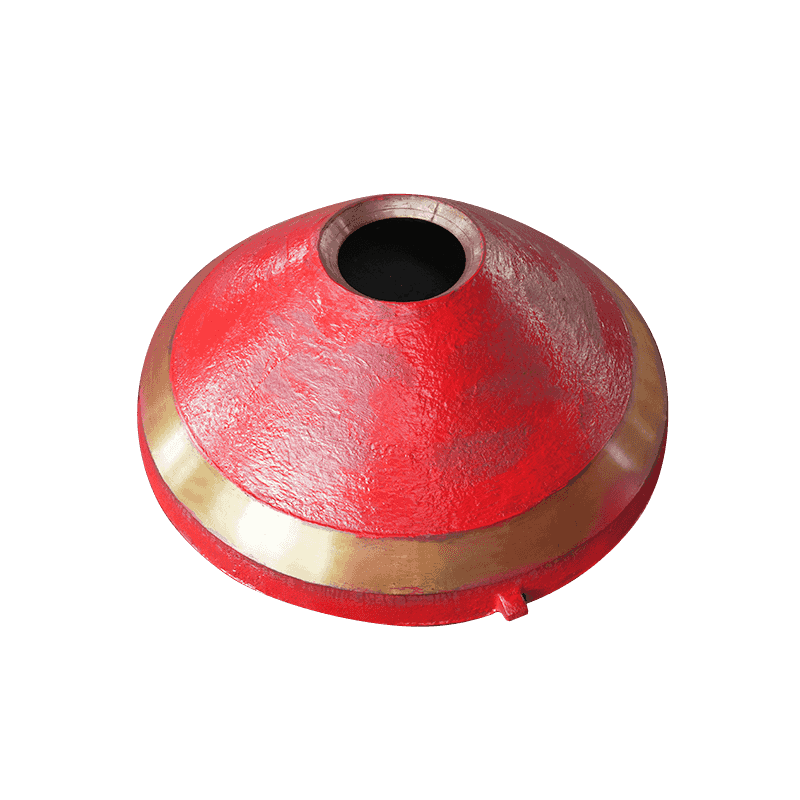
The crushing wall, known in some regions as the mantle, is the moving part that gyrates inside the fixed concave. It takes the hardest blows and absorbs most of the wear in the upper chamber. A high-quality cone crusher high manganese steel crushing wall is cast in manganese grades that form a hardened layer under impact while keeping the thicker core ductile enough to resist cracking.
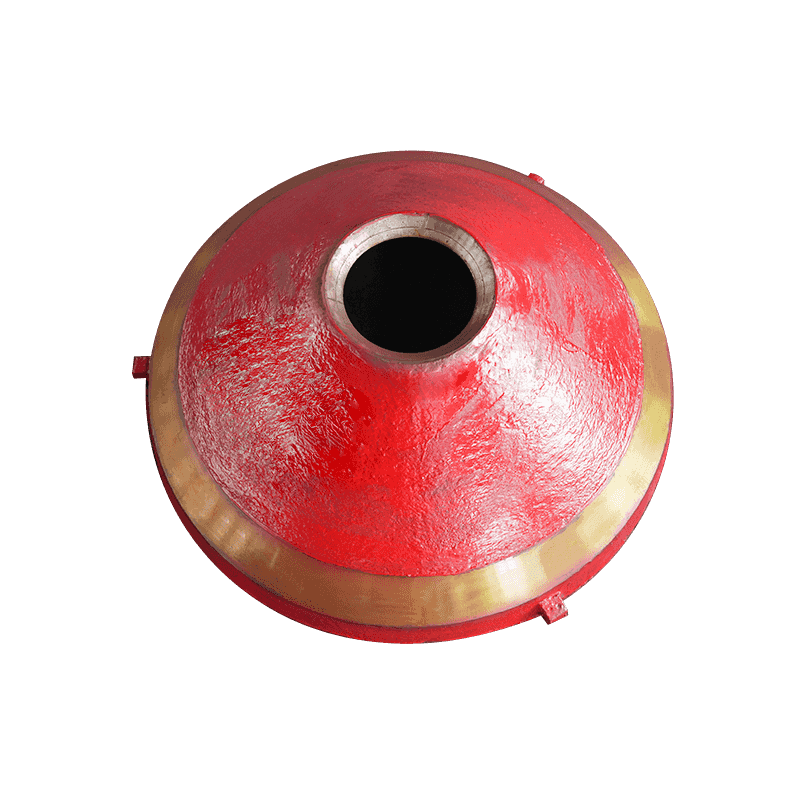 Wholesale Cone Crusher High Manganese Steel Crushing Wall Suppliers, Factory - NNantong Haoshun Casting Co., Ltd is China wholesale Cone Crusher High Manganese Steel Crushing Wall suppliers and factory, The high manga...View Product →
The mortar wall, also called the concave or bowl liner, surrounds the crushing wall and provides the stationary surface against which rock is crushed. A properly matched high manganese steel mortar wall preserves the chamber profile and keeps the gap geometry close to design specifications. If the liner profile is wrong, the crusher will consume more power, produce a flakier product and wear unevenly.
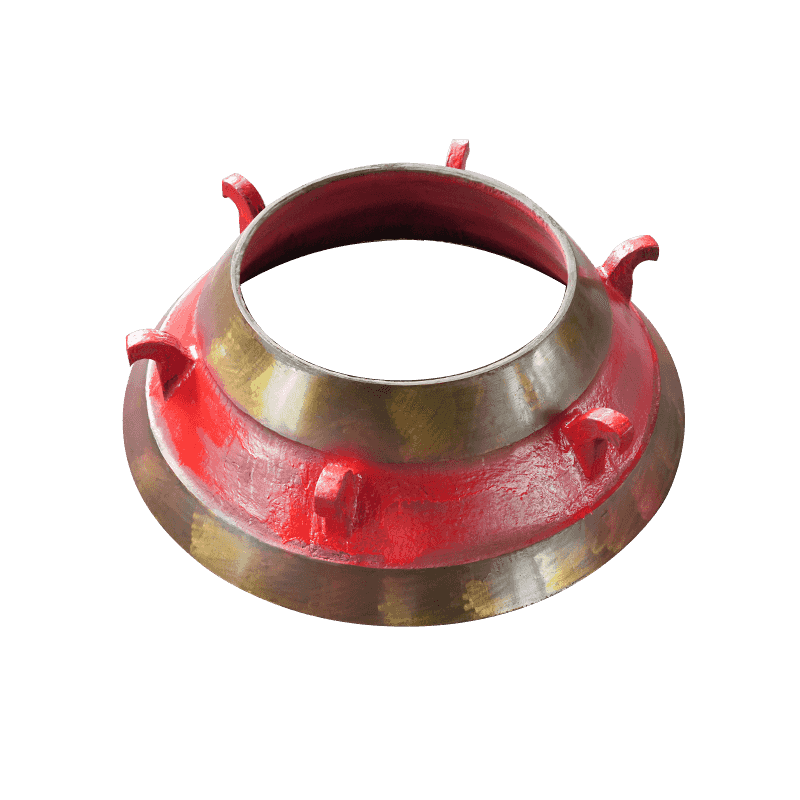 Wholesale Cone Crusher High Manganese Steel Mortar Wall Suppliers, Factory - NanNantong Haoshun Casting Co., Ltd is China wholesale Cone Crusher High Manganese Steel Mortar Wall suppliers and factory, The high mangane...View Product →
These two parts work as a set. Replacing only one side without checking the opposing liner can lead to early failure and unnecessary downtime. In our foundry, we cast both the crushing wall and the mortar wall to match the original equipment chamber geometry, and we can supply them for most common cone crusher models. The same casting discipline carries through to our jaw crusher plates, impact crusher blow bars and vertical shaft impact crusher liners, all produced under the same quality system.
Two types of cone crusher, one basic choice. Spring machines reward simplicity and known behavior; hydraulic machines reward automation and uptime. Match the type to your material, your crew and your production plan. Then spend the same care on wear parts, because the difference between a profitable crushing season and a costly one is often measured in the steel that meets the rock.
Previous Post
Liner Plate Types: Materials, Applications & How to Choose the Right One
Next Post
High Chromium Steel Grades Explained: Stainless, Tool, Cast Iron, and More
Related Products

-
- Phone:
-
+86 182 6058 7168
+86 (0)513 6890 5666
-
- Email:
- [email protected]
-
- Address:
- Wanghao Industrial Park, Haimen City, Nantong City, Jiangsu Province, China
-
- Media:

