
 English
  русский
  عربى
عربى Home / News / Industry News / Which Metal Is Best for Casting? A Practical Buyer's Guide to Wear Parts
Which Metal Is Best for Casting? A Practical Buyer's Guide to Wear Parts
Why the Same Wear Report Keeps Coming Back
A maintenance superintendent pulls the same quarterly report from the printer: a fixed jaw plate that lasts 340 hours, a set of high-chromium blow bars that rounded off after 180 hours instead of the promised 260, and a mill liner that cracked at a repair weld only two weeks after installation. Each failure has its own part number and its own cost code, but they all share one root question. Did anyone pick the right metal for the casting?
That question sounds simple. In practice it is the most expensive question in a crushing plant, because the wrong alloy fails in ways that are rarely gradual. A manganese steel liner that never work-hardens is eaten away uniformly. A brittle high-chromium part shatters, sometimes taking a rotor with it. A ductile iron frame that was under-specified cracks after a season of cold-weather operation. The metal decision does not just set the price of a spare part. It sets uptime, maintenance labor, safety exposure, and the cost per ton of finished product.
Here is the conclusion before the detail: there is no single best metal for casting. The right answer depends on the wear mechanism, the impact energy, the part geometry, and the economics of downtime at your specific site. For crushing and grinding equipment, the practical contest is almost always between two families — high manganese steel and high chromium cast iron. A third group, ductile iron and low-alloy steel, handles structural parts that do not wear directly but must carry load without failing. Every other alloy is a niche solution for a specific environment.
Match the Alloy to the Wear Mechanism
Metal selection comes down to three questions, and they should be answered in order.
- How is the part wearing? Identify whether the surface is being gouged by large rocks, scratched by fine particles, eroded by a fluid stream, or struck by repeated impacts. Each mode favors a different alloy.
- How much impact energy is present? A jaw crusher delivers enough force to work-harden a manganese steel surface in minutes. A chute or slurry line delivers none. High impact calls for toughness; low impact calls for hardness.
- What does a failure actually cost? Compare the price of a longer-lasting but more expensive alloy against the cost of an extra changeout, lost production, and the risk of secondary damage to the machine.
Start with wear mode because it determines which family of alloys can survive at all. Gouging and percussive wear need a metal that can absorb plastic deformation, which is precisely how high manganese steel works. Its surface transforms under repeated impact from soft austenite into a hard, deformed layer while the core remains tough, so it becomes harder precisely where the stones hit it. Low-stress abrasion, in contrast, rewards the hard carbide particles embedded in high chromium iron. Carbides at 1,200 to 1,600 Vickers cut through abrasive feed without being deformed. Put manganese steel in a low-impact abrasive duty and it stays soft. Put high chromium iron in a severe impact duty and it cracks.
That is why the debate between the two families is really a debate about the machine, the feed, and the failure history — not about which metal is better in the abstract. A well-chosen alloy can double or triple the life of a wear part; a poorly chosen one can fail in a single shift.
High Manganese Steel: The Work-Hardening Champion
What Makes It Different
High manganese steel is the material most people visualize when they picture a crusher wear part. Often called Hadfield manganese steel after its inventor, it contains roughly 1.0 to 1.4 percent carbon and 11 to 14 percent manganese. In the fully heat-treated condition it is austenitic, soft, and ductile, with a bulk hardness of only 170 to 220 HB and elongation between 20 and 45 percent. That is not a mistake. The softness allows the surface to work-harden in service. When a rock strikes the surface hard enough, the austenite transforms locally into a hardened structure that can reach 450 to 550 HB while the interior stays tough and forgiving.
The practical effect: a manganese steel jaw plate starts its life soft enough to survive shock loading and gets harder as it works. The working face develops a hardened crust that resists gouging, and if a piece of tramp steel gets into the crusher, the plate deforms instead of shattering. That toughness is why this material has been the standard for primary crushing in quarrying, mining, and recycling for more than a century.
Where High Manganese Steel Wins
- Fixed and movable jaw plates in jaw crushers, where feed size is large and impact is severe
- Crushing walls and mortar walls in cone crushers, which experience high compressive and rolling loads
- Gyratory mantles and concaves in primary gyratory crushers
- Hammer heads in crushers that rely on dynamic impact rather than compression
- Impact crusher liners when the feed contains large, blocky material
Where It Falls Short
The weakness of manganese steel is the flip side of its mechanism: without impact, it does not harden. In a low-impact application — a slurry pump, a mill liner running under moderate abrasion, a chute lining — the material stays near 200 HB and wears quickly, sometimes faster than a cheaper medium-carbon steel. It also yields under high compressive loads in the initial period if the machine is run with closed-side settings that are too tight for a soft, new liner. Operators who understand manganese steel run new liners carefully during the seating-in period.
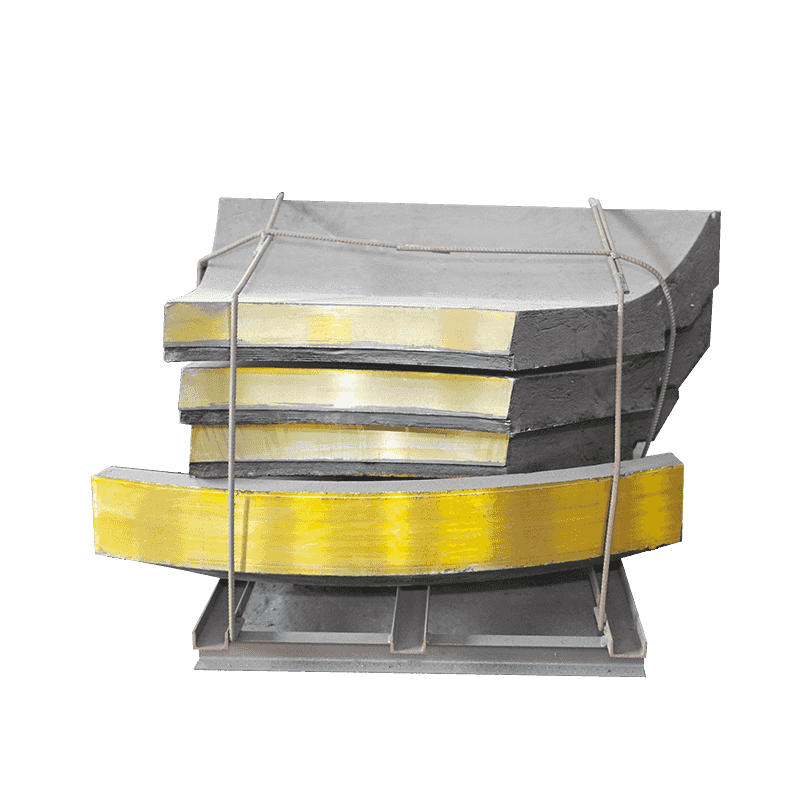
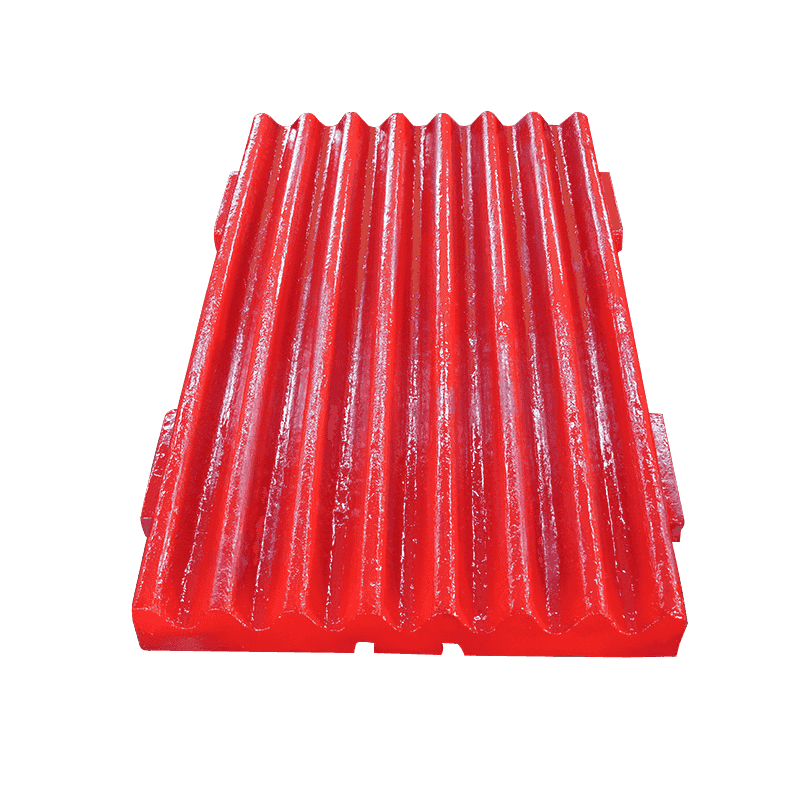
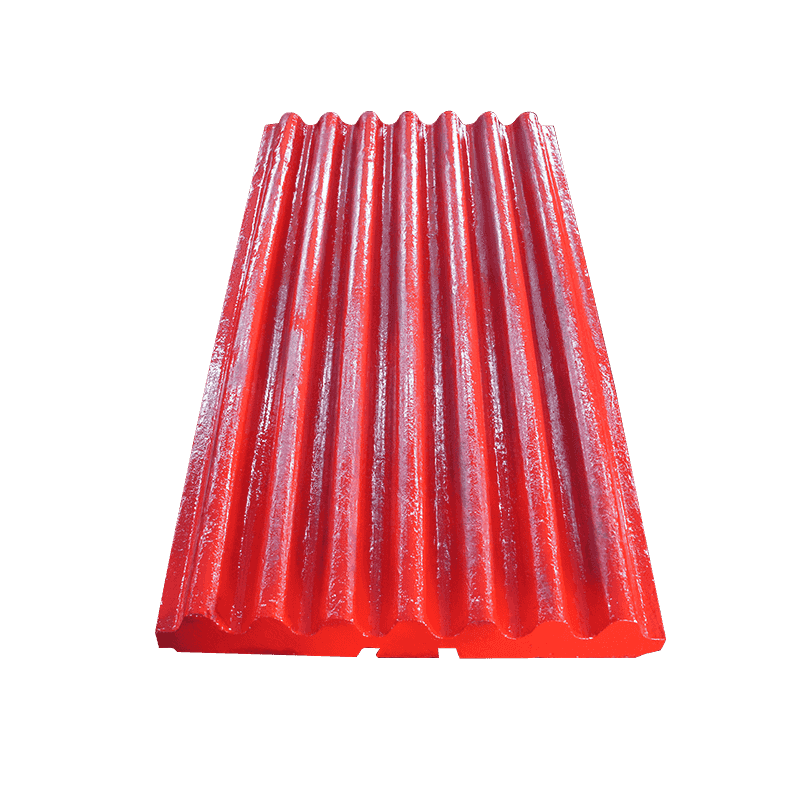
For a primary jaw crusher, the fixed plate carries the initial impact of the feed and is usually the first wear part replaced. A well-heat-treated casting is the difference between a smooth season and repeated changeouts; our jaw crusher high manganese steel fixed jaw plate is designed to work-harden across the full crushing face rather than only at the tooth tips. The full material story, including standard grades and composition ranges, is covered in our guide to the properties, grades, and uses of high manganese steel castings.
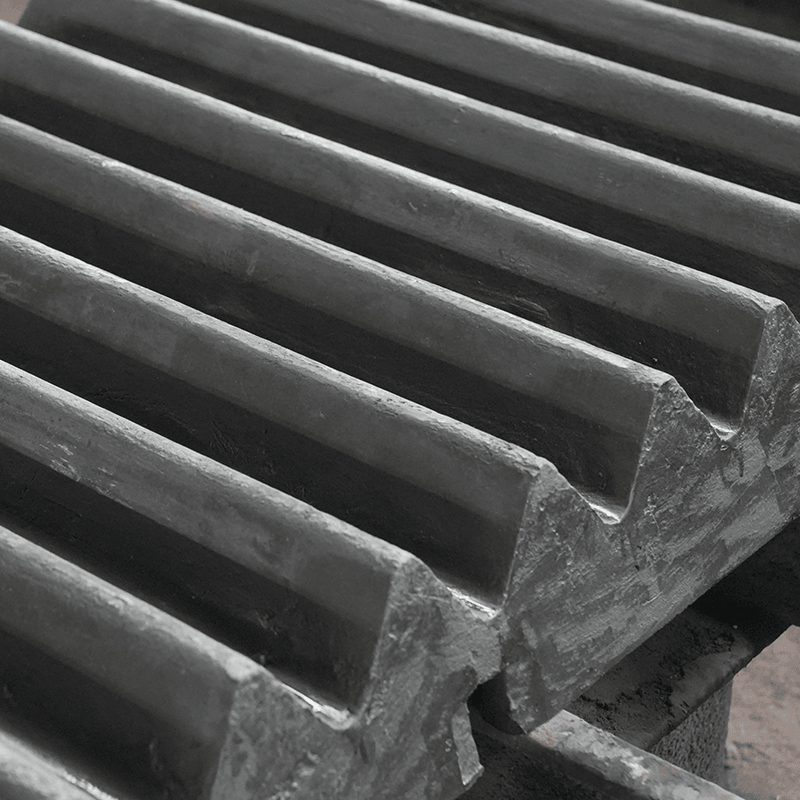 Wholesale Jaw Crusher High Manganese Steel Fixed Jaw Plate Suppliers, Factory - Nantong Haoshun Casting Co., Ltd is China wholesale Jaw Crusher High Manganese Steel Fixed Jaw Plate suppliers and factory, The high mang...View Product →
High Chromium Cast Iron: The Abrasion Specialist
Hardness Built into the Structure
High chromium cast iron is not really iron in the ductile sense of the word; it is a composite of hard carbides in a metal matrix. Typical compositions run 2.0 to 3.5 percent carbon and 12 to 30 percent chromium, with molybdenum, nickel, or copper added to refine the matrix. During solidification and heat treatment, the chromium forms M7C3-type carbides with a hardness on the order of 1,200 to 1,600 HV, far harder than any steel surface. The matrix can be austenitic or martensitic depending on the heat treatment, and the final casting typically lands between 58 and 65 HRC.
That structure makes high chromium cast iron the best available answer for low-stress abrasion and erosion. The carbides act like microscopic blades that scratch at the rock instead of being scratched by it. A blow bar in an impact crusher, a wear plate in a VSI, a grinding ball in a mill — these parts fail by wearing away particle by particle, and nothing in the common casting catalog resists that slow grinding better than chromium carbides.
Where High Chromium Cast Iron Wins
- Blow bars and plate hammers in impact crushers treating medium-hard, abrasive feed
- VSI crusher wear parts: dividing cones, flow channel plates, rotor tips, and peripheral protective plates
- Ball mill liners, grinding balls, and mill internals where sliding abrasion dominates
- Slurry pump impellers, liners, and casings in abrasive liquid applications
- Roller mill tires, grinding rings, and pulverizer parts
The Toughness Tradeoff
Every hard material pays for its hardness with brittleness. High chromium iron has low ductility and can crack if it meets impact it was not designed for. A single piece of tramp metal through an impact crusher can shatter a blow bar, and the shards can damage the rotor, the curtains, and the discharge conveyor. That risk is manageable when the feed is controlled — which is why high chromium is the standard for secondary and tertiary impact crushing — but it is a real limitation for primary positions that see oversize rock.
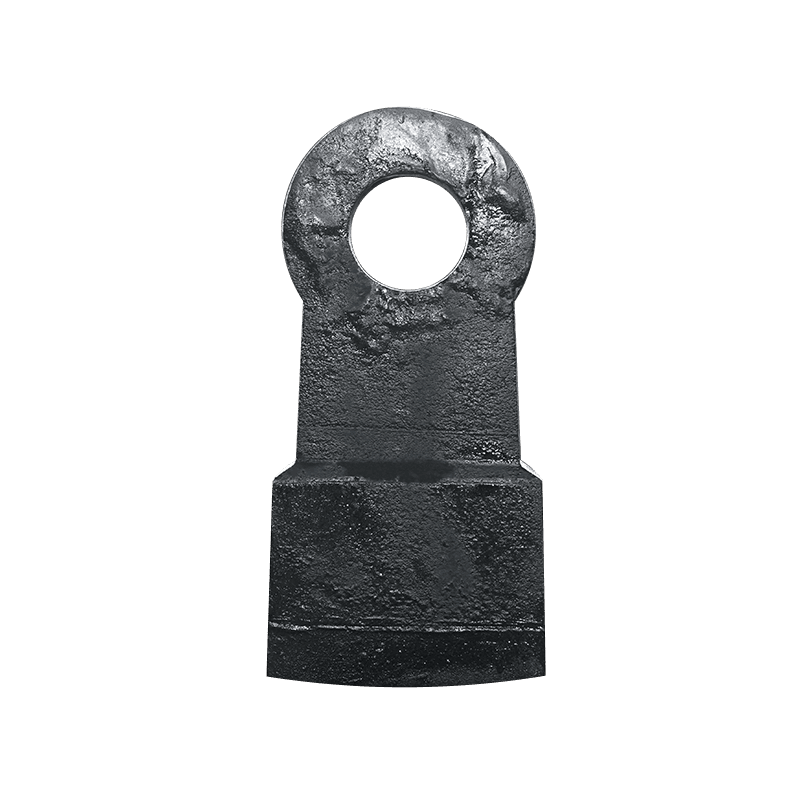
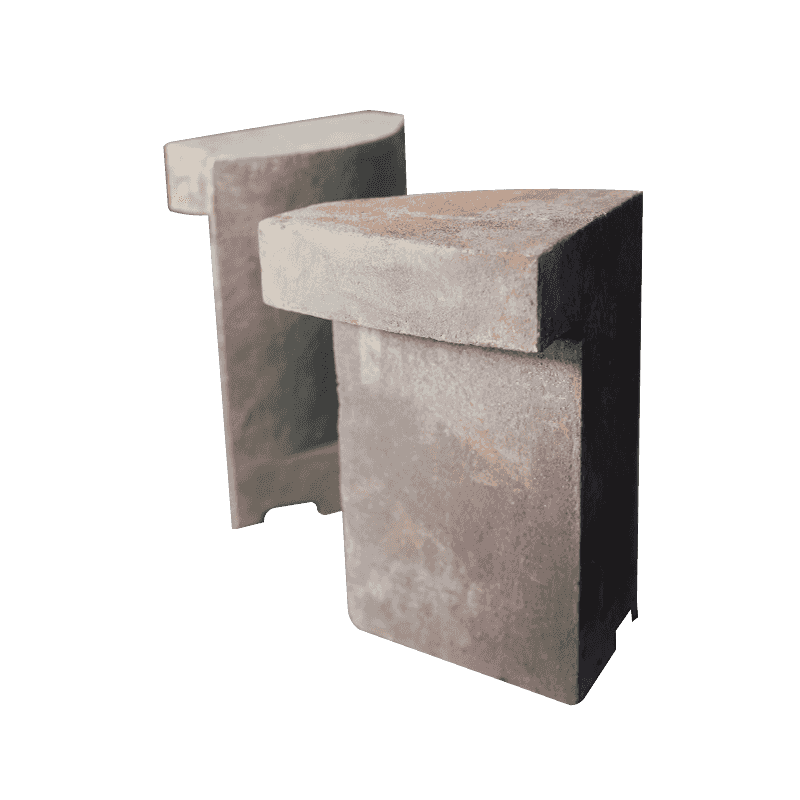
For secondary impact crushers handling medium-hard, abrasive feed, most operators choose a high-chrome plate hammer for impact crusher, and the difference between grades can change the changeout interval from weeks to months. When the feed conditions sit near the boundary between the two families, our comparison of high manganese steel versus chromium castings explains how to read the crossover point.
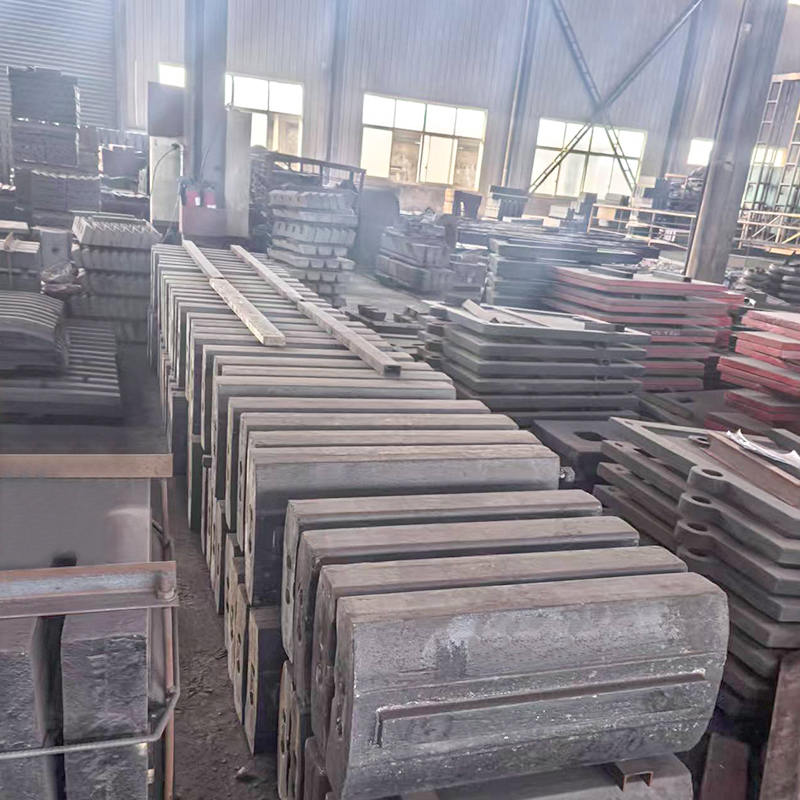 High Chrome Hammer Plate for Impact Crusher Suppliers, FactoryAs China high chromium hammer plate suppliers and hammer plate factory, Nantong Haoshun Casting Co., Ltd. provide wholesale high chrome p...View Product →
The Supporting Cast: Metals That Solve Specific Problems
Gray Iron
Gray iron is the workhorse of general castings. Its carbon forms graphite flakes that give it excellent vibration damping and machinability, but the same flakes act like internal notches that limit tensile strength to roughly 150 to 350 MPa. Gray iron is the right answer for machine bases, brake drums, bearing housings, and parts that need stiffness and damping without significant impact. It casts well in complex molds and is cheap, but it has no place in a wear application.
Ductile Iron
Ductile iron, also called nodular iron, solves the main weakness of gray iron. Adding magnesium or cerium to the melt makes the graphite spherical instead of flaky, turning the material from brittle to forgiving. Tensile strength runs 400 to 800 MPa with elongation up to about 18 percent, and impact resistance is dramatically better. This is why ductile iron appears in crusher frames, valve bodies, gearbox housings, and large structural castings that must survive fatigue loads. It is not a wear material in the sense that manganese steel is, but it is the structural backbone of many machines that hold wear parts in place.
Carbon Steel and Low-Alloy Steel
Plain carbon steel castings are weldable, tough, and well understood. They are the default for machine frames, gears, and linkage components where the job is to carry load rather than fight abrasion. When a part needs some wear resistance plus the ability to absorb impact, low-alloy steels — chromium-molybdenum grades being the most common — are used for mill liners, breaker bars, and similar components. A Cr-Mo steel liner will never match a high chromium cast iron liner in pure abrasion life, but it will not shatter when a grinding ball or a piece of tramp steel hits it.
Stainless Steel
Stainless steel castings bring two properties that other iron and steel grades lack: corrosion resistance and high-temperature strength. Austenitic grades, frequently CF8M or CF8, are standard for pumps, valves, and process equipment in chemical plants, food lines, and marine environments. Stainless has no advantage against dry, abrasive rock, so it does not appear in crusher wear paths unless corrosion is the dominant problem.
Aluminum Alloys
Aluminum is the easiest metal to cast in the sense that it melts at about 660°C, flows well into thin mold sections, and machines easily. It is inexpensive per unit volume, light, and recyclable, which makes it the default for automotive castings, aerospace brackets, electronics housings, and prototyping. But its softness eliminates it from any abrasion-dominated role. No one picks aluminum for a crusher liner.
Copper-Based Alloys
Bronze and brass alloys earn their place through corrosion resistance, low friction, and electrical conductivity. Bronze bearings and bushings are standard in crusher and mill applications precisely because they tolerate high loads while running against steel without galling. Marine propellers, pump sleeves, and valve trim are bronze territory. They are too expensive and too soft for bulk wear parts, but they are irreplaceable in the sliding contacts around the machine.
Casting Metals Compared Side by Side
Before choosing, it helps to see the whole field in one view. The table below summarizes typical ranges for common casting alloys. Hardness and toughness figures are indicative ranges for typical grades, not absolute limits.
| Metal | Hardness (typical) | Impact toughness | Abrasion resistance | Common applications | Relative cost |
|---|---|---|---|---|---|
| High manganese steel | 170–220 HB as-treated; surface exceeds 450 HB after work hardening | Excellent | Good under gouging and impact; weak under low-stress abrasion | Jaw plates, cone liners, hammer heads | Medium |
| High chromium cast iron | 58–65 HRC | Low to fair | Excellent for sliding and low-impact abrasion | Blow bars, VSI parts, grinding balls, mill liners | Medium to high |
| Ductile iron | 140–300 HB | Good | Fair | Frames, valve bodies, large structural castings | Low to medium |
| Gray iron | 120–250 HB | Poor | Fair | Machine bases, brake drums, housings | Low |
| Carbon steel | 120–200 HB | Good | Poor to fair | Frames, gears, fabricated structures | Low to medium |
| Low-alloy steel (Cr-Mo) | 200–400 HB | Good | Moderate | Mill liners, breaker bars | Medium |
| Stainless steel | 130–220 HB | Good | Fair | Pumps, valves, chemical process equipment | High |
| Aluminum alloys | 40–120 HB | Fair | Poor | Automotive, aerospace, electronics housings | Medium |
| Bronze and brass | 40–120 HB | Fair | Poor | Bearings, bushings, marine hardware, valve trim | High |
The Wear Mechanism, Not the Datasheet, Decides
Gouging Abrasion
Gouging abrasion is what happens when a heavy rock is crushed between two metal surfaces and the rock cuts into the plate as it fractures. The contact stresses are high enough to deform the metal plastically, which triggers the work-hardening response in manganese steel. In this mode the surface hardness of a manganese steel casting can climb from around 200 HB to over 450 HB, and the material essentially hardens itself as fast as it wears. No other common casting alloy matches that behavior.
High-Stress and Low-Stress Abrasion
High-stress abrasion happens when abrasive particles are trapped between two moving metal surfaces and crushed there, as in the grinding zone of a ball mill. The particles break down and the metal is worn by repeated high contact stresses. Low-stress abrasion happens when particles slide freely over a surface without being crushed, as in chutes, flow channels, and slurry pump passages. The two modes favor different materials. High-stress abrasion rewards a tough alloy with some hardness, often alloyed steel or modified manganese steel. Low-stress abrasion rewards maximum carbide hardness, which is high chromium iron's territory.
Impact and Percussive Wear
Repeated impacts — hammer crusher blows, feed material landing on a rotor, grinding media falling inside a mill — demand toughness to avoid cracking and a surface that hardens in response. High manganese steel is the first choice here, sometimes modified with chromium and molybdenum to lift baseline wear resistance without sacrificing the work-hardening response.
Erosion and Corrosion
When particles move in a fluid stream, the wear mode is erosion, and the angle and velocity of the particle stream dictate the damage. Erosion by sharp particles at glancing angles is abrasive; at high angles it is closer to impact. High chromium iron performs well in most erosive duties, and when the fluid is acidic or alkaline, corrosion accelerates material loss dramatically. High chromium iron resists this better than manganese steel, and for severe chemical environments, stainless steel or specially alloyed iron may be needed.
Choosing the Metal for Real Crushing and Grinding Machines
Jaw Crushers
A jaw crusher is the classic high manganese application. The fixed jaw plate takes the initial impact of the feed, and the movable jaw plate drives the crushing action. Both plates are loaded in compression and are struck by rocks that can weigh hundreds of kilograms. The metal must survive that shock and then harden on the surface to resist gouging. High manganese steel does both, which is why jaw crusher castings have been manganese steel for more than a century. Alloy modifications such as small additions of chromium, molybdenum, or vanadium are common to extend life, but the base metal stays manganese steel.
Cone Crushers
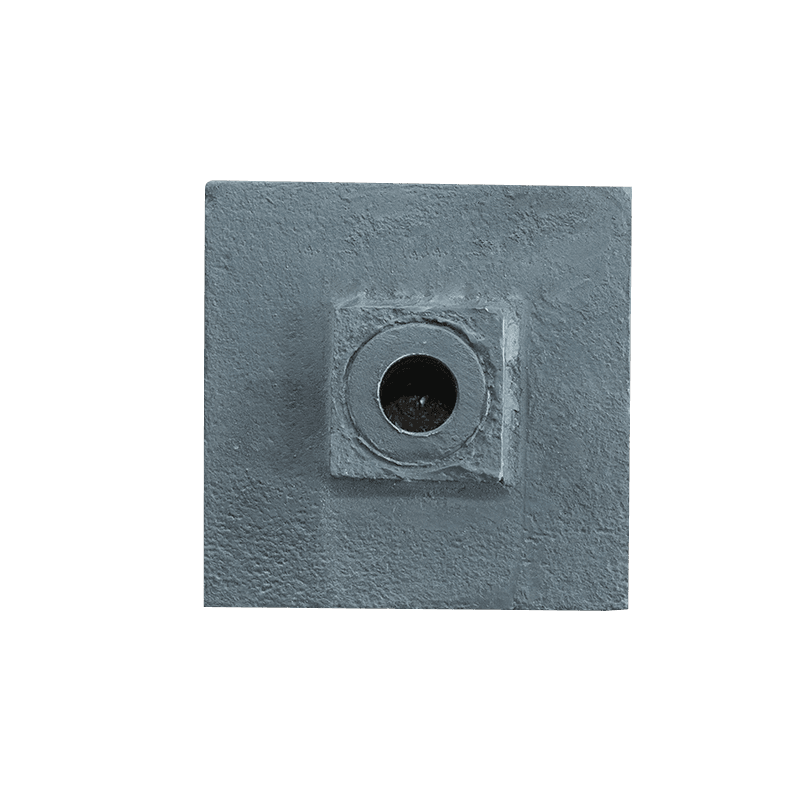
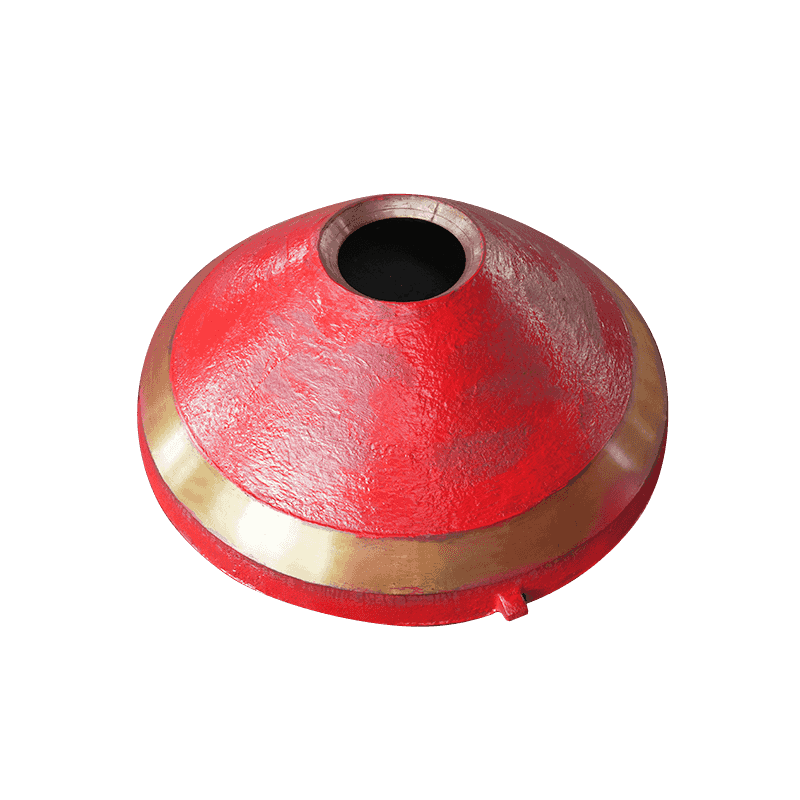
Cone crusher liners — the crushing wall and the mortar wall — experience rolling compression and some sliding as rock passes through the crushing chamber. The feed is usually already crushed, so the stones are smaller than in a jaw crusher, but the contact pressures are high and repeated. Standard manganese steel works well, and alloyed manganese grades with chromium or molybdenum are widely used to improve life in abrasive ores. Liner profile and feed grading matter as much as the alloy: a liner that is too heavy or too light will wear unevenly regardless of its hardness. In a cone crusher, the crushing wall is the component that directly shapes the product size; our high manganese steel crushing wall is engineered for the high compressive loads and rolling wear found in secondary and tertiary crushing chambers.
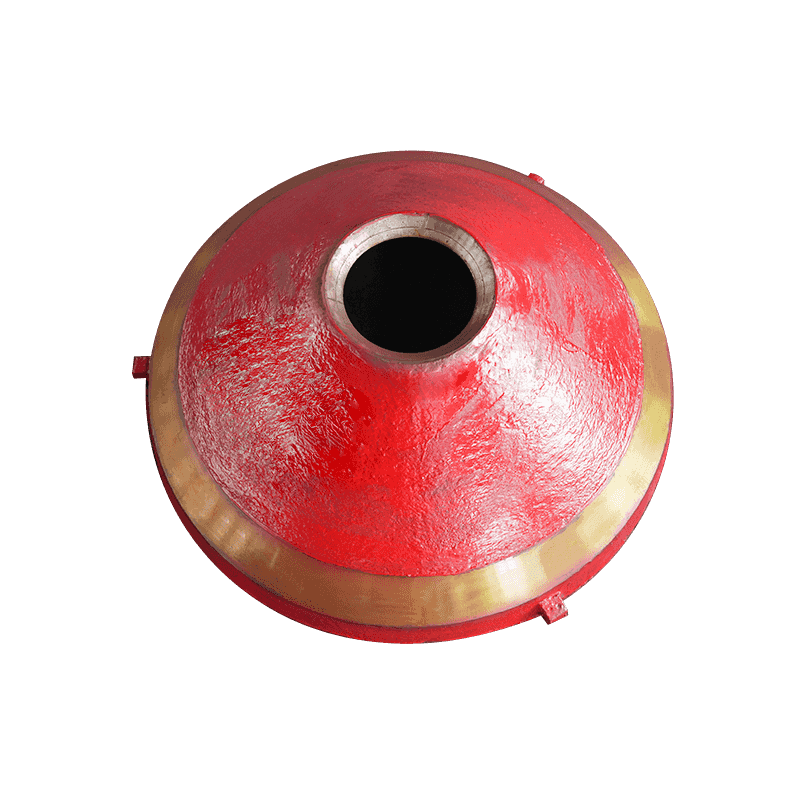 Wholesale Cone Crusher High Manganese Steel Crushing Wall Suppliers, Factory - NNantong Haoshun Casting Co., Ltd is China wholesale Cone Crusher High Manganese Steel Crushing Wall suppliers and factory, The high manga...View Product →
Impact Crushers
Impact crushers are the hardest application to assign to a single alloy because they combine impact and sliding abrasion in the same part. A rotor throws rock at the blow bar at high speed; when the rock hits, the blow bar absorbs an impact load; as the rock travels along the bar, the surface sees sliding abrasion. For medium-hard, abrasive feed in secondary roles, high chromium cast iron is the strongest candidate: its carbides resist the sliding abrasion, and the matrix can be tuned to survive moderate impact. For large, blocky feed with severe impact, manganese steel is safer, and some operators use a chromium-alloyed manganese steel as a compromise. The decision should be made case by case from the feed size distribution and the failure history of the plant.
Vertical Shaft Impact Crushers
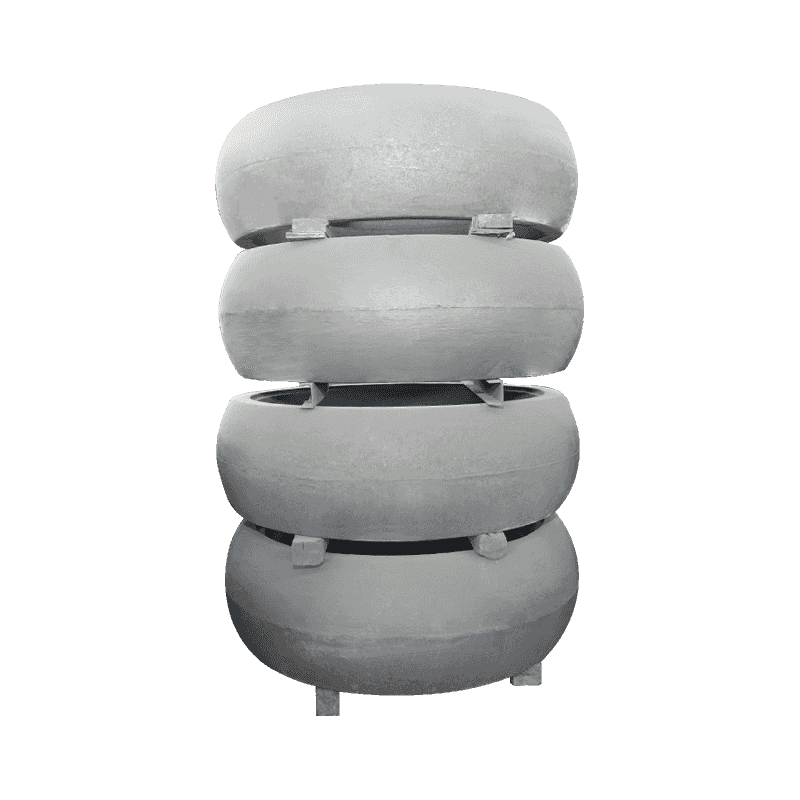
VSI crushers are the cleanest case for high chromium cast iron. Rock is accelerated to high velocity and ejected against internal wear parts and rock shelves, producing erosion and low-stress abrasion rather than the heavy impact seen in jaw or cone crushers. Dividing cones, flow channel plates, rotor tips, and peripheral protective plates are all made from high chromium castings because they need maximum carbide hardness and can tolerate the relatively controlled impact environment.
Grinding Mills and Media
Grinding circuits split between two very different parts. Grinding media — balls, cylpebs, and rods — need maximum hardness to fracture ore efficiently, and high chromium iron delivers that, typically at 58 to 65 HRC. Mill liners, on the other hand, must absorb the impact of falling media and lift the charge correctly, so they are commonly made from chromium-molybdenum alloy steel or modified manganese steel, balancing hardness against toughness and fatigue resistance.
Why Heat Treatment and Inspection Matter as Much as the Alloy
High Manganese Steel Must Be Fully Solution-Annealed
High manganese steel is only trustworthy when it receives a full solution heat treatment: heating to around 1050°C to dissolve carbides, followed by rapid water quenching to lock the austenitic structure. If the foundry cuts corners — lower temperature, insufficient holding time, or slow cooling — carbides precipitate at grain boundaries and the casting becomes brittle. A jaw plate that should bend under a tramp metal event will instead crack. This is one of the most common quality differences between foundries, and it is invisible in a hardness report. The heat treatment cycle is often the difference between a 200-hour part and a 600-hour part made from the same nominal grade.
High Chromium Iron Needs a Controlled Hardening Cycle
High chromium iron also depends on heat treatment to develop the right matrix. A properly treated casting has a martensitic matrix with a controlled amount of retained austenite, which gives it a useful combination of hardness and toughness. An over-treated or under-treated part can be so brittle that it cracks on installation, or so soft that it wears like ordinary iron. These differences do not show up on the surface; they show up in service life and failure mode.
What to Ask For on the Quality Side
- A composition certificate for each heat, with carbon, chromium, manganese, and alloying elements within specified ranges
- Hardness targets per part — a range, not a vague promise — and records showing how they were measured
- Evidence of heat treatment, such as furnace logs or certification
- Inspection for internal defects on critical parts, using ultrasonic or dye-penetrant methods
- Dimensional checks on mounting surfaces, tooth profiles, and contact areas
None of these checks will guarantee a perfect casting, but combined they explain most of the difference between a part that lasts the season and a part that fails at 40 percent of expected life.
Seven Questions to Ask Before You Order Cast Wear Parts
Approaching a foundry with clear questions is the fastest way to get a good result. Use the following list as your starting point.
- What wear mode dominates at my installation — gouging, high-stress abrasion, low-stress abrasion, or erosion? Give the foundry the full context: feed size, feed rate, rock type, moisture, and crusher settings.
- What hardness and toughness values do you target for this part, and how do you verify them in production?
- What heat treatment cycle does this casting receive? For manganese steel, a full solution anneal is the baseline standard.
- Can you supply composition certificates and test records for each batch I order?
- What dimensional tolerances do you hold on critical locating surfaces and tooth profiles?
- What is your record on tramp-metal incidents? Do you recommend a tougher grade for my feed conditions?
- How do you define wear life — hours, tons crushed, or tons of product? Make sure you measure the same metric.
Track the results across at least one complete set of liners or blow bars. The data you collect — hours, tons, and cost per ton — will answer the best-metal question better than any general article, because it is specific to your machine and your ore. If you are weighing the two families across an entire plant, our full guide to crusher high-chromium and manganese steel castings ties the material science back to real machine selection.
The Best Metal Is the One Matched to Your Wear Mode
There is no metal that wins every casting argument, and anyone who claims otherwise is probably selling a single alloy. The selection logic is actually straightforward. High manganese steel takes the hits: fixed and movable jaw plates, cone liners, gyratory mantles, and hammer crusher parts where impact energy is high and toughness is non-negotiable. High chromium cast iron takes the abrasion: blow bars, VSI wear parts, grinding balls, and mill liners where the dominant enemy is sliding wear and the impact environment is under control. Ductile iron and low-alloy steel carry the structure: frames, housings, and the parts that do not wear directly but must not fail.
Within those families, the quality of the casting matters more than the exact alloy number. Heat treatment, composition control, and inspection separate a short-lived part from a durable one even when the nominal grade is identical. And the only reliable way to choose between two candidate grades is to measure them in your own machine: track hours, tons, and cost per ton, and adjust the alloy as the data builds.
Define your wear mode, shortlist the alloy family that matches it, verify the foundry's process controls, and validate with field data. Work that loop consistently, and the best metal for your casting application stops being a guess.
Previous Post
High Chromium Steel Grades Explained: Stainless, Tool, Cast Iron, and More
Next Post
Complete Guide to Impact Crusher Components: Hammer Material Selection, Wear Parts Maintenance, and Maximizing Service Life
Related Products

-
- Phone:
-
+86 182 6058 7168
+86 (0)513 6890 5666
-
- Email:
- [email protected]
-
- Address:
- Wanghao Industrial Park, Haimen City, Nantong City, Jiangsu Province, China
-
- Media:

