
 English
  русский
  عربى
عربى Home / News / Industry News / What Are the Three Main Types of Jaw Crushers? Blake, Dodge, and Universal
What Are the Three Main Types of Jaw Crushers? Blake, Dodge, and Universal
A maintenance planner at a limestone quarry orders a set of jaw plates against a drawing that lists only the crusher's gape and width. The plates arrive, the bolt holes line up, the machine runs for three weeks, and then the cheek plates start cracking while the discharge setting drifts wider every shift. Nothing is wrong with the steel. The plates were profiled and heat treated for a top-pivot machine, and the crusher on site is a bottom-pivot design. That is a thirty-minute conversation that saves a three-week outage.
The three main types of jaw crushers are the Blake crusher, the Dodge crusher, and the Universal crusher. What separates them is one measurable feature: the position of the pivot that carries the swing jaw. A Blake crusher pivots the swing jaw at the top. A Dodge crusher pivots it at the bottom. A Universal crusher pivots it at a point between the two. Every practical consequence follows from that single geometric decision, including the size of rock you can feed, whether the discharge opening stays constant, how often the machine chokes, how the jaw plates wear, and what you have to write on a purchase order to get parts that fit and last.
If you are buying jaw plates, cheek plates, toggle plates, or a complete set of wear parts, the crusher type is the first thing to establish and the first thing suppliers usually forget to ask about. Two machines with identical gape and width can take completely different jaw dies, and a plate that is dimensionally correct but geometrically wrong will wear twice as fast at the discharge end, load the frame unevenly, and change the product gradation of the whole plant downstream.
There is also a second classification that shows up constantly in search results and supplier catalogues: single toggle, double toggle, and compound pendulum. That grouping describes how the swing jaw is driven rather than where it hangs, and the two systems overlap. A top-pivot machine can be either single or double toggle. This article covers both frameworks, explains how they interact on a real machine, and then translates all of it into the wear part decisions that actually cost money.
The Three Main Types of Jaw Crushers at a Glance
The classic textbook classification, used in mineral processing courses and in most equipment manuals, sorts jaw crushers by pivot position. The pivot is the fixed pin or bearing that the swing jaw rotates about. Move that pivot and you change which opening is fixed and which one varies as the jaw swings.
| Feature | Blake crusher | Dodge crusher | Universal crusher |
|---|---|---|---|
| Pivot position | Top of the swing jaw | Bottom of the swing jaw | Intermediate point between top and bottom |
| Feed opening | Fixed | Variable through the stroke | Partly variable |
| Discharge opening | Variable, set by the closed side setting | Fixed | Variable |
| Consistency of product size | Moderate | Highest of the three | Moderate |
| Largest lump the chamber accepts | Largest for a given machine size | Smallest | Medium |
| Risk of choking or packing | Low | High | Medium |
| Typical duty today | Primary crushing in mines, quarries, recycling and slag | Laboratory, sampling, small tonnage, controlled feed | Legacy installations and specialist duty |
| Wear pattern on jaw plates | Concentrated at the lower third of the chamber | Concentrated at the upper part of the chamber | Spread across the middle |
The logic behind the table is simple geometry. On a Blake machine the swing jaw hangs from the top, so the jaw faces stay a fixed distance apart at the feed end and come closest together at the discharge end. The minimum gap at the bottom is the closed side setting, and the gap grows as the jaw swings away, which is the open side setting. The difference between them is the throw.
On a Dodge machine the geometry is inverted. The jaw is pinned at the bottom, so the discharge gap never changes and the feed opening opens and closes with every revolution. That gives an unusually uniform product, which is exactly why laboratories use it, and it also creates the packing problem that keeps it out of production plants.
The Universal design sits in the middle and was an attempt to combine a generous feed opening with a reasonably consistent product. It never displaced the Blake layout because the compromise costs mechanical simplicity without delivering a decisive advantage.
Type One: The Blake Jaw Crusher and Its Top Pivot
Eli Whitney Blake patented the top-pivot jaw crusher in 1858 for producing road aggregate, and the layout is still the backbone of primary crushing more than a century and a half later. If you walk into almost any hard rock quarry or metal mine and look at the first machine in the flowsheet, you are almost certainly looking at a Blake geometry.
How the Blake geometry sets feed and discharge
Because the swing jaw is suspended at the top, the feed opening is constant. That single fact explains most of the Blake crusher's advantages. A constant opening can accept large, irregular lumps without the risk that the chamber closes on a boulder and refuses to release it. The practical rule used across the industry is that the largest lump should not exceed about 80 percent of the feed opening width, and on a Blake machine that rule holds consistently through the stroke rather than only at one point in the cycle.
The discharge end is where the adjustment lives. The closed side setting is measured when the jaw is at its closest approach to the fixed jaw, and it is normally set with shims, a wedge, or a hydraulic cylinder depending on machine age and vendor. Typical primary settings run from about 75 mm to 150 mm on large machines, while smaller secondary-duty units may be set as tight as 20 mm to 40 mm. The throw, which is the open side setting minus the closed side setting, usually falls between 20 mm and 50 mm.
Where Blake crushers do their best work
Blake machines dominate primary crushing because they combine the largest practical feed opening with a low risk of packing. They handle hard, abrasive, blocky rock such as granite, basalt, quartzite, and ore, and they also work well in construction and demolition recycling where the feed is unpredictable and contains occasional uncrushable material.
The trade-off appears in product shape. Because the chamber reduces the material progressively and the jaw motion is partly a rubbing action in single toggle versions, the product tends to be slabby and flaky compared with what a cone crusher produces. Most plants accept this, because the jaw is doing the coarse reduction and the shape is corrected in the secondary stage.
The other trade-off is wear distribution. On a Blake machine the crushing force is highest near the discharge, so the lower third of the jaw plates wears fastest. Plates are normally reversible, which means a set can be turned end for end at roughly half life to expose a fresh surface and effectively double the interval between replacements.
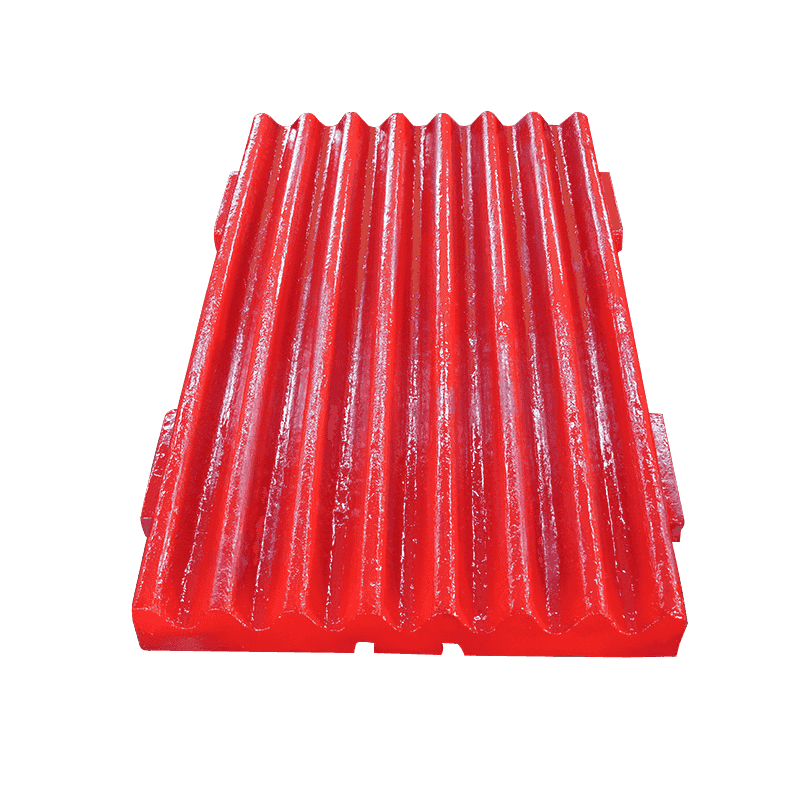
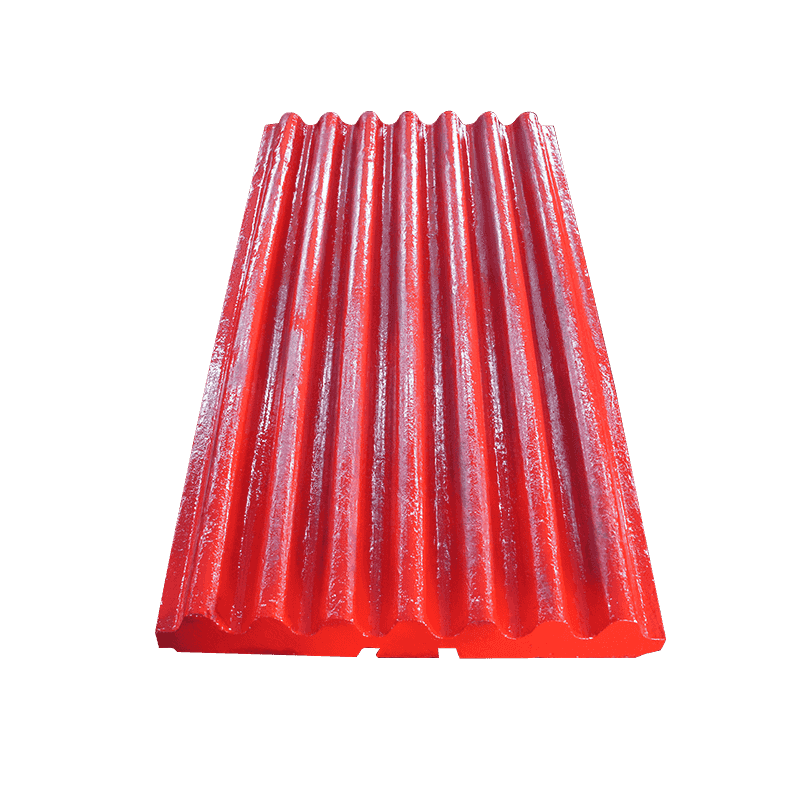
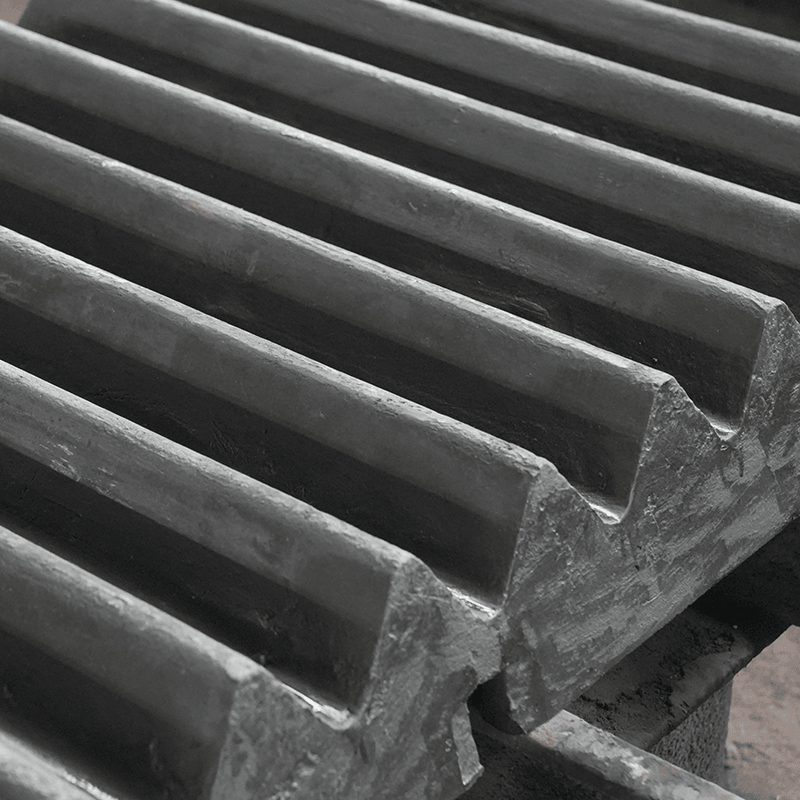 High Manganese Steel Fixed Jaw Plate for Jaw CrushersFor operations weighing jaw plate wear distribution, this high manganese fixed jaw plate offers alloy additions for wear and impact resistance.View Product →
Type Two: The Dodge Jaw Crusher and Its Bottom Pivot
The Dodge crusher reverses the pivot. The swing jaw is pinned at the bottom and driven from above, so the discharge gap is mechanically fixed and the feed opening breathes in and out with every rotation of the eccentric shaft.
Why Dodge crushers choke
Picture what happens as the swing jaw closes at the top. A lump that has already entered the chamber and is sitting halfway down has to go somewhere when the opening above it narrows. If the material below it has not cleared the discharge, the chamber fills and the machine packs solid. This is the choking behaviour that gives the Dodge design its reputation, and it is a direct consequence of the geometry rather than a manufacturing fault.
The result is that a Dodge crusher needs a controlled, well-graded, free-flowing feed with a top size well below the maximum theoretical opening. It rewards that discipline with the most closely sized product of the three types, because the discharge gap is the same on every stroke and there is no setting variation to widen the gradation curve.
Where a Dodge crusher still earns its place
Laboratories, sampling rooms, pilot plants, and small specialised plants are the natural home of this design. When the requirement is a repeatable 10 mm or 6 mm product from a small sample, a fixed discharge opening is worth more than throughput. Beyond that niche, the low capacity, the sensitivity to feed variation, and the accelerated wear at the upper end of the jaw plates make it a poor choice for production duty.
For buyers, the Dodge type matters mainly as a warning. A crusher that is asked to do Blake work while built on Dodge geometry will fail in a recognisable pattern: repeated stalls at start-up, uneven plate wear concentrated at the top, and a rising proportion of oversize in the product as the chamber packs and releases in cycles.
Type Three: The Universal Jaw Crusher and Its Intermediate Pivot
The Universal crusher places the pivot somewhere between the top and the bottom of the swing jaw. The intention was to split the difference: a feed opening that is partly protected from closing, and a discharge opening that varies less than on a full Blake machine.
The compromise geometry
With the pivot in the middle, the jaw effectively works as two levers. The section above the pivot opens and closes as the jaw swings, and so does the section below it. Neither opening is fully fixed. In practice this produces a moderate feed acceptance, a moderate product consistency, and a chamber that is harder to set up than either of the alternative layouts.
Why Universal crushers are rare today
The Universal layout survives mainly in older installations and in specialist applications where it was specified decades ago and the plant has been maintained around it. Modern machine design has standardised on the Blake geometry for primary duty and on cone and impact crushers for finer stages, so a new Universal machine is unusual. If you are sourcing wear parts for one, expect to work from drawings or from physical measurement rather than from a standard catalogue listing, and expect longer lead times on castings that are not held in stock.
The Other Three Types: Single Toggle, Double Toggle, and Compound Pendulum
Ask a supplier what type of jaw crusher you have and you may get a completely different answer: single toggle, double toggle, or compound pendulum. This classification describes the drive and the motion of the swing jaw rather than the pivot position, and it is the framework most commonly used in Chinese and wider Asian manufacturing, where the terminology translates as simple pendulum, compound pendulum, and combined swing.
Single toggle jaw crushers
In a single toggle machine, the swing jaw is mounted directly on the eccentric shaft at the top and is supported at the bottom by one toggle plate. The jaw therefore does two things at once: it swings back and forth and it rises and falls slightly. That compound motion gives the design its alternative name. The motion is more aggressive, the machine is lighter for the same gape, and the throughput is typically 20 to 30 percent higher than a double toggle unit of comparable size.
The cost of that aggressiveness is friction. The swing jaw scrubs vertically against the material as well as compressing it, and that scrubbing accelerates wear on the jaw plates. Single toggle machines are also more sensitive to the condition of the toggle plate and the seating, and they generally run at higher speeds, commonly in the 250 to 350 rpm range for medium sizes.
Double toggle jaw crushers
The double toggle design, which is the classic Blake arrangement, uses a pitman driven by the eccentric shaft and two toggle plates. The swing jaw is suspended on a fixed pivot and receives a purely compressive stroke with very little vertical movement. The mechanical advantage is higher, the motion is gentler on the wear surfaces, and jaw plate life is longer in hard, abrasive rock.
The price is weight, cost, and complexity. A double toggle machine needs a heavier frame, larger bearings, and a bigger foundation, and it delivers less tonnage for the same feed opening. Its eccentric speed is lower, typically around 200 to 300 rpm, because the long stroke needs time to clear the chamber. Where the duty is very hard, very abrasive primary crushing and the plant runs three shifts, the longer plate life and lower downtime frequently justify the extra capital cost.
Compound pendulum and the naming trap
Compound pendulum is not a third mechanism. It is the Asian-market name for the single toggle geometry, just as simple pendulum is the name for the double toggle layout. A third term, combined swing, refers to an intermediate pivot design that corresponds closely to the Universal crusher described above. Buyers who order against a translated datasheet can easily end up comparing a single toggle machine with a double toggle machine under the impression that they are looking at two different pivot systems.
| Feature | Single toggle | Double toggle |
|---|---|---|
| Toggle plates | One | Two |
| How the swing jaw is carried | Mounted on the eccentric shaft at the top | Suspended on a fixed top pivot and driven by a pitman |
| Motion character | Combined swing and vertical movement | Predominantly compressive swing |
| Relative throughput at equal gape | Higher, often by 20 to 30 percent | Lower |
| Reduction ratio in one pass | About 4:1 to 8:1 | About 4:1 to 6:1 |
| Jaw plate wear from scrubbing | Higher | Lower |
| Machine mass and capital cost | Lighter and cheaper | Heavier and more expensive |
| Typical eccentric speed | 250 to 350 rpm | 200 to 300 rpm |
| Preferred duty | General quarry and mine primary crushing, mixed feed | Hard, abrasive, high tonnage primary duty |
 High Manganese Steel Movable Jaw Plate for Jaw CrushersA movable jaw plate cast in high manganese steel for impact-heavy crushing, useful when confirming crusher type before ordering replacement wear parts.View Product →
How to Tell Which Type You Are Standing In Front Of
Machine nameplates are often missing, repainted over, or written in a language nobody on site reads. The following checks take a few minutes and will establish the type with enough confidence to order the right wear parts.
- Find the swing jaw and trace it upward. If it ends in a bearing or pin at the top of the frame, the machine is a Blake or top-pivot design. If it is free at the top and pinned near the bottom, it is a Dodge.
- Count the toggle plates at the rear of the machine. One toggle plate means single toggle, and two means double toggle.
- Look at where the pitman sits. A large vertical pitman between the eccentric shaft and the toggles indicates a double toggle machine.
- Watch the discharge gap while the machine idles. A gap that changes visibly through the stroke points to a Blake or Universal geometry. A gap that stays constant points to a Dodge.
- Inspect the jaw plate wear pattern. Heavier wear at the bottom of the chamber indicates a top pivot. Heavier wear at the top indicates a bottom pivot.
- Measure the plate thickness with a straight edge. Worn plates change the nip angle, and a nip angle beyond roughly 25 to 30 degrees will push material out of the chamber instead of gripping it.
- Check the closed side setting with a lead ball or a tape at the discharge. Record it, because the next set of plates must be set up the same way.
Write the answers down. The crusher type, the gape and width, the closed side setting, the throw, the plate thickness, the bolt hole centres, and the plate profile are the seven pieces of information that determine whether the next delivery fits and performs.
How Pivot Position Changes the Jaw Plates You Buy
Jaw plates are not interchangeable across crusher types even when the mounting dimensions happen to match. The profile, the plate thickness at each end, and sometimes the alloy selection are tuned to the way the chamber closes.
On a top-pivot machine the plate is usually designed to be reversible. The tooth profile is symmetric about the centre line so the plate can be turned end for end when the lower third has worn. Buyers who specify a non-reversible profile lose that second life and pay roughly twice as much per hour of operation without realising it. Thickness at the discharge end is often slightly greater to compensate for the higher load there.
On a bottom-pivot machine the load sits at the upper end and the plate profile is often asymmetric. Reversibility is either impossible or only partly useful. This is one of the reasons a Dodge crusher is expensive to run per tonne even though the machine itself is simple.
Profile choice also interacts with the nip angle. Corrugated and toothed plates grip better and allow a slightly steeper nip angle than smooth plates, but they also create more fines and more scrubbing. Smooth plates produce a better-shaped product and lower power draw in some materials but are more prone to slip when the feed is wet and slabby. The right answer depends on the rock, not on the catalogue.
Tolerances matter as much as the alloy. Bolt hole position on a large jaw plate is normally held to within about 1.5 mm of the drawing, and plate thickness to within 2 to 3 mm. A plate that is 5 mm oversize in thickness will not fit the wedge arrangement. A plate with hole centres 4 mm out will either refuse the bolts or, worse, accept them under load and crack at the ears after a few hundred hours.
Cheek plates, also called side guards or side liners, protect the frame from the material that escapes the jaw faces. They are often treated as an afterthought, but a set of cheek plates that is too thin or made from the wrong alloy will wear through and start damaging the frame, which turns a low-cost consumable into a fabrication job.
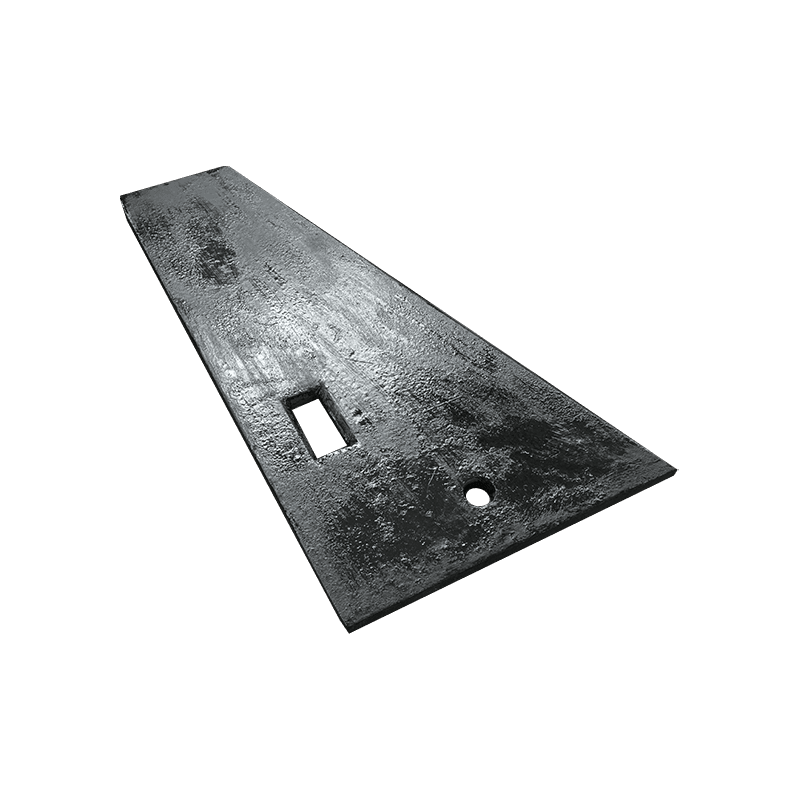 High Manganese Steel Jaw Crusher Side Guard PlateAlso called cheek plates, this high manganese side guard protects the crusher body from material impact and helps prevent frame damage.View Product →
Matching Wear Material to the Crushing Duty
Once the crusher type is known, the second decision is the alloy. The two families that dominate jaw crusher wear parts are austenitic manganese steel and high chromium cast iron, and they are not substitutes for one another.
| Material | Typical hardness | Impact toughness | Best suited to |
|---|---|---|---|
| Austenitic manganese steel, 12 to 14 percent Mn | About 180 to 220 HB as cast, work hardens to roughly 450 to 550 HB in service | Very high | Jaw plates, cone crushing walls and mortar walls, impact liners, hammers where impact is severe |
| Austenitic manganese steel, 18 to 22 percent Mn | Similar as cast, higher work hardening capacity | Very high | Large primary jaw plates, thick section castings, heavy impact duty |
| High chromium cast iron, around 26 percent Cr | About 58 to 62 HRC | Moderate | Blow bars, plate hammers, vertical shaft impactor parts, low impact abrasion |
| Chromium molybdenum niobium alloy steel | About 45 to 55 HRC after heat treatment | Moderate to high | Mill liners and wear plates where abrasion dominates and impact is limited |
| Low alloy or martensitic steel | About 350 to 450 HB | Moderate | Cheek plates, lighter duty liners, applications where manganese cannot work harden |
Manganese steel works by work hardening. The surface starts soft, in the region of 200 HB, which lets it absorb impact without cracking. Repeated crushing load deforms the surface layer, and the hardness climbs into the 500 HB region while the interior stays tough. That is why manganese jaw plates perform well in hard rock primary crushing, and it is also why they underperform in low impact, high abrasion duty: if the surface never receives enough load to work harden, it simply wears away.
High chromium iron behaves in the opposite way. It arrives hard, with carbides that resist abrasion extremely well, and it stays hard because there is no work hardening mechanism to rely on. The limitation is toughness. Put a high chromium plate into a large primary jaw crusher handling 700 mm granite blocks and it will chip or crack. Put a manganese plate into a low impact abrasive duty and it will wear through quickly.
This is the point at which a supplier's real technical capability shows. Alloy chemistry, pouring temperature, heat treatment cycle, and section thickness control the final performance far more than the headline grade name. Buyers should ask for the chemical composition against a recognised specification such as ASTM A128 or GB/T 5680, a hardness survey taken at several points on the casting, and reference to the heat number that ties the part to the production record. A plate that meets the dimensional drawing but has no traceability is a gamble on the whole chamber.
For anyone who wants a deeper look at how manganese steel behaves in jaw crusher service, there is a useful technical discussion of what makes high manganese steel castings essential for jaw crushers, including the work hardening mechanism and the conditions under which it fails to engage.
Capacity, Reduction Ratio, and Settings by Type
Throughput on a jaw crusher is a function of chamber volume, throw, eccentric speed, feed gradation, and the work index of the rock, so any published capacity figure is an estimate for a defined feed. The numbers below are indicative ranges that help with early-stage sizing and with sanity-checking a supplier's claim.
| Parameter | Blake, top pivot | Dodge, bottom pivot | Universal, intermediate pivot |
|---|---|---|---|
| Typical reduction ratio in one pass | 4:1 to 8:1 | 6:1 to 10:1 on closely sized feed | 4:1 to 6:1 |
| Maximum feed lump as a share of gape | Up to about 80 percent | Often limited to about 60 percent in practice | About 70 percent |
| Typical closed side setting, large primary unit | 75 to 150 mm | Not adjustable in the same way, discharge is fixed | 50 to 120 mm |
| Typical throw | 20 to 50 mm | Small, often under 20 mm | 20 to 40 mm |
| Product size consistency | Moderate | High | Moderate |
| Sensitivity to wet or sticky feed | Moderate | High | Moderate to high |
Two settings deserve more attention than they usually get. The first is the closed side setting, because it controls both the product size and the load on the machine. Setting a jaw crusher tighter than the design allows raises the crushing force, increases power draw, and accelerates plate wear without improving throughput, since the chamber simply cannot pass material any faster. The second is the nip angle, which is the angle between the two jaw faces. Keep it below roughly 25 to 30 degrees. Beyond that, material rides up instead of being nipped, and you get slip, dust, and a rising proportion of oversize in the product.
Feed gradation also matters more than most operators expect. A chamber fed with a narrow size band behaves differently from one fed with a broad band including fines. Fines act as a lubricant between the plates, reduce the effective grip, and can cause the plates to polish rather than work harden. If a plant is consistently achieving less than the expected capacity, checking the feed curve is often more productive than adjusting the crusher.
A Buying Checklist for Jaw Crusher Wear Parts
Most premature wear part failures trace back to a specification gap rather than a manufacturing defect. The following points close the common gaps before the purchase order is issued.
- Crusher type, established by pivot position and toggle count, not by assumption.
- Machine model and serial number where a nameplate survives, plus the gape and width as a cross-check.
- Jaw plate dimensions taken from the drawing or, if none exists, from physical measurement of the worn plate plus the wear allowance.
- Bolt hole diameter, hole centres, and counterbore depth measured on the machine, not on the old plate if the old plate has cracked at the ears.
- Plate profile: smooth, corrugated, or toothed, with tooth pitch and tooth height specified.
- Reversibility requirement stated explicitly, so the supplier knows the profile must be symmetric.
- Material grade with a recognised specification, plus required hardness range and the points at which hardness will be measured.
- Traceability requirement, including heat number marking and a composition certificate.
- Dimensional tolerances agreed in writing, with particular attention to thickness and hole position.
- Packing and marking requirements for export, including weight per crate and lifting points.
- Lead time and minimum order quantity, confirmed against the planned maintenance window rather than against the supplier's convenience.
- Cost per tonne of material crushed, calculated from price divided by expected service hours and throughput, used as the comparison metric rather than price per kilogram.
The last point is the one that changes decisions. Two suppliers may quote a 40 percent price difference on the same nominal grade, and the cheaper plate may still be the more expensive one if it lasts 30 percent fewer hours. Ask both suppliers for the same three numbers: alloy specification, hardness range with test method, and expected service hours in the specific rock being crushed. A supplier who cannot answer the third question is selling castings, not wear solutions.
Maintenance Practices That Protect Both the Machine and the Plates
Wear parts fail on a schedule, and the schedule is influenced more by maintenance discipline than by the alloy on the drawing. These practices apply to all three crusher types, with the setting checks adjusted for the geometry.
- Measure the closed side setting at least weekly and after every plate change. Use a lead ball or a calibrated gauge, and record the value in a log.
- Re-torque wedge and clamping bolts to the specified value after the first 24 hours of running and then at each scheduled inspection. Loose plates move, and a moving plate cracks.
- Reverse or rotate jaw plates at about half of their usable wear life. On top-pivot machines this is usually a simple end-for-end swap.
- Check the nip angle whenever plate thickness changes significantly. A heavily worn chamber has a different grip geometry from a new one.
- Inspect the toggle plate and its seats for cracking. On machines without hydraulic overload protection, the toggle is the sacrificial element and a cracked toggle is a warning, not a nuisance.
- Keep the feed size within the 80 percent rule and avoid continuous feeding of oversized lumps, which spike the load on the plates and the frame.
- Monitor the discharge gradation. A widening product curve usually means plate wear, a drifting setting, or a change in feed, and it will affect the downstream crushers.
- Inspect cheek plates and side liners on the same schedule as the jaw plates, since they protect the frame rather than the crushing surfaces.
- Store spare plates on timber or rubber, never directly on concrete, and keep them dry. Manganese steel plates that sit in the open can develop surface corrosion in the bolt areas.
- Keep a wear record per chamber position, not just per machine. Tracking which end of which plate wears first tells you more about the machine than any single measurement.
The record matters because it converts maintenance into procurement data. After two or three plate changes, a plant knows the service hours per set, the tonnage per set, and the position of the wear scar. That is enough to negotiate on performance rather than on price, and enough to tell whether an alloy change is worth testing.
Getting the crusher type right is the cheapest reliability improvement available to a crushing plant. It costs a walk to the machine, a look at the pivot, and a count of the toggle plates. It saves the cost of a set of jaw plates that were geometrically wrong from the moment they were bolted in, plus the downtime, plus the risk to the frame and the downstream stages.
The short version is this. A Blake crusher pivots at the top and gives you the largest feed opening and the most forgiving chamber, which is why it dominates primary crushing. A Dodge crusher pivots at the bottom and gives you the most consistent product at the cost of capacity and choking risk, which is why it belongs in laboratories and small controlled duties. A Universal crusher pivots in the middle and splits the difference without winning on either side, which is why it is now rare. Superimposed on all three is the toggle arrangement, where single toggle machines trade plate life for throughput and double toggle machines trade capital cost for longer wear intervals in hard abrasive rock.
For a plant that runs jaw crushers every day, the practical follow-up is straightforward. Confirm the type, confirm the pivot and the toggle count, then order wear parts against a written specification that includes dimensions, tolerances, alloy grade, hardness range, and traceability. Nantong Haoshun Casting Co., Ltd. supplies high manganese steel jaw plates, movable jaw plates, side guards and related crusher wear castings for the machines described here, and the same rule applies to any supplier: the casting is only as good as the specification behind it. Put the type, the setting, and the alloy on paper, and the next set of plates will earn its cost.
Previous Post
No previous article
Next Post
Machinery Parts Explained: Types, Materials, Wear Parts and Buying Guide
Related Products

-
- Phone:
-
+86 182 6058 7168
+86 (0)513 6890 5666
-
- Email:
- [email protected]
-
- Address:
- Wanghao Industrial Park, Haimen City, Nantong City, Jiangsu Province, China
-
- Media:

