
 English
 русский
 عربى
Home / News / Industry News / What Are Mining Machines? A Practical Guide to Crushing Equipment and Wear Parts
What Are Mining Machines? A Practical Guide to Crushing Equipment and Wear Parts
A quarry maintenance planner does not buy a mining machine as a standalone object. They buy a system: a drill that creates a hole of the right diameter and angle, a blast that fragments rock within a target size range, a loader that fills a truck in a predictable number of passes, a crusher that accepts the largest lump without bridging, and a screen that sends the right product to the stockpile. If one link in that chain is undersized or poorly matched, the whole site feels it in queue times, fuel burn, wear rate and cost per tonne.
Short answer: mining machines are the mechanical equipment used to win, move, size and prepare minerals. They include drilling rigs, blasting support equipment, hydraulic excavators, wheel loaders, haul trucks, dozers, graders, crushers, screens, feeders, conveyors, pumps, ventilation systems and grinding mills. The term is also used loosely for crypto mining rigs, but in the industrial sense it refers to heavy equipment and processing machinery used in surface and underground mining, quarrying and mineral processing.
What Are Mining Machines in the Industrial Sense?
In mining, a machine is defined by its duty, not only by its shape. A 90-tonne excavator can be a mining machine on one site and a construction machine on another. The difference is the duty cycle, the ground conditions, the production target and the cost structure. Mining machines are expected to run in abrasive, dusty, wet or hot conditions, often for 20 hours a day, with maintenance windows that are planned around production rather than convenience.
The scope usually runs from the rock face to the product stockpile. At the face, drilling and blasting machines break the rock. Loading and hauling machines move the broken material. Primary crushing reduces it to a size that a conveyor or truck can handle. Secondary and tertiary crushing and screening create saleable grades. Grinding mills reduce particles further when the product needs liberation or a fine specification. Auxiliary machines keep dust, water, heat, power and material flow under control.
Surface mining and underground mining use different versions of the same logic. A surface quarry may rely on large rotary blasthole drills, electric rope shovels, 90- to 240-tonne haul trucks, jaw or gyratory crushers and inclined screens. An underground mine may use compact jumbos, load-haul-dump machines, shaft conveyors, ventilation fans and smaller jaw or cone crushers. The common thread is that every machine has to match the rock, the layout and the maintenance capability of the site.
The Mining Machine System: From Rock Face to Product
The fastest way to understand mining machines is to follow the material flow. The table below groups the main stages, the equipment typically found in each stage, and the wear or consumable issue that most often affects availability.
| Stage | Typical machines | Primary job | Wear or consumable focus |
|---|---|---|---|
| Drilling | Rotary blasthole drills, DTH rigs, top hammer rigs, jumbos | Create holes for blasting or ground support | Bits, rods, hammers, couplings, flushing air or water |
| Blasting and breaking | Bulk explosive trucks, stemming trucks, hydraulic breakers, splitters, wire saws | Fragment rock to a target size and shape | Explosive energy, detonators, breaker chisels, saw wire |
| Loading and hauling | Rope shovels, hydraulic excavators, wheel loaders, haul trucks, dozers, graders | Move broken rock from face to crusher or stockpile | Bucket teeth, GET, truck trays, tyres, ground-engaging tools |
| Crushing and screening | Jaw, gyratory, cone, impact and VSI crushers; vibrating screens; feeders | Reduce size and separate product grades | Jaw plates, cone liners, blow bars, impact liners, screen media |
| Grinding and milling | SAG mills, ball mills, vertical roller mills, rod mills | Liberate minerals or produce fine product | Mill liners, grinding media, roller sleeves, table liners |
| Auxiliary and support | Conveyors, pumps, fans, dewatering systems, dust suppression, power systems | Keep material, air, water and power moving safely | Belt and idler wear, pump impellers, filter media, ducting |
A common mistake is to optimise one stage in isolation. A crusher with a large feed opening may still be the bottleneck if the loader cannot deliver a steady charge or the screen cannot remove fines fast enough. A truck fleet may have enough nominal payload but lose time on a haul road with poor grade control. The useful question is not "Which machine is biggest?" but "Which machine limits the system, and what does it cost to relieve that limit?"
Drilling Machines: Making the Hole, Not the Blast
Drilling machines create the geometry that blasting depends on. Hole diameter, burden, spacing, angle, depth and collaring accuracy all influence fragmentation. A drill that wanders off line or produces a ragged hole can force a larger powder factor, more vibration and more oversize rock. That oversize then travels to the loader and crusher as extra cost.
Rotary drilling
Rotary blasthole drills use a rotating bit with downforce to cut rock. They are common in open-pit and quarry applications where the rock is soft to medium-hard and the hole diameter is large. The machine's productivity depends on bit type, air volume for hole cleaning, rotary speed, weight on bit and ground conditions. In abrasive rock, bit life and hole quality are the main consumable concerns.
Down-the-hole drilling
DTH drilling places the hammer close to the bit, so the impact energy reaches the rock with less loss through the drill string. This makes DTH useful in hard rock and in holes where straightness matters. The trade-off is that the hammer is in the hole, exposed to water and cuttings, and the air pressure requirement is higher than for many rotary systems.
Top hammer drilling
Top hammer drilling delivers impact and rotation from the top of the drill string. It is widely used in smaller-diameter holes, underground development and construction blasting. Rod and coupling wear can be significant because the impact wave travels through the string. Good collaring, correct feed force and suitable flushing are essential to avoid deviation and premature rod failure.
| Method | Best fit | Strengths | Limits and watch points |
|---|---|---|---|
| Rotary | Large-diameter surface holes in soft to medium rock | High penetration in suitable ground; simple bit maintenance | Bit wear in abrasive rock; hole cleaning must be adequate |
| DTH | Hard rock, straight holes, surface and some underground work | Efficient energy transfer; good hole quality | Hammer exposed to water and cuttings; higher air pressure |
| Top hammer | Smaller holes, underground development, construction | Flexible; good mobility; familiar maintenance model | Rod and coupling wear; deviation control needs discipline |
Drilling is also a data-rich stage. Modern rigs can record penetration rate, air pressure, rotation speed, hole depth and location. That data is useful for spotting changed ground conditions, worn bits or operator practice issues before they show up as oversize or poor fragmentation at the crusher.
Blasting and Breaking Machines: Fragmentation Before Crushing
Blasting is not a machine in the same sense as a truck or crusher, but the equipment that supports blasting is part of the mining machine system. Bulk explosive trucks mix and deliver ANFO or emulsion on the bench. Stemming trucks place inert material in the collar of the hole. Electronic detonators provide timing control. Hydraulic breakers, splitters and wire saws handle oversize, secondary breaking or cases where blasting is not allowed.
The quality of blasting affects every downstream machine. Finer fragmentation can raise loader fill factors and crusher throughput. Too much fines can create dust and handling problems. Too much oversize can cause crusher bridging, breaker downtime and extra hauling. The practical target is a run-of-mine size distribution that the primary crusher can accept at a steady rate without excessive stoppages.
Hydraulic breakers are often judged by impact energy, but the more useful measure is how they perform on the site's specific rock. A breaker that is well matched to the carrier and the rock can reduce secondary blasting and improve crusher feed consistency. Wire saws and hydraulic splitters are slower but can be useful in sensitive areas where vibration, flyrock or noise are constrained.
Loading and Hauling Machines: Where Cycle Time and Payload Rule
Loading and hauling usually represent a large share of operating cost. A rope shovel, hydraulic excavator or wheel loader fills a haul truck, and the truck carries material to a crusher, stockpile or dump. The matching between loader and truck matters more than the nominal size of either machine. If the loader fills a truck in two passes, the truck may wait for the next bucket. If it takes five passes, the loader may wait for the truck. A practical target is often three to five passes, depending on bucket fill, material density and truck body configuration.
Haul road design has a direct effect on machine productivity. Grade, rolling resistance, curve radius, road width and watering all influence cycle time and tyre wear. A truck may be rated for a certain payload, but if the road is soft or poorly maintained, the operator may have to reduce speed or payload to protect tyres and structural components. Good dispatch practice, payload monitoring and road maintenance can be more valuable than a marginal increase in truck size.
Support machines also belong in this group. Dozers clean benches, push material to loaders and maintain dumps. Graders maintain haul roads. Water trucks control dust, though water use must be balanced against traction and water availability. Wheel loaders offer flexibility in tight layouts and stockpile work, while hydraulic excavators and rope shovels are often more productive in hard, dense bank material.
Crushing and Screening Machines: The Heart of Mineral Processing
Crushers reduce run-of-mine material to a size that can be conveyed, screened or ground. The main types are jaw, gyratory, cone, impact and vertical shaft impact crushers. Each has a different relationship between feed size, reduction ratio, product shape and wear cost.
Jaw crushers
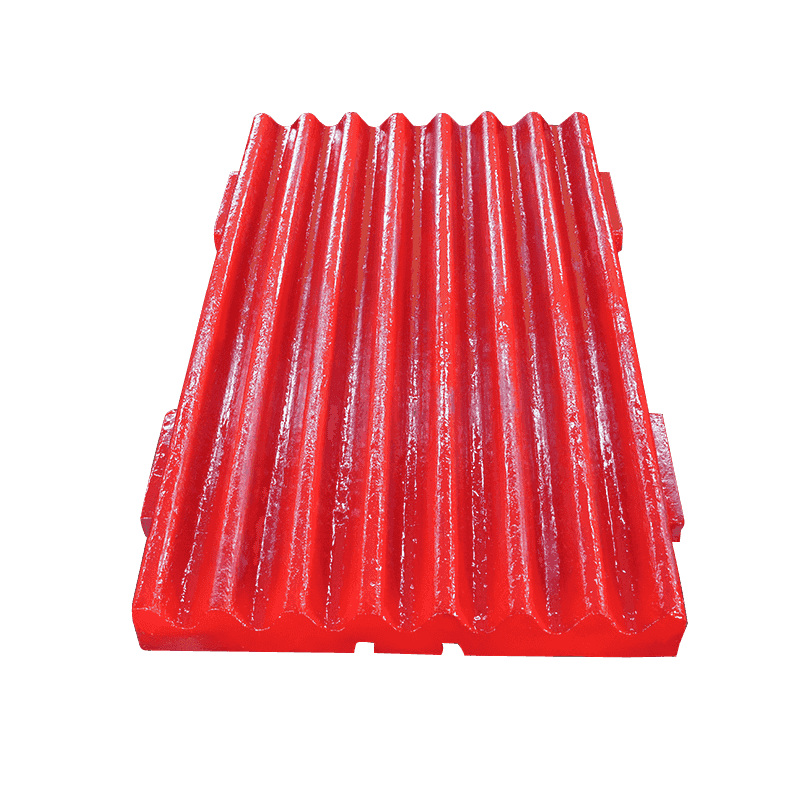
Jaw crushers are often used as a primary crusher in quarries and smaller mines. Material is squeezed between a fixed jaw and a moving jaw. The feed opening, closed-side setting, eccentric throw and toggle plate design determine capacity and product size. The fixed jaw plate and movable jaw plate are high-wear components because they are in direct contact with the rock. A plate that is too hard may crack under shock; a plate that is too soft may wear quickly. The balance between hardness and toughness is the practical design question.
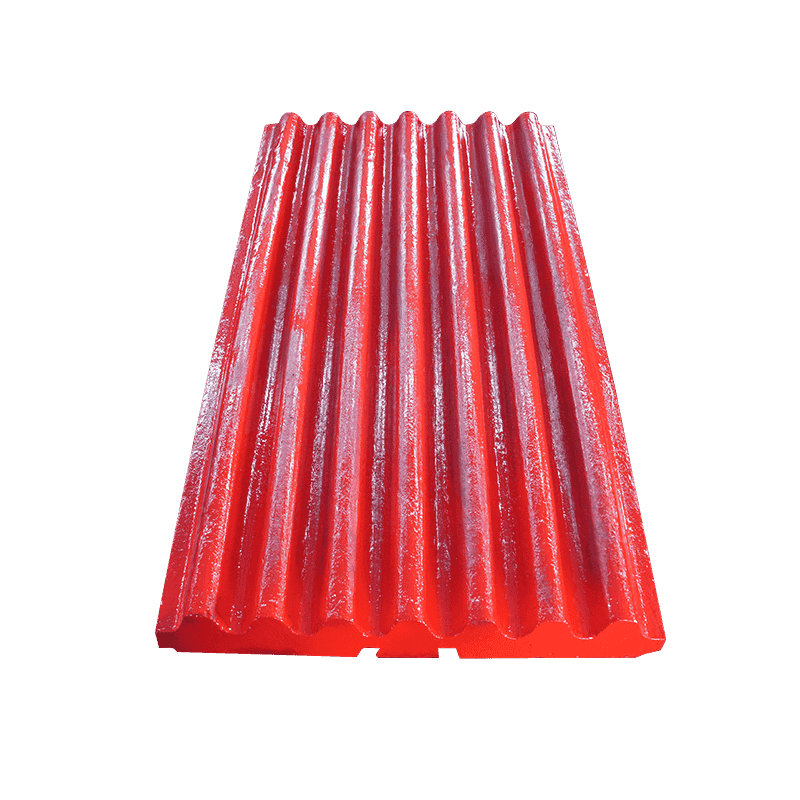
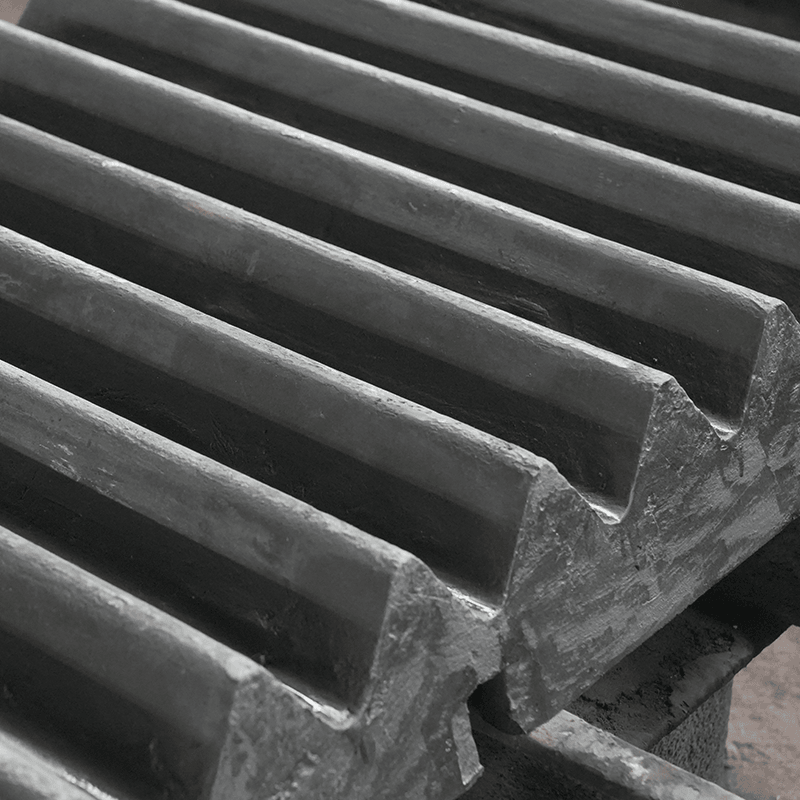 High Manganese Steel Fixed Jaw Plate for Jaw CrushersA high-manganese alloy fixed jaw plate for primary jaw crushers, relevant where wear resistance and impact toughness must be balanced with correct seating.View Product →
In a jaw crusher, the fixed jaw plate should be checked for even wear, cracks around bolt holes and fit against the jaw body. A poorly seated plate can move under load, causing bolt failure or premature breakage. The backing material and tightening procedure matter as much as the alloy grade.
Cone crushers
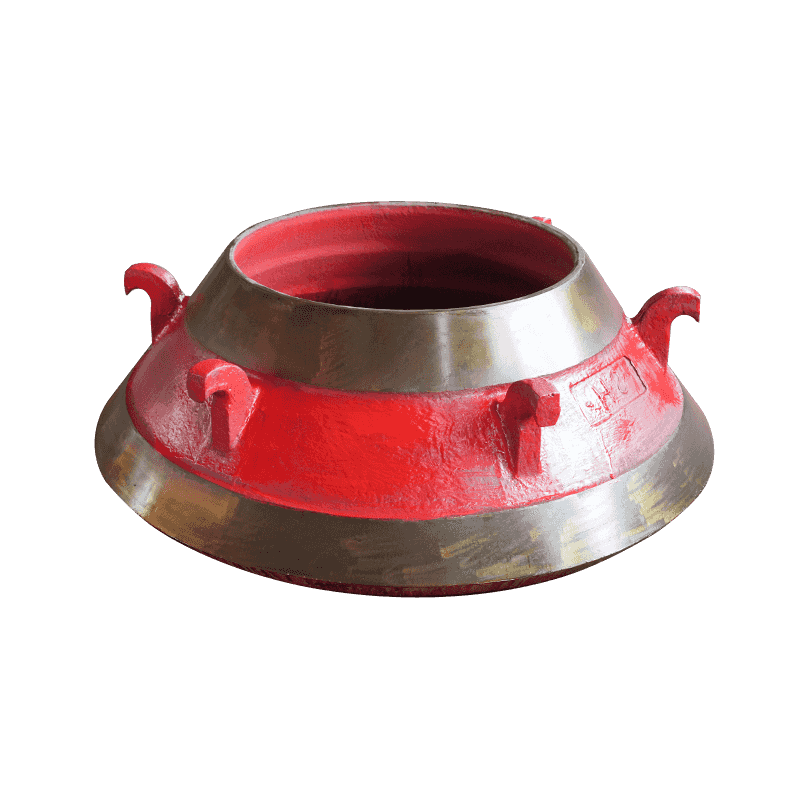
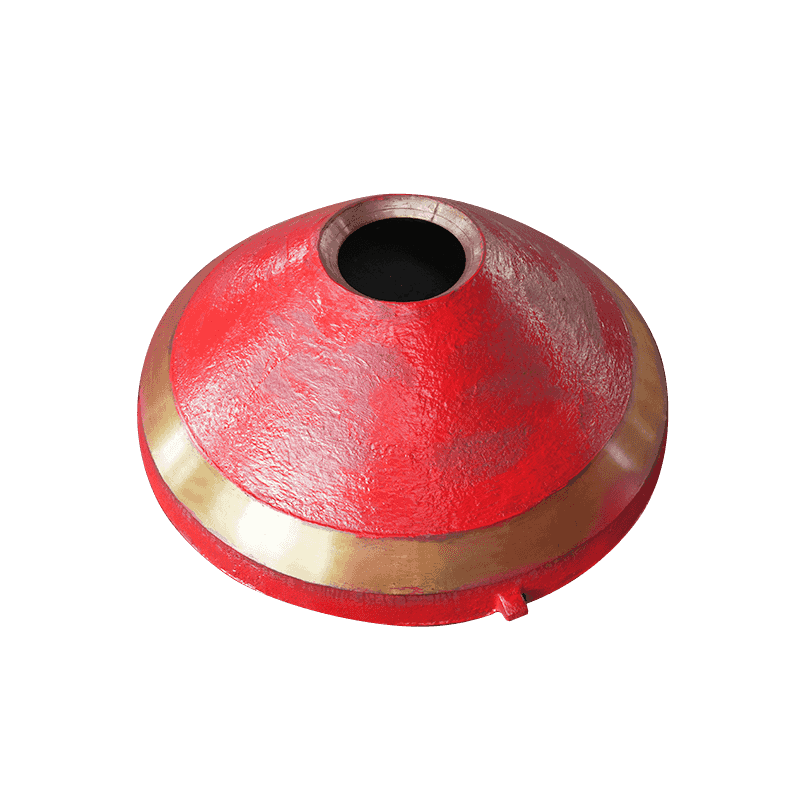
Cone crushers are used for secondary and tertiary reduction. They are sensitive to feed grading, moisture and the presence of tramp metal. The crushing chamber is formed by a crushing wall on the main shaft and a mortar wall or bowl liner. Both are wear parts. As the liners wear, the chamber profile changes, which affects throughput, power draw and product shape. Operators need to monitor wear and adjust the closed-side setting within the manufacturer's range.
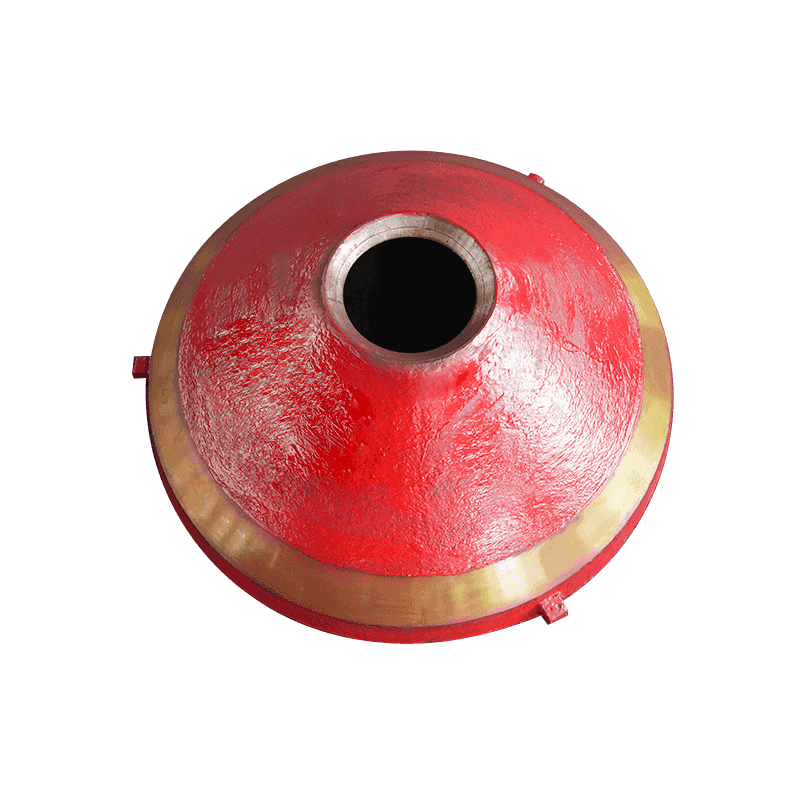 High Manganese Steel Crushing Wall for Cone CrushersA high-manganese crushing wall for cone crushers, relevant to secondary and tertiary reduction where liner wear and chamber profile affect throughput and product shape.View Product →
A cone crusher that is fed with too much fine material or too much moisture can pack and lose capacity. A crusher that is fed with material that is too large for the chamber can bridge or stall. The liner material must survive both abrasion and impact, and the fit of the liner to the cone body must be correct to avoid backing material failure.
Impact crushers
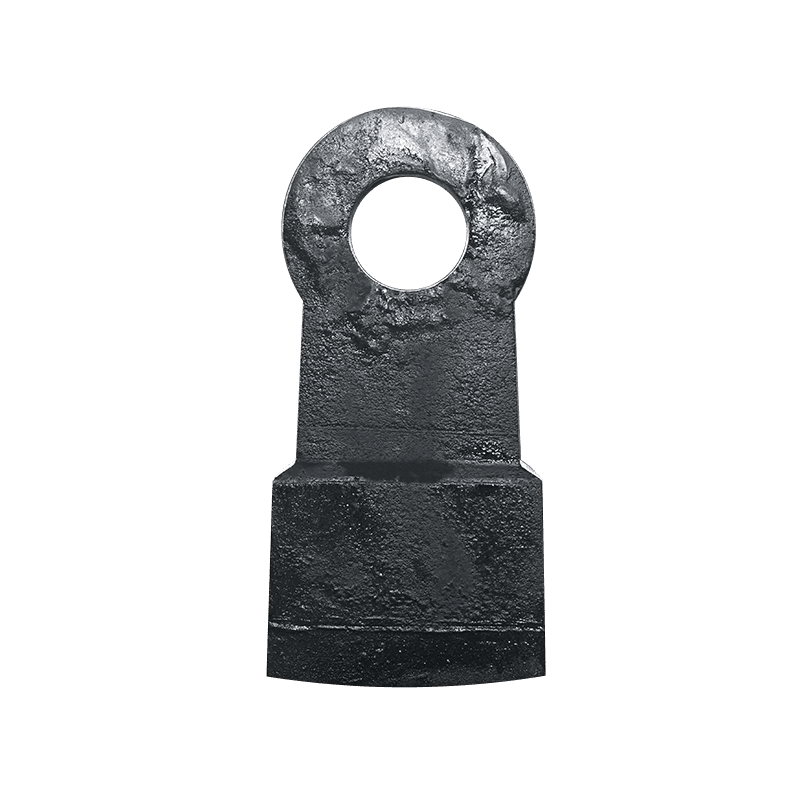
Impact crushers use rotating blow bars or hammers to strike material against breaker plates. They are common in recycling, limestone and other low-to-medium abrasion applications where a cubical product is important. The blow bar is the main wear part. High chromium castings are often used where abrasion resistance is the priority, while high manganese steel may be preferred where impact energy is high and toughness is needed.
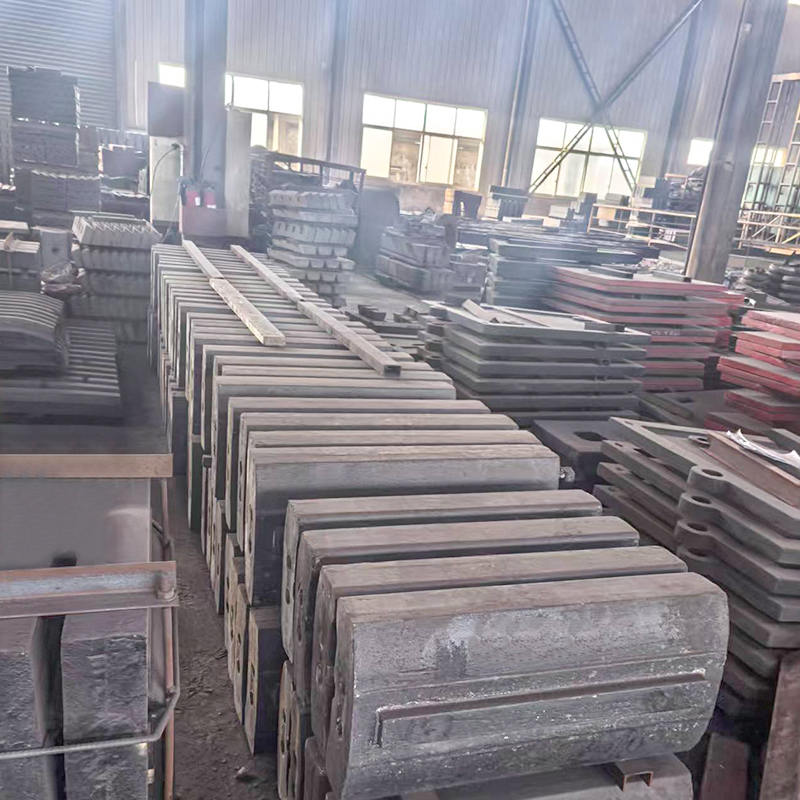 High Chromium Plate Hammer for Impact CrushersA high-chromium plate hammer for impact crushers, relevant where abrasion resistance is the priority and blow bar wear affects rotor balance and product shape.View Product →
Impact crusher performance depends on rotor speed, blow bar metallurgy, breaker plate clearance and feed distribution. Uneven wear on the blow bars can cause vibration and poor product shape. Operators should rotate or replace bars in matched sets where the manufacturer recommends it, and check the rotor for balance after changeout.
Screening and feeding
Screens separate material by size and are often the real bottleneck in a plant. A screen that is overloaded or blinded cannot make the required separation, and the oversize material recirculates to the crusher. Screen media selection depends on aperture, wear life and the risk of pegging. Feeders control the rate and distribution of material into the crusher, which affects chamber filling and power draw.
Grinding and Milling Machines: The Long Tail of Wear
Grinding mills reduce particles to a fine size for liberation or product specification. SAG mills use large steel balls and the ore itself as grinding media. Ball mills use steel balls. Vertical roller mills use rollers and a table to grind material between surfaces. In all cases, the wear parts are central to availability and cost.
Mill liners protect the shell and control the motion of the charge. Liner profile affects lift, impact and wear rate. Grinding media wear affects power draw and product size. In vertical mills, roller sleeves and table liners are exposed to abrasive wear and require regular inspection. A liner that is changed too late can damage the shell or cause unscheduled downtime. A liner that is changed too early wastes labour and material.
High chromium castings are often selected for wear-resistant mill components where abrasion dominates. Chromium molybdenum niobium alloy steel liners may be used where a combination of hardness and toughness is required. The choice should be based on the wear mechanism, not only on a hardness number. For example, high chromium castings can be a good fit for abrasive slurry or fine-particle wear, while high manganese steel may be better where impact loading is severe.
Auxiliary and Support Machines: What Keeps the Site Running
The auxiliary system is easy to ignore until it stops. Conveyors move material between stages and can be a major source of downtime if belts, idlers or pulleys fail. Pumps handle slurry, water and reagent transfer. Fans and ventilation systems control dust and underground air quality. Dewatering systems keep pits and underground workings dry. Dust suppression systems protect workers and equipment.
Water recycling is part of the machine system in many operations. Thickeners, clarifiers, filter presses and return water pumps allow process water to be reused. This reduces fresh water demand and discharge volume, but it also creates wear and scaling challenges in pipes, pumps and valves. A water recycling circuit that is poorly maintained can raise operating cost and reduce plant availability.
Power supply and control systems are also part of the picture. Variable frequency drives, motor protection, switchgear and automation can improve efficiency and protect equipment. However, they add complexity. Maintenance teams need the skills and spares to support the control system, not only the mechanical equipment.
How Mining Machines Are Selected: A Practical Buying Framework
Machine selection starts with the deposit and the product, not with a brochure. The same crusher model can perform well in one rock type and struggle in another. A useful specification process covers the following points:
- Feed size distribution, including the largest lump and the proportion of fines.
- Rock properties such as compressive strength, abrasion index, moisture content and clay content.
- Required product size, shape and gradation, including tolerances around the target curve.
- Throughput required at peak and average, not only at nominal rated capacity.
- Availability targets, maintenance windows and the site's ability to handle major component changeouts.
- Power, fuel, water and compressed air requirements.
- Local support, spare parts lead time and the supplier's ability to provide wear part drawings.
- Total cost per tonne, including wear parts, energy, labour and downtime.
Consider a primary jaw crusher. A 1,200 mm feed opening means little if the crusher cannot accept the largest lump at the required rate, or if the discharge setting cannot be adjusted to suit the downstream cone crusher. The feed opening, eccentric throw, closed-side setting and horsepower must be checked together. The same logic applies to a haul truck: payload, body volume, gradeability and tyre rating must match the route, not just the brochure.
Procurement risk often sits in the details. A wear part that is dimensionally close but not exact can cause backing material failure, bolt stretch or premature cracking. A casting with the right hardness but the wrong toughness can fail in impact service. A supplier that cannot provide material certificates, dimensional reports or traceability may create problems that only appear after the part is installed. The lowest price per kilogram is rarely the lowest cost per tonne.
Wear Parts and Castings: The Small Components That Decide Uptime
Crusher wear parts are a small share of the machine's capital cost but a large share of its operating cost. Jaw plates, cone liners, blow bars, impact liners, hammer heads, roller sleeves and mill liners are all consumables. Their life depends on the rock, the crusher setting, the feed distribution and the material grade. The two most common families in crushing are high manganese steel and high chromium castings, but they are not interchangeable.
| Property or use case | High manganese steel | High chromium castings |
|---|---|---|
| Wear mechanism | Good under high impact; work-hardens under load | Good under abrasion; high hardness supports wear resistance |
| Toughness | Generally high; can absorb shock | Lower than manganese steel in heavy impact |
| Typical parts | Jaw plates, cone crushing walls, mortar walls, impact liners | Blow bars, plate hammers, wear plates, mill liners, roller sleeves |
| Risk if misapplied | Rapid wear in severe abrasion without enough impact | Cracking or breakage under high shock loading |
For a deeper comparison of high manganese steel versus chromium castings, the decision should be based on the actual wear mechanism. A cone crusher liner in a hard, abrasive rock may need a different grade from a jaw plate in a site with occasional tramp metal. A blow bar in a recycling application may need a different balance from a blow bar in limestone. The supplier should ask about feed size, moisture, throughput and failure mode before recommending a grade.
Nantong Haoshun Casting Co., Ltd. describes a 21-year history, a 20,000+ square metre plant and exports to more than 10 countries. Its catalogue is organised around high manganese and high chromium castings for jaw, cone, impact, vertical shaft impact and vertical mill applications. That structure is useful for buyers because it maps wear parts to the machine and installation position rather than offering a single generic alloy. The company also lists chromium wear-resistant cast iron grinding balls and chromium molybdenum niobium alloy steel liners, which extend the wear part discussion into milling and grinding circuits.
When evaluating a casting supplier, ask for dimensional reports, material certificates, casting traceability and references for similar applications. Check the fit of bolt holes, the flatness of mating surfaces and the condition of machined faces. A wear part that does not seat correctly can fail before its alloy grade matters.
Maintenance, Safety and Operational Discipline
Mining machines are high-energy systems. Safety depends on lockout, isolation, confined space procedures, correct lifting equipment and trained personnel. A crusher chamber is not a safe place to inspect without following the site's isolation and permit system. A conveyor cannot be cleaned safely while it is running. A haul truck cannot be inspected under a raised body without proper props or locks.
Maintenance planning should include wear measurement, not only breakdown repair. Jaw plates, cone liners and blow bars should be measured at defined intervals so that changeout can be planned before the wear profile changes the chamber or damages the machine. Backing material must be mixed and cured according to the supplier's instructions. Bolts must be torqued correctly and rechecked after the recommended running hours. Cracks should be investigated, not welded without engineering approval.
Dust and heat are constant factors. Dust can enter bearings, seals and electrical enclosures. Heat can affect lubricant life and hydraulic performance. Water can cause corrosion and slurry build-up. A maintenance programme that addresses these conditions will get more life from the machine and the wear parts.
Common Misunderstandings and Procurement Risks
The first misunderstanding is language. A search for "what are mining machines" can return crypto mining rigs, which are computer systems for cryptocurrency mining. Industrial mining machines are heavy equipment for mineral extraction and processing. The two uses of "mining" are unrelated in engineering terms.
The second misunderstanding is that a harder wear part is always better. Hardness can improve abrasion resistance, but it can also reduce toughness. A very hard blow bar may crack in a high-impact application. A manganese steel plate may wear quickly in a low-impact abrasive application where a chromium casting would last longer. The correct choice depends on the wear mechanism, the feed material and the machine's operating parameters.
The third misunderstanding is that price per kilogram is a useful comparison. A cheap liner that wears out in half the time and causes an extra changeout is expensive. A higher-cost casting that lasts longer and fits correctly can be cheaper per tonne. Buyers should compare cost per operating hour or cost per tonne, including labour, downtime and risk.
The fourth risk is dimensional fit. Wear parts are not generic blocks of steel. They have bolt patterns, radii, backing surfaces and chamber profiles. A part that is close but not correct can cause poor seating, movement, cracking or reduced chamber performance. Dimensional verification before installation is a basic control.
A Practical Checklist for Buyers and Operators
Use the following checklist when specifying or reviewing mining machines and their wear parts:
- Define the material flow and identify the bottleneck stage before choosing equipment.
- Match the machine to the rock properties, feed size and required product size, not only to the nominal capacity.
- Check the loading and hauling match, including pass count, road grade and payload control.
- Confirm crusher feed opening, closed-side setting and horsepower against the largest lump and the target throughput.
- Select wear parts by wear mechanism, not by hardness alone.
- Verify dimensions, bolt patterns and mating surfaces before installation.
- Ask for material certificates, traceability and references for similar applications.
- Plan wear inspection and changeout before the part profile affects machine performance.
- Include dust, water, heat and maintenance access in the site design.
- Compare total cost per tonne, including downtime and labour, rather than purchase price alone.
Mining machines are best understood as a chain of matched equipment and consumables. The drill, blast, loader, truck, crusher, screen and mill all influence one another. The wear parts inside the crusher and mill are not minor accessories; they determine how long the machine can run at the setting that the plant needs. A practical specification process, disciplined maintenance and a supplier who can match the casting to the application will usually deliver more value than a single larger machine or a lower purchase price.
Previous Post
No previous article
Next Post
Mechanical Items Examples: From Fasteners to Industrial Crusher Wear Parts
Related Products

-
- Phone:
-
+86 182 6058 7168
+86 (0)513 6890 5666
-
- Email:
- [email protected]
-
- Address:
- Wanghao Industrial Park, Haimen City, Nantong City, Jiangsu Province, China
-
- Media:

