 English
  русский
  عربى
عربى high chrome vs High Manganese Steel:
high chrome iron, the material used in High Chromium Castings, excels at resisting abrasive wear in moderate impact environments. Crusher High Manganese Steel Castings excel at high impact wear where the surface work hardens automatically under repeated blows. Neither material is universally superior. The correct choice depends on the dominant wear mechanism in the application. Understanding what is a hammer mold, how chromium transforms cast iron, and what is the effect of high manganese in steel allows engineers and procurement teams to specify the right casting material from the start rather than discovering an expensive mismatch after equipment goes into service.
| Property | high chrome (High Chromium Castings) | Crusher High Manganese Steel Castings |
|---|---|---|
| Chromium content | 11 to 30 percent | Less than 2 percent typically |
| Manganese content | Less than 1 percent typically | 11 to 22 percent |
| Hardness as supplied | 58 to 66 HRC after heat treatment | 200 to 250 HB as cast |
| Hardness in service | Stable, does not increase further | Work hardens to 450 to 550 HB under impact |
| Best wear mode | Abrasion, low to moderate impact | High impact combined with abrasion |
| Typical applications | Ball mill liners, slurry pump parts, grinding balls | Jaw plates, cone mantles, impact crusher blow bars |
high chrome Iron and High Chromium Castings: What They Are and How They Work
high chrome iron is a family of white cast iron alloys containing between 11 and 30 percent chromium by weight, with carbon content typically ranging from 2 to 3.5 percent. The defining characteristic of this material is the formation of hard chromium carbide particles within the iron matrix during solidification. These carbides, primarily of the M7C3 type where M represents chromium and iron atoms combined, have a measured hardness of 1600 to 1800 Vickers, making them among the hardest phases found in any engineering alloy. It is the volume fraction and distribution of these carbides, rather than the iron matrix alone, that gives high chrome castings their outstanding resistance to abrasive wear.
High Chromium Castings are produced by melting a carefully controlled charge of iron, ferrochrome, and carbon in an electric induction furnace, then pouring the liquid metal into sand or permanent molds at temperatures of 1380 to 1450 degrees Celsius. As the casting cools, chromium and carbon combine ahead of the solidification front to precipitate the hard carbide phase before the iron matrix solidifies around them. The resulting microstructure consists of hard M7C3 carbides embedded in a matrix that can be austenite, martensite, or a mixture of the two depending on the chromium to carbon ratio and any subsequent heat treatment applied.
Grades and Composition of high chrome Iron
| Grade | Carbon (percent) | Chromium (percent) | Hardness after Heat Treatment | Typical Use |
|---|---|---|---|---|
| Low Cr (11 to 14 percent) | 2.4 to 3.0 | 11 to 14 | 56 to 62 HRC | Moderate abrasion, pumps |
| Mid Cr (15 to 19 percent) | 2.0 to 3.2 | 15 to 19 | 60 to 64 HRC | Mill liners, impeller wear parts |
| High Cr (20 to 28 percent) | 2.0 to 3.5 | 20 to 28 | 62 to 66 HRC | Grinding balls, coal mill parts |
Heat treatment is essential for achieving the best performance from High Chromium Castings. The as cast condition often contains some retained austenite in the matrix, which is softer than martensite and reduces abrasion resistance. A destabilization heat treatment at 950 to 1050 degrees Celsius followed by air or oil quenching converts the austenite to martensite, raising the matrix hardness from around 400 HV to 600 to 700 HV and substantially improving the overall wear life of the part. Properly heat treated High Chromium Castings typically last three to five times longer than unalloyed white iron or pearlitic gray iron parts under equivalent abrasive wear conditions.
Does chromium affect iron? The Metallurgical Answer in Practical Terms
Does chromium affect iron? Profoundly, in at least four distinct and measurable ways that explain why adding chromium to iron transforms an otherwise brittle and moderately hard material into one of the most effective wear resistant alloys in industrial use.
First, chromium dramatically changes the type of carbide that forms during solidification. In ordinary unalloyed cast iron, carbon precipitates as iron carbide (Fe3C, known as cementite), which has a hardness of approximately 800 to 900 Vickers. When chromium is present above about 10 percent, carbon combines preferentially with chromium to form M7C3 carbides with a hardness of 1600 to 1800 Vickers, roughly double that of cementite. This single effect more than doubles the resistance of the casting to abrasive particles cutting across its surface.
Second, chromium is a strong ferrite stabilizer and carbide former, meaning it reduces the activity of carbon in the liquid iron and controls the solidification path of the alloy. By adjusting the chromium to carbon ratio, foundry engineers can control whether the casting solidifies as a hypoeutectic, eutectic, or hypereutectic structure, each of which gives a different distribution and morphology of the carbide phase and therefore a different combination of hardness and toughness in the final part.
Third, chromium increases the hardenability of the iron matrix, meaning the matrix transforms from austenite to martensite during cooling at slower cooling rates than would be needed without chromium. This allows thicker High Chromium Castings to achieve a through hardened martensitic matrix without the need for rapid quenching that would risk cracking a complex shaped casting. A chromium content of 15 to 20 percent, combined with small additions of molybdenum and nickel, typically provides enough hardenability to achieve a fully martensitic matrix even in sections over 100 millimeters thick when air quenched.
Fourth, chromium improves the oxidation and corrosion resistance of iron. While high chrome castings are not stainless steel, the chromium in the matrix does form a thin protective oxide layer on exposed surfaces that slows atmospheric corrosion compared to ordinary cast iron. In wet grinding applications where the abrasive slurry is acidic or contains chlorides, this modest corrosion resistance contributes meaningfully to the service life of the casting beyond what hardness alone would predict.
what is a hammer mold: Design, Function, and Connection to wear resistant Castings
what is a hammer mold? In the context of metal casting and crusher wear parts manufacturing, a hammer mold is the shaped cavity into which molten metal is poured to produce crusher hammers, also called blow bars or impact hammers, which are the striking elements mounted on the rotor of an impact crusher or hammer mill. The mold defines the geometry, size, and surface finish of the finished hammer, and its design has a direct influence on the internal soundness, microstructure, and ultimately the service life of the cast wear part it produces.
A hammer mold for producing High Chromium Castings or Crusher High Manganese Steel Castings is typically made from chemically bonded silica sand, chromite sand, or a combination of both. Chromite sand is preferred for high chrome iron hammer castings because its higher thermal conductivity promotes rapid solidification at the outer surface of the casting, which refines the carbide structure near the working surface and improves abrasion resistance at the point where the hammer strikes rock or mineral ore. The mold cavity is usually oriented so that the thicker striking face of the hammer is at the bottom of the mold, ensuring that any shrinkage porosity migrates toward a riser or feeder head at the thinner end rather than forming internal voids in the working section.
Key Features of a Properly Designed Hammer Mold
- Accurately machined or formed cavity that controls the hammer's striking face dimensions to within plus or minus 2 millimeters so the rotor remains balanced after fitting multiple hammers
- A correctly sized riser or feeder head positioned above the thickest section to compensate for the volumetric shrinkage that occurs as the metal solidifies and contracts
- Venting channels that allow gases generated by the hot metal to escape from the mold cavity without becoming trapped as porosity in the casting
- A mold coat or wash applied to the cavity surface that prevents metal penetration into the sand grains, which would cause a rough surface and difficulty in separating the casting from the mold after solidification
- Draft angles on vertical surfaces that allow the pattern to be withdrawn cleanly from the sand mold before pouring without damaging the mold cavity walls
- A central hole or bore formed by a sand core to create the mounting aperture through which the hammer is secured to the rotor pin or bolt
The quality of the hammer mold directly determines the internal soundness and dimensional accuracy of every crusher hammer poured into it, which is why experienced wear parts foundries invest in dimensional inspection of each mold cavity before every pour rather than assuming mold quality is stable between uses. A mold that has been used multiple times may develop erosion or distortion that causes the finished hammer to be out of dimension, leading to rotor imbalance and accelerated bearing wear in the crusher itself.
What is high manganese steel used for? Applications Across Heavy Industry
What is high manganese steel used for? High manganese steel, also known as Hadfield steel after its inventor Robert Hadfield who first produced it in 1882, is used in any application where a metal surface must absorb repeated high energy impacts while simultaneously resisting abrasive wear. The defining property that makes high manganese steel uniquely suited to these conditions is its ability to work harden at the surface under impact while maintaining a tough, ductile interior that absorbs the energy of each blow without fracturing.
The standard composition of high manganese steel is 10 to 14 percent manganese and 1.0 to 1.4 percent carbon, with the remainder being iron and small quantities of silicon and sometimes chromium or molybdenum for specific performance enhancements. In the water quenched and solution treated condition, the entire structure is austenite, a face centered cubic crystal structure that is inherently tough and ductile despite the high carbon content. This is the fundamental reason why high manganese steel can absorb impact without cracking even at very high carbon levels that would make ordinary steel extremely brittle.
- Crusher jaw plates, toggle seats, and cheek plates in jaw crusher installations where the feed material falls directly onto the liner surface and every loading cycle involves both compression and sliding abrasion simultaneously
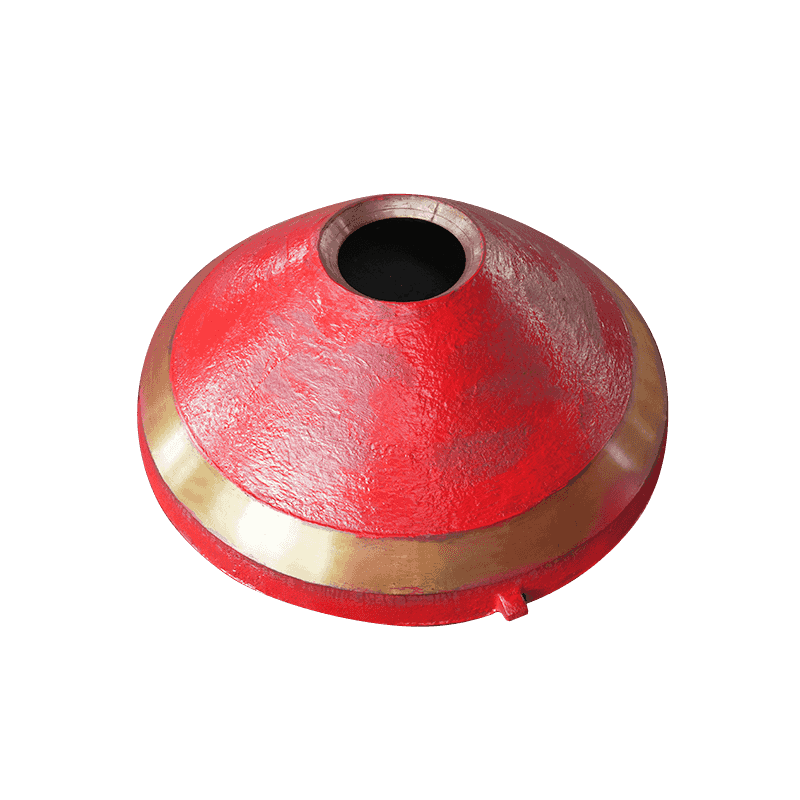
- Cone crusher mantles and bowl liners where the steel must accept thousands of compressive impacts per hour from the crushing action while the rock slides across the liner surface, creating both abrasive and impact wear simultaneously
- Railway track frogs and crossings where wheel flanges strike the rail at irregular angles and the cumulative impact energy is enormous, yet the part must maintain its dimensional profile for train safety over millions of wheel passes
- Dredge bucket teeth and excavator lip assemblies where the ground material being dug varies from soft clay to hard rock and the loading mode changes from pure abrasion to high impact from one bucket fill to the next
- Ball mill feed end liners where incoming ore feed impacts the liner directly as it falls from the feed chute and the impact velocity is sufficient to trigger meaningful surface work hardening on every contact
- Ballistic protection plates in military and security applications where the steel must deform plastically rather than shattering under projectile impact, absorbing kinetic energy in the deformed layer while the backing material remains structurally intact
The critical requirement for successful performance of high manganese steel in any of these applications is that the impact stress at the working surface must be high enough to trigger the work hardening transformation. In applications where the contact stress is too low, the steel simply wears away as relatively soft austenite without ever developing the hardened surface layer that justifies its use over cheaper alternatives. This is why high manganese steel is not a universal solution and should only be specified when impact loading is confirmed to be significant in the wear mechanism.
What is the effect of high manganese in steel? The Metallurgy of Work Hardening
What is the effect of high manganese in steel? Manganese at concentrations above 10 percent produces a set of metallurgical effects that are qualitatively different from the effects of manganese at the 0.5 to 2 percent levels found in most structural and tool steels. Understanding these effects explains both the exceptional performance of high manganese steel under impact and the specific conditions in which it fails to perform as expected.
Austenite Stabilization
The most fundamental effect of high manganese in steel is the stabilization of the austenite crystal structure from elevated temperature down to room temperature and below. Manganese lowers the martensite start temperature of steel very effectively, and at 12 percent manganese combined with 1.2 percent carbon, the martensite start temperature falls to approximately minus 50 degrees Celsius. This means the steel retains its austenitic structure at all service temperatures encountered in normal crushing or earthmoving operations, which is essential because it is the austenite structure itself that provides both the initial toughness and the capacity for work hardening.
Strain Induced Transformation and Work Hardening
When the austenite surface of high manganese steel is subjected to high contact stress from an impacting rock or projectile, the austenite in the stressed zone undergoes a strain induced transformation to epsilon martensite, a hexagonal close packed structure, and to alpha prime martensite, a body centered tetragonal structure. Both transformation products are significantly harder than the parent austenite. Simultaneously, the high dislocation density generated by the plastic deformation creates additional strengthening by dislocation interaction, the classical mechanism of strain hardening. The combined effect of transformation and dislocation hardening raises the surface hardness from an initial 200 to 250 HB in the as treated condition to 450 to 550 HB in heavily worked service, a factor of two to two and a half increase achieved without any heat treatment.
| Manganese Content | As Treated Hardness | Work Hardened Surface | Toughness | Work Hardening Rate |
|---|---|---|---|---|
| 10 to 12 percent | 180 to 220 HB | 400 to 480 HB | High | Fast |
| 12 to 14 percent | 200 to 250 HB | 450 to 550 HB | Very high | Moderate |
| 18 to 22 percent | 200 to 240 HB | 500 to 580 HB | Very high | Slow but sustained |
Embrittlement Risk From Carbide Precipitation
The most important negative effect of high manganese at elevated temperatures is carbide precipitation at grain boundaries. If high manganese steel is held in the temperature range of 300 to 900 degrees Celsius for any extended time, carbon migrates to austenite grain boundaries and precipitates as iron manganese carbide. These grain boundary carbides embrittle the steel severely, reducing impact resistance from the very high values seen in fully austenitic material to dangerously low levels. This is why all Crusher High Manganese Steel Castings must be solution treated at 1050 to 1100 degrees Celsius and then immediately water quenched to dissolve any carbides that formed during casting and to suppress further carbide precipitation during cooling. A part that has been improperly treated or that has been subjected to welding heat without subsequent solution treatment will fail prematurely by brittle fracture rather than by the gradual surface wear that is the expected failure mode.
Crusher High Manganese Steel Castings: Manufacturing, Grades, and Performance in Service
Crusher High Manganese Steel Castings are among the most technically demanding products in the wear parts foundry industry because they must satisfy simultaneous requirements for dimensional accuracy, internal soundness, correct chemical composition, and fully austenitic microstructure, with any single shortcoming being sufficient to cause premature failure in the hostile environment of a crushing or grinding circuit.
The manufacturing sequence for Crusher High Manganese Steel Castings begins with melting a carefully verified charge of steel scrap, ferromanganese, ferrosilicon, and carbon additions in an electric arc furnace or induction furnace. The manganese content is verified during the heat by spectrometric analysis before tapping, since any deviation from the target range of 11 to 14 percent manganese materially affects the work hardening behavior of the finished casting. Carbon content must be maintained between 1.0 and 1.4 percent for standard grades, with the upper end of the carbon range preferred for applications where abrasion resistance is more important than toughness, and the lower end preferred for applications where fracture resistance is the primary concern.
After pouring into sand molds designed to avoid hot spots and promote directional solidification toward risers, the castings are allowed to cool fully in the mold before shakeout. The as cast structure contains grain boundary carbides that must be eliminated before the part enters service. Solution heat treatment at 1050 to 1100 degrees Celsius dissolves these carbides into the austenite matrix, after which immediate water quenching arrests their reformation. The quench must be rapid enough to cool the thickest section through the carbide precipitation range before any meaningful precipitation occurs, which is one reason why very thick Crusher High Manganese Steel Castings, above 200 millimeters in section, present a technical challenge and may require specialized quench facilities or alloy additions that increase the stability of the austenite.
- Standard grade (11 to 14 percent Mn, 1.0 to 1.4 percent C): the most widely used specification for jaw plates, cone mantles, and impact crusher blow bars in standard quarry and mining applications
- Modified grade with chromium (11 to 14 percent Mn, 1.0 to 1.4 percent C, 1 to 3 percent Cr): chromium addition raises the as treated hardness slightly and is preferred for feeds containing a high proportion of fine, sharp abrasive particles where the abrasion component of wear is significant relative to impact
- High manganese grade (18 to 22 percent Mn, 1.0 to 1.3 percent C): used in applications with very high impact energy and where the standard grade has shown a tendency to develop surface cracks from repeated severe impact loading
- Ultra hard grade with titanium or vanadium microalloying: these additions refine the austenite grain size during solidification and reduce the tendency for carbide precipitation during cooling from the solution treatment temperature, improving toughness in thick section castings
Performance monitoring of Crusher High Manganese Steel Castings in service is best done by measuring the hardness of the working surface at periodic intervals using a portable hardness tester. A surface hardness reading of 450 HB or above confirms that the work hardening process has been successfully activated, which means the crushing conditions are delivering sufficient impact stress to utilize the material's full potential. A surface hardness that remains near the as treated value of 200 to 250 HB after substantial service time is a diagnostic indicator that the impact stress in that application is insufficient to trigger work hardening, and the material specification should be reconsidered in favor of a pre hardened high chrome casting.
Selecting Between high chrome and Crusher High Manganese Steel Castings: A Practical Framework
The most reliable framework for choosing between high chrome and Crusher High Manganese Steel Castings starts with characterizing the wear mechanism rather than simply naming the machine type, since the same machine can present different dominant wear modes depending on the feed material and operating conditions.
- Identify the primary wear mechanism by examining the worn surface of a previous wear part under magnification: deep parallel grooves indicate high stress abrasion where High Chromium Castings will excel; a pitted, deformed surface with a highly polished and hardened zone indicates impact wear where Crusher High Manganese Steel Castings are the correct choice
- Assess the hardness of the feed material relative to the wear part material: when the feed material is harder than 60 percent of the casting surface hardness, abrasion dominates and high chrome iron is preferred; when feed hardness is lower than the casting surface hardness, impact is the primary failure mechanism and high manganese steel is preferred
- Consider the consequence of brittle fracture: high chrome castings are harder but less tough than high manganese steel castings, meaning they are more vulnerable to fracture if an uncrushable object such as a steel tramp metal piece enters the crusher; where tramp metal risk is high, Crusher High Manganese Steel Castings provide significantly better protection against catastrophic fracture
- Review the operating temperature: both materials perform best at normal ambient temperatures, but high chrome castings are more sensitive to thermal shock from water quenching during operation, while high manganese steel must never be heated above 300 degrees Celsius in service or during maintenance welding without subsequent solution treatment
- Evaluate the feasibility of hardfacing repair: Crusher High Manganese Steel Castings can be built up with welded hardfacing deposits when they thin down to a minimum section, extending service life significantly at lower cost than full replacement; high chrome castings are difficult to weld and are typically replaced rather than repaired when worn
As a practical starting point: specify Crusher High Manganese Steel Castings for jaw crushers, cone crushers, gyratory crushers, and impact crusher blow bars processing hard rock with significant tramp metal risk. Specify High Chromium Castings for ball mills, rod mills, slurry pumps, coal mills, and any application where the abrasive is fine, the impact energy is low, and the feed material is consistently sized without tramp metal risk.
Frequently Asked Questions
What is high chrome iron and how does it differ from ordinary cast iron?
high chrome iron is a white cast iron alloy containing 11 to 30 percent chromium and 2 to 3.5 percent carbon. The chromium causes hard M7C3 carbides to form during solidification, with hardness of 1600 to 1800 Vickers compared to 800 to 900 Vickers for the iron carbides in ordinary white iron. This carbide difference makes high chrome iron two to three times more resistant to abrasive wear than ordinary cast iron under equivalent conditions.
Does chromium affect iron in terms of toughness as well as hardness?
Does chromium affect iron toughness? Yes, but in a complex way. Chromium additions in high chrome iron improve hardenability of the matrix, which allows the matrix to transform from brittle retained austenite to tougher martensite during heat treatment, modestly improving toughness. However, high chrome iron as a class remains significantly less tough than high manganese steel because the very high carbide volume fraction makes it inherently brittle. Chromium additions above 30 percent begin to reduce toughness by forming more continuous carbide networks.
What is a hammer mold and what materials are used to make it?
what is a hammer mold? It is the shaped cavity into which molten metal is poured to produce crusher hammers or blow bars. Most hammer molds are made from chemically bonded silica sand for standard production or chromite sand for high chrome castings where faster surface solidification is needed. The mold includes risers, vents, and a sand core to form the mounting bore of the finished hammer.
What is high manganese steel used for in mining applications specifically?
What is high manganese steel used for in mining? It is used for jaw crusher plates, cone crusher mantles and bowl liners, gyratory crusher main shaft sleeves, impact crusher blow bars where toughness is critical, dredge bucket teeth, and ball mill feed end liners. In all these applications the material receives sufficient impact loading in service to work harden its surface from 200 to 250 HB in the as treated state to 450 to 550 HB under operating conditions.
What is the effect of high manganese in steel on weldability?
What is the effect of high manganese in steel on welding? High manganese steel can be welded using austenitic manganese steel electrodes or wires, but the heat affected zone must not be allowed to remain in the 300 to 900 degree Celsius range for more than a few seconds during each weld pass. Excessive heat input causes carbide precipitation at grain boundaries in the heat affected zone, which embrittles the material adjacent to the weld. Keeping interpass temperatures below 260 degrees Celsius and using short, stringer bead techniques minimizes this risk.
How are Crusher High Manganese Steel Castings heat treated and why is this step critical?
Crusher High Manganese Steel Castings are solution treated at 1050 to 1100 degrees Celsius for a time sufficient to dissolve all grain boundary carbides formed during casting, then immediately water quenched to cool the casting through the carbide precipitation range before any significant re precipitation occurs. This treatment is critical because Crusher High Manganese Steel Castings in the as cast condition contain grain boundary carbides that reduce impact toughness by 60 to 80 percent compared to the fully austenitic solution treated condition.
Can High Chromium Castings be used in jaw crushers?
High Chromium Castings are generally not recommended for jaw crusher jaw plates where large feed pieces generate sudden, high energy compressive impacts. The high carbide volume fraction in high chrome iron makes it susceptible to brittle fracture under the severe impact loading typical of primary jaw crushing. Crusher High Manganese Steel Castings are the standard specification for jaw plates precisely because their austenitic toughness allows them to absorb these impacts without fracturing. High Chromium Castings are however used successfully in secondary cone and ball mill applications where impact energy per event is much lower.
What happens if high manganese steel is used in a low impact application?
If Crusher High Manganese Steel Castings are used in an application where contact stress is insufficient to trigger the work hardening transformation, the surface remains in the soft austenitic state at 200 to 250 HB and the wear rate is high because neither hardness nor the work hardened structure is protecting the surface. The result is short service life that may be inferior even to ordinary carbon steel, which at least provides some baseline hardness from its pearlitic or bainitic microstructure without requiring impact to develop its properties.
What alloy additions improve High Chromium Castings for specific applications?
Molybdenum at 0.5 to 3 percent is the most common alloy addition to High Chromium Castings because it significantly increases hardenability, allowing thicker castings to achieve a fully martensitic matrix after air quenching. Copper at 0.5 to 1.5 percent provides a secondary hardenability boost at lower cost than molybdenum. Nickel at 0.5 to 1.5 percent improves toughness of the martensitic matrix modestly. Titanium in small quantities below 0.1 percent can refine the carbide distribution by acting as a grain refiner during solidification.
How should procurement teams verify the quality of Crusher High Manganese Steel Castings from a new supplier?
Quality verification of Crusher High Manganese Steel Castings from a new supplier should include: a chemical composition certificate verified by independent spectrometric analysis of a sample cut from the actual casting rather than from the ladle only; a Brinell hardness test on the machined surface of the casting to confirm it falls within the 180 to 250 HB range consistent with fully austenitic solution treated material; a microstructural examination by metallographic section to confirm austenitic matrix with no visible grain boundary carbide films; and dimensional inspection against the engineering drawing to verify the casting will fit the crusher correctly without modification.