 English
  русский
  عربى
عربى Home / News / Industry News / How Are High Manganese Steel Castings Used, and How Do They Compare to High Carbon Steel and Grinding Balls?
How Are High Manganese Steel Castings Used, and How Do They Compare to High Carbon Steel and Grinding Balls?
What High Manganese Steel Castings Are and When They Are the Right Choice
High Manganese Steel Castings are wear-resistant austenitic steel components containing 10% to 14% manganese and 1.0% to 1.4% carbon, produced by casting into molds and then water-quenched from above 1,050 degrees Celsius to achieve a fully austenitic microstructure that work-hardens dramatically under impact loading. They are the dominant wear part material in impact-driven applications: jaw crusher plates, cone crusher mantles, impact crusher blow bars, gyratory crusher liners, rail crossings, and excavator teeth where the combination of repeated impact and abrasion simultaneously challenges the material.
The fundamental selection rule is this: choose High Manganese Steel Castings when impact is the dominant stress mechanism and the work-hardening effect can be activated; choose high chrome iron castings when abrasion dominates and impact stress is too low to drive manganese steel work-hardening. Manganese steel that does not work-harden (because impact stress is insufficient) remains soft at 180 to 220 Brinell and wears rapidly. In the right application, its work-hardened surface reaches 450 to 550 Brinell while the core stays tough enough to resist fracture.
For grinding media, crusher balls and forged steel grinding balls serve different functions and are selected based on the grinding application, required hardness, and impact-to-abrasion ratio within the mill.
What Is High Manganese Steel Grade: ASTM A128 and International Equivalents
The question of what is high manganese steel grade is best answered by reference to ASTM A128, the primary specification standard for austenitic manganese steel castings in North American and international commerce. ASTM A128 defines multiple grades differentiated by manganese content, carbon content, and alloying additions that modify the base material for specific performance requirements.
ASTM A128 Grade Definitions
| Grade | Carbon (%) | Manganese (%) | Other Elements | Best Application |
|---|---|---|---|---|
| A | 1.05 to 1.35 | 11.0 min | None specified | Standard impact applications |
| B-1 | 0.90 to 1.05 | 11.5 to 14.0 | None | Lower carbon for toughness |
| B-2 | 1.05 to 1.20 | 11.5 to 14.0 | None | Standard grade, most common |
| B-3 | 1.12 to 1.28 | 11.5 to 14.0 | None | Higher carbon for abrasion |
| C | 1.05 to 1.35 | 11.5 to 14.0 | Cr 1.5 to 2.5% | Chrome-modified for hard abrasives |
| D | 0.70 to 1.30 | 11.5 to 14.0 | Mo 0.9 to 1.2% | Heavy section castings |
| E-1 | 0.70 to 1.30 | 15.0 to 18.0 | None | Maximum toughness requirement |
The most widely specified grade for crusher wear parts is ASTM A128 B-2 or B-3, which provides the standard manganese content range of 11.5% to 14% with the carbon range that balances work-hardening response against toughness. Grade C (with chromium addition) is specified for applications involving very hard abrasives (silica above 70% SiO2, quartzite, flint) where the additional carbides from chromium improve initial wear resistance before full work-hardening develops. Grade D (with molybdenum) is specified for thick-section castings above 100mm where molybdenum improves hardenability and reduces the risk of incomplete solution annealing in the casting interior.
What Is High Manganese Steel Used For: Applications Across Industries
The question of what is high manganese steel used for spans a remarkably wide range of industries and applications, all connected by the common requirement for material that can withstand severe impact-abrasion combined with the risk of catastrophic loading events that would fracture harder, more brittle materials. The work-hardening mechanism and high toughness of High Manganese Steel Castings make them uniquely suited to this combination of requirements.
Mining and Mineral Processing
Mining is the largest single application sector for High Manganese Steel Castings globally. The processing of hard rock minerals requires crushing equipment that contacts extremely hard, abrasive feed material at high energy, creating exactly the impact-abrasion conditions where manganese steel excels:
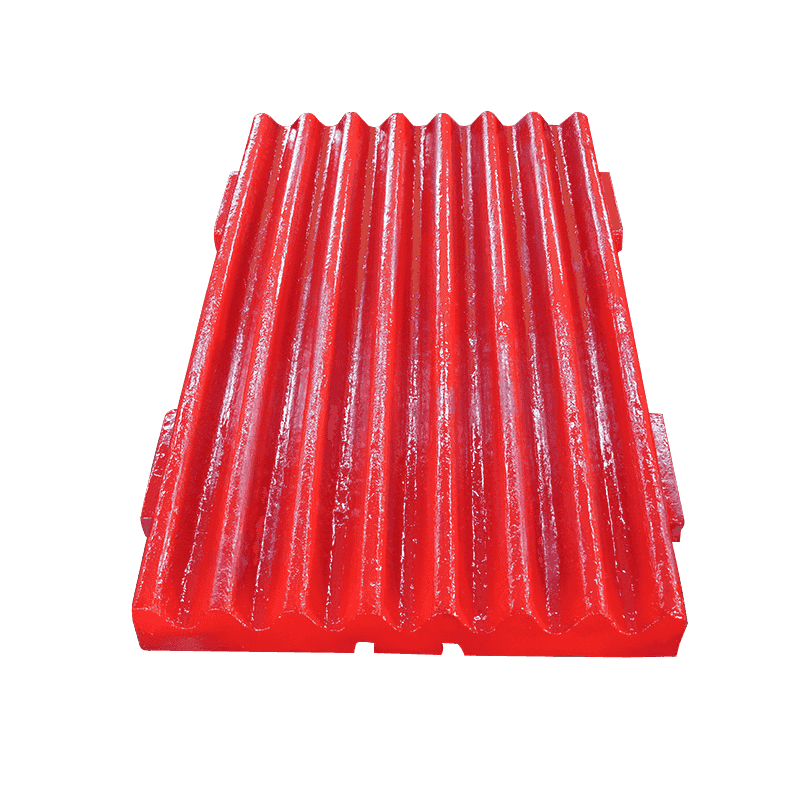
- Jaw crusher wear plates (jaw dies): The fixed and swing jaw plates of jaw crushers are the most commonly replaced High Manganese Steel Castings in quarrying and hard rock mining. A 600mm x 900mm jaw crusher processes 100 to 300 tonnes of hard rock per hour, and the jaw plates typically last 1,500 to 5,000 tonnes of processed material depending on rock hardness before replacement. Grade B-2 or C manganese steel provides the best performance balance in this application.
- Cone crusher mantles and concave rings: The inner mantle and outer concave bowl liner of cone crushers are typically the second and third largest volume High Manganese Steel Castings in a hard rock processing plant. The hemispherical shape and large mass (300 to 2,000 kg per component in large primary cone crushers) requires careful foundry practice with properly designed risers to prevent internal shrinkage porosity.
- Gyratory crusher liners: Primary gyratory crushers processing run-of-mine rock from large open pit mines use the largest single High Manganese Steel Castings produced in most foundries: the spider bushing assembly, concave segment rings, and mantle for large primary gyratories can weigh 5,000 to 15,000 kg per component.
- Impact crusher blow bars and impact aprons: Horizontal shaft impact (HSI) crushers and vertical shaft impact (VSI) crushers use manganese steel blow bars and impact aprons in applications where limestone, concrete recycling, and similar moderately hard feed materials are processed. For very hard abrasive feed in VSI crushers, high chrome iron is sometimes preferred over manganese steel.
Rail and Transportation Infrastructure
Railway track crossings (frogs and switches) are among the largest non-mining applications for High Manganese Steel Castings. The crossing point where rail wheels must traverse the gap in the rail experiences intense repeated impact loading at high frequency that would rapidly fatigue and fracture high carbon steel or cast iron, while the work-hardening of manganese steel allows the crossing to become progressively harder and more resistant to impact damage with service. A rail crossing cast from ASTM A128 Grade B-2 manganese steel typically lasts 3 to 10 times longer than an equivalent component made from pearlitic high carbon steel rail in heavy-haul freight rail applications.
Earth Moving and Excavation
Excavator bucket teeth, cutting edges, and digging lips experience severe combined impact and abrasion from rock-bearing soil, shale, and blasted rock material. Manganese steel teeth work-harden from the initial soft state during the first hours of use as rocks strike and abrade the tooth surface, progressively improving resistance to further wear. Loader bucket lips and motor grader blades operating in gravelly and rocky terrain are similarly specified in manganese steel for extended service life compared to conventional structural steel alternatives.
High Manganese Steel vs High Carbon Steel: Which to Choose and Why
The comparison of high manganese steel vs high carbon steel for wear applications is practically important because both materials are widely used in abrasive and impact-intensive industrial environments, and they are sometimes proposed as alternatives to each other in procurement decisions. Understanding the genuine performance differences prevents costly misapplication of either material.
Microstructural Basis of the High Manganese Steel vs High Carbon Steel Difference
The performance difference in high manganese steel vs high carbon steel comparisons originates in the fundamentally different microstructures of the two material families:
- High carbon steel microstructure: High carbon steels (0.6% to 1.0% carbon) typically have a pearlitic or martensitic microstructure depending on heat treatment. Pearlitic high carbon steel (as in rail steel) has a lamellar structure of ferrite and cementite that provides a combination of strength, hardness (250 to 350 HB), and moderate toughness. Martensitic high carbon steel (as in abrasion-resistant plate steels, AR400 to AR500) achieves hardness of 400 to 500 HB through quench hardening but has limited toughness at these hardness levels.
- High manganese steel microstructure: High manganese steel has a fully austenitic microstructure after solution annealing and water quenching. The austenite is initially soft (180 to 220 HB) but transforms progressively to a work-hardened state under impact loading, ultimately reaching 450 to 550 HB at the working surface while the bulk of the casting remains tough austenite. This transformation involves both strain-induced martensite formation and mechanical twinning of the austenite crystal structure.
Direct Performance Comparison: High Manganese Steel vs High Carbon Steel
| Performance Property | High Manganese Steel (Mn 12%, C 1.2%) | High Carbon Steel (C 0.8%, Pearlitic) | Winner |
|---|---|---|---|
| Initial hardness (as delivered) | 180 to 220 HB | 250 to 350 HB | High carbon steel |
| In-service surface hardness | 450 to 550 HB (work hardened) | 250 to 350 HB (limited increase) | High manganese steel |
| Impact toughness (Charpy J) | 100 to 200 J | 15 to 60 J | High manganese steel |
| Resistance to fracture under heavy impact | Excellent | Moderate to poor | High manganese steel |
| Low-impact abrasion resistance | Poor to moderate (if not work hardened) | Good | High carbon steel |
| Machinability | Very poor | Moderate | High carbon steel |
| Performance with tramp metal in feed | Excellent (tough, absorbs shock) | Poor (brittle fracture risk) | High manganese steel |
The practical decision rule for high manganese steel vs high carbon steel is clear: wherever significant impact loading is present alongside abrasion, and wherever tramp metal or unplanned overloading events are possible, High Manganese Steel Castings provide better total performance and lower catastrophic failure risk than high carbon steel alternatives. For pure low-stress abrasion without significant impact (conveyor chutes, slurry pipes, fine grinding), high carbon martensitic steels often provide better wear rate performance because the manganese steel cannot develop the work-hardened surface that requires impact loading to achieve.
Riser in Casting: Function, Design, and its Critical Role in High Manganese Steel Quality
A riser in casting (also called a feeder or feed head) is a reservoir of liquid metal attached to the casting during pouring that remains liquid longer than the main casting body and feeds molten metal into the solidifying casting to compensate for the volumetric shrinkage that occurs as the metal transitions from liquid to solid state. Understanding the function of a riser in casting is directly relevant to the quality of High Manganese Steel Castings because shrinkage porosity in inadequately risered manganese steel castings is a primary cause of premature wear part failure in service.
Why High Manganese Steel Castings Need Effective Risers
All metals shrink when they solidify from liquid to solid, and steel shrinks by approximately 3% to 4% in volume during solidification. If this shrinkage is not compensated by liquid metal feeding from a riser, the void created by shrinkage forms inside the casting as porosity: either dispersed microporosity distributed through the casting volume, or concentrated macroporosity (a shrinkage cavity) in the region that solidifies last. High Manganese Steel Castings are particularly susceptible to shrinkage defects because:
- High solidification shrinkage: Austenitic manganese steel has a higher solidification shrinkage than carbon steel, approximately 4% to 5% volumetrically, requiring a larger riser volume relative to casting volume than lower-alloy steels.
- High pour temperature: Manganese steel is poured at 1,480 to 1,540 degrees Celsius, significantly higher than carbon steel. The greater superheat means the riser in casting remains liquid longer relative to the casting, which is beneficial for feeding, but also means greater total shrinkage must be compensated.
- Variable section thickness: Crusher wear parts including jaw plates, cone mantles, and gyratory concave rings have complex geometries with significantly varying section thicknesses. Thick sections cool more slowly than thin sections, creating a complex pattern of solidification fronts that must be anticipated in riser design to ensure feeding paths remain open until all thick sections have solidified.
Types of Riser in Casting Designs
- Open top riser: A cylindrical reservoir open at the top that remains liquid due to atmospheric pressure equalizing through the open top. Simple to design and verify (the riser top remains concave during solidification if feeding is occurring correctly, creating a visible shrinkage pipe in the riser rather than in the casting). Standard for most medium-complexity High Manganese Steel Castings.
- Blind (enclosed) riser: A riser completely enclosed within the mold with no opening to atmosphere. Used where the casting geometry does not permit a top-accessible riser position, or where a pressurized riser system using an exothermic riser sleeve is employed. Requires an atmospheric vent or an exothermic igniter to ensure the riser top does not freeze before feeding is complete.
- Exothermic riser: A riser surrounded by an exothermic sleeve or topping compound that generates heat during the pouring process, maintaining the riser metal at higher temperature than the surrounding mold and extending the riser's feeding duration. Exothermic risers can reduce the required riser volume by 30% to 50% compared to conventional sand risers for equivalent feeding performance, significantly reducing metal yield loss to risering and lowering the cost per kilogram of good casting produced.
- Side riser (lateral feeder): A riser attached to the side of the casting rather than the top, used for flat or horizontal sections where top risering would leave too much distance between the riser and the feeding target. Critical for the wide, flat jaw plate sections of large jaw crusher castings where a single top riser may not reach the far end of the casting before the metal path freezes.
Riser Sizing: The Caine and Modulus Methods
The two most widely used methods for calculating riser size in foundry practice are the Caine method (empirical, based on casting-to-riser volume ratio) and the Modulus method (based on the surface area to volume ratio of the casting section being fed). The Modulus method (also called the Chvorinov rule-based method) states that the riser will remain liquid longer than the casting section it feeds if the riser's modulus (volume divided by cooling surface area) is at least 1.2 times the modulus of the thickest section being fed. For High Manganese Steel Castings, a riser modulus multiplier of 1.2 to 1.4 times the casting section modulus is standard practice, with the higher factor used for higher-risk thick sections and for manganese steel's higher shrinkage compared to carbon steel.
Crusher Balls and Forged Steel Grinding Balls: Selection Guide for Mineral Processing
Crusher balls and forged steel grinding balls are the two principal categories of grinding media used in ball mills, rod mills, and SAG (semi-autogenous grinding) mills in mineral processing plants, cement works, and power generation fuel preparation facilities. Understanding the distinction between these two product categories and the performance factors that determine correct selection is essential for optimizing grinding circuit operating costs and product quality.
Crusher Balls: Definition and Characteristics
The term crusher balls in the grinding media context refers to cast iron or cast steel grinding balls produced by pouring liquid metal into ball-shaped molds, as opposed to forged balls produced by hot working of rolled steel bar. Cast crusher balls are widely produced in three material categories:
- High chrome cast iron crusher balls: The most widely used premium grinding ball material in wet grinding ball mill applications. Produced from white iron with 10% to 30% chromium content, achieving hardness of 58 to 66 HRC throughout the ball cross-section through destabilization heat treatment. The dense network of hard M7C3 chromium carbides in the iron matrix provides excellent resistance to the abrasion-dominated wear mechanism of fine ore grinding. High chrome crusher balls achieve wear rates of 30 to 80 grams per tonne of ore processed in typical copper, gold, and iron ore ball mill applications, compared to 100 to 200 grams per tonne for lower-quality cast iron alternatives.
- Low chrome cast iron crusher balls: Cast iron balls with 1% to 3% chromium, providing lower hardness (45 to 55 HRC) and lower wear resistance than high chrome alternatives, at significantly lower purchase cost. Suitable for less abrasive ores and for applications where the incremental cost of high chrome is not economically justified by reduced wear rate.
- Martensitic cast steel balls: Cast from medium-carbon alloy steel and quench hardened to a martensitic microstructure. Provides higher toughness than cast iron alternatives (important in SAG mills and primary ball mills where impact loading is high) with moderate wear resistance. A useful intermediate option between the toughness of forged balls and the hardness of high chrome cast iron.
Forged Steel Grinding Balls: Production and Performance Advantages
Forged steel grinding balls are produced by hot forging of heated steel bar billets in progressive dies that form the spherical shape through compressive plastic deformation, followed by immediate quench hardening in water or polymer quench to develop the martensitic microstructure that provides grinding media hardness. This production process creates a fundamentally different internal structure compared to cast crusher balls:
- Elimination of casting porosity: The hot forging process closes any internal porosity present in the starting billet material through plastic deformation at high temperature, producing a fully dense internal structure. Cast balls, regardless of how well they are produced, retain at least some level of microporosity from solidification shrinkage, which reduces local material strength and creates initiation sites for fracture under impact loading.
- Superior toughness from wrought microstructure: The hot working of forging refines the steel grain structure and closes any as-cast dendritic segregation from the billet, producing a uniform, fine-grained wrought microstructure after quench hardening. This wrought microstructure has significantly higher impact toughness than the cast structure of equivalent-hardness cast iron balls. Forged steel grinding balls at 60 to 65 HRC hardness have fracture toughness 2 to 4 times higher than cast high chrome iron balls at equivalent hardness, making them the preferred specification for SAG mills and primary ball mills where ball-to-ball and ball-to-liner impact energy is high enough to fracture brittle cast iron media.
- Uniform hardness through the cross-section: Quality forged steel grinding balls are through-hardened by quenching from the forging heat immediately after the forging step, producing a martensitic structure from the surface to the center of the ball. This through-hardness ensures that as the ball wears in service, the exposed fresh material has the same hardness as the original surface, maintaining consistent grinding performance throughout the ball's service life. Some lower-quality forged balls may have inadequate through-hardness with softer cores that become exposed as the ball wears, causing accelerated wear rate and inconsistent mill performance as ball charge composition drifts from specification.
Crusher Balls vs Forged Steel Grinding Balls: Application-Based Selection
| Application | Dominant Wear Mechanism | Recommended Grinding Media | Reason |
|---|---|---|---|
| Ball mill, secondary grinding (fine ore) | Abrasion dominant | High chrome crusher balls | Maximum hardness minimizes wear at low impact loads |
| SAG mill (primary coarse grinding) | High impact plus abrasion | Forged steel grinding balls | Toughness resists fracture at high impact energy |
| Cement ball mill | Moderate abrasion, moderate impact | High chrome crusher balls or forged | Both perform well; cost and local supply determine choice |
| Rod mill | Line contact abrasion, moderate impact | Forged steel grinding balls (rod equivalent) | Wrought structure resists bending fatigue in rods |
| Coal grinding (power plant) | Low stress abrasion | Low chrome crusher balls or forged (lower hardness) | Coal is soft; maximum hardness not needed |
Quality Verification for High Manganese Steel Castings and Grinding Media Procurement
Procurement of High Manganese Steel Castings and grinding media without adequate quality verification exposes buyers to significant financial risk from premature failure, productivity loss from unexpected replacement cycles, and safety risk from catastrophic fracture of substandard components under operating loads.
Chemical Analysis and Heat Treatment Verification
Every shipment of High Manganese Steel Castings should be accompanied by a spectrographic analysis report confirming the chemical composition of each heat of metal poured. For crusher wear parts, the minimum documentation includes: manganese content within the specified grade range (typically 11.5% to 14.0% for B-2), carbon content within the specified range (1.05% to 1.20% for B-2), silicon below 1.0%, phosphorus below 0.07%, and sulfur below 0.04%. Heat treatment records should show that every batch was solution annealed at a documented temperature above 1,050 degrees Celsius for sufficient time and water quenched at a sufficient rate to achieve full austenite throughout the casting cross-section.
Hardness Testing as a Quality Indicator
As-delivered hardness of correctly solution-annealed High Manganese Steel Castings should fall in the range of 180 to 220 Brinell. Hardness significantly above 250 HB indicates retained carbides from incomplete solution annealing, which dramatically reduces toughness and causes premature brittle fracture in service. Hardness significantly below 180 HB may indicate incorrect composition or measurement error and should be investigated before accepting the shipment.
For forged steel grinding balls, hardness testing at the center of cross-sectioned sample balls from each production batch confirms through-hardness. Quality forged steel grinding balls should show hardness variation of no more than 3 to 5 HRC from surface to center across the full ball diameter; greater variation indicates inadequate through-hardening during quench and predicts faster wear rate as the softer core material is exposed in service.
Frequently Asked Questions
1. What is high manganese steel grade most commonly used for crusher wear parts?
The most commonly specified grade for crusher wear parts is ASTM A128 Grade B-2 (carbon 1.05% to 1.20%, manganese 11.5% to 14.0%) for standard applications including jaw plates, cone mantles, and gyratory concave rings processing moderately hard rock. ASTM A128 Grade C (with 1.5% to 2.5% chromium addition) is specified for very hard, high-silica abrasives including quartzite, flint, and high-SiO2 ores where the additional chromium carbides improve initial wear resistance before full work-hardening develops. Grade D (with molybdenum) is specified for thick-section castings above 100mm where full solution annealing of the cross-section requires the hardenability improvement that molybdenum provides.
2. What is high manganese steel used for outside of the mining industry?
Beyond mining and mineral processing, high manganese steel is used for: railway track crossings (frogs and switches) where the work-hardening under repeated wheel impact extends service life 3 to 10 times compared to pearlitic rail steel; excavator bucket teeth and cutting edges in earth moving equipment; dragline bucket lips in coal and mineral mining; crusher hammers in scrap metal processing; shot blast machine components; industrial tractor and bulldozer undercarriage components; and military armor applications where the combination of toughness and work-hardening provides ballistic protection properties. Rail and mining applications together account for the large majority of global High Manganese Steel Castings production.
3. What is the main difference in high manganese steel vs high carbon steel for wear applications?
The main difference in high manganese steel vs high carbon steel is the work-hardening mechanism: high manganese steel starts soft (180 to 220 HB) but hardens progressively to 450 to 550 HB under impact loading while remaining tough and fracture-resistant. High carbon steel has moderate initial hardness (250 to 350 HB for pearlitic grades) that does not increase significantly in service, and has much lower impact toughness (15 to 60 J vs 100 to 200 J for manganese steel). The practical selection rule is: choose high manganese steel for applications with significant impact loading where work-hardening can be activated; choose high carbon steel (or high chrome iron) for low-impact abrasion applications where manganese steel would remain in the unhardened soft state and wear rapidly.
4. What is a riser in casting and why is it critical for High Manganese Steel Castings?
A riser in casting is a reservoir of liquid metal attached to the casting during pouring that feeds molten metal into the solidifying casting to compensate for the 3% to 5% volumetric shrinkage of steel during solidification. Without adequate risering, the shrinkage appears as internal porosity or surface shrinkage cavities in the casting, which significantly reduce the mechanical strength, toughness, and service life of the component. High Manganese Steel Castings are particularly demanding from a risering standpoint because they have higher solidification shrinkage than carbon steel, are poured at higher temperatures, and have complex geometric sections with varying thickness that create challenging solidification patterns requiring multiple strategically placed risers to ensure all sections are adequately fed.
5. When should I choose crusher balls over forged steel grinding balls?
Choose high chrome crusher balls over forged steel grinding balls when the application is a secondary ball mill grinding fine ore where abrasion is the dominant wear mechanism and individual ball-to-ball and ball-to-liner impact energies are relatively low. High chrome crusher balls achieve lower wear rates than forged steel balls in these abrasion-dominated conditions because their dense chromium carbide microstructure provides superior abrasion resistance. Choose forged steel grinding balls over crusher balls when the application is a SAG mill or primary ball mill where large feed rock creates high impact energy that would fracture the more brittle cast iron media, or when mill operational history shows high ball breakage rates with cast media that would be eliminated by the superior fracture toughness of forged balls.
6. How do I verify the quality of High Manganese Steel Castings from a supplier?
Verify quality of High Manganese Steel Castings through four documented checks: first, request the spectrographic chemical analysis report for each heat confirming manganese, carbon, silicon, phosphorus, and sulfur within the specified grade range; second, request heat treatment records confirming solution annealing above 1,050 degrees Celsius for the required time and water quenching; third, perform Brinell hardness testing on each casting lot and confirm the result falls within 180 to 220 HB (higher hardness indicates insufficient solution annealing); fourth, for critical applications, request a bend or impact test on test coupons cast from the same heat, confirming that the material bends substantially without brittle fracture, which is the definitive proof of correct austenitic microstructure.
7. What causes High Manganese Steel Castings to fracture in service?
Premature fracture of High Manganese Steel Castings in service is almost always caused by one of three root causes: undissolved grain boundary carbides from insufficient solution annealing (the most common cause, producing brittle inter-granular fracture under impact); sensitization from inadvertent reheating above 300 degrees Celsius after quenching (which can occur during welding repair or during service if the part overheats); or design overloading from tramp metal in the crusher feed that creates impact forces exceeding the toughness of even correctly treated manganese steel. Of these, incomplete heat treatment accounts for the majority of premature fracture cases and is entirely preventable through documented foundry process control and incoming quality testing.
8. Are forged steel grinding balls always better than crusher balls?
No. Forged steel grinding balls are better than cast crusher balls only in applications where impact loading is high enough to cause fracture of the more brittle cast media, and where the incremental cost of forged balls (typically 20% to 40% more expensive than equivalent high chrome cast balls) is justified by lower total grinding media cost from reduced breakage losses. In fine ore secondary ball mills where impact loading is moderate and abrasion dominates, high chrome cast crusher balls typically achieve lower wear rates and lower total grinding media cost than forged steel balls, making cast the economically superior choice for these specific applications. The correct selection requires an objective analysis of the specific mill's impact energy and abrasion regime rather than a blanket preference for either technology.
9. Can High Manganese Steel Castings be repaired by welding in the field?
Field welding repair of High Manganese Steel Castings is technically possible but requires strict precautions that are not practical in most field environments. The fundamental problem is that heating manganese steel above 300 degrees Celsius causes carbide precipitation at grain boundaries (sensitization), which dramatically reduces toughness and can cause brittle fracture of the repaired component under operational loading. Any welding repair must use austenitic manganese steel or austenitic stainless steel electrodes, must be performed with the casting cooled to below 20 degrees Celsius inter-pass temperature, and must avoid any preheating of the parent casting. In practice, most operations replace rather than repair worn or cracked High Manganese Steel Castings because field welding risks creating a component that appears repaired but has severely compromised toughness in the heat-affected zone.
10. What is the typical service life expectation for High Manganese Steel Castings in a jaw crusher?
Service life for High Manganese Steel Castings jaw plates in a jaw crusher varies significantly with feed rock hardness, crusher setting (closed side setting), and production rate, but typical industry benchmarks are: in hard granite or basalt (Bond Work Index above 15 kWh/t), jaw plate life of 2,000 to 5,000 tonnes processed per set of jaw plates; in medium-hard limestone or similar (Bond Work Index 8 to 14 kWh/t), 5,000 to 15,000 tonnes; in soft limestone or softer materials (Bond Work Index below 8 kWh/t), 15,000 to 30,000 tonnes or more. These figures assume correctly heat-treated Grade B-2 or B-3 manganese steel. Incorrectly heat-treated jaw plates with undissolved carbides may fail within hundreds of tonnes from brittle fracture rather than graduating through the expected wear-based service life.
Previous Post
High Chromium Castings vs High Manganese Steel Castings: The Comprehensive Guide
Next Post
Complete Technical Guide to High Chromium Castings and Abrasion Resistant Materials
Related Products

-
- Phone:
-
+86 182 6058 7168
+86 (0)513 6890 5666
-
- Email:
- [email protected]
-
- Address:
- Wanghao Industrial Park, Haimen City, Nantong City, Jiangsu Province, China
-
- Media:

