
 English
  русский
  عربى
عربى Home / News / Industry News / Commercial 50% Cone Crusher Spare Parts: When to Buy at the Right Wear Point
Commercial 50% Cone Crusher Spare Parts: When to Buy at the Right Wear Point
By the time a cone crusher's crushing wall reaches 50% wear, the practical window for ordering commercial 50% cone crusher spare parts is already open. Waiting until the manganese steel is paper-thin may feel like efficient inventory management, but it turns a scheduled liner change into an expensive race against the clock. For operations that depend on continuous crushing, the real question is not whether to replace worn parts, but when to confirm the order and which spare parts deserve the purchase.
What Does the 50% Wear Point Mean for Cone Crusher Spare Parts?
Every cone crusher produces a specific wear profile on its crushing wall and mortar wall. The profile changes with feed size, rock abrasiveness, moisture, crusher settings, and liner design. A 50% wear point is therefore not a universal number, but it is a useful commercial milestone. At that point, the liner still has enough steel to protect the crusher, yet enough working hours remain for a well-made replacement to arrive and be installed before the liner becomes unsafe.
Many maintenance teams make the mistake of treating the 50% wear point as a condition to inspect rather than a trigger to buy. If you wait until 90% wear, the lead time alone can force a shutdown. A simple planning table makes the logic easier to apply.
| Wear level | Recommended action | Main risk if ignored |
|---|---|---|
| 30% | Request quotes and confirm supplier capability | None immediate, but late sourcing later creates delays |
| 50% | Place the commercial spare parts order and schedule the change | Supply delays, longer downtime, unplanned maintenance |
| 80% | Prepare crusher and crew for the replacement | Liner breakage, frame damage, lost production |
| 90%+ | Stop the crusher before failure | Catastrophic wear-through and secondary damage |
The commercial 50% cone crusher spare parts order should be placed before the liner reaches 70% wear. That timing gives you a safety margin for production, shipping, and unexpected delays.
Material Grades That Matter for Crushing Wall and Mortar Wall
High manganese steel is still the workhorse material for cone crusher crushing walls and mortar walls. Its work-hardening behaviour means that under repeated impact, the surface becomes hard and wear-resistant while the core remains tough. The same chemical family covers several grades. You may see designations such as Mn13Cr2, Mn18Cr2, or variants that add molybdenum and nickel. The supplier should state the grade clearly and provide chemical analysis with each batch.
The 50% in the phrase commercial 50% cone crusher spare parts is a planning threshold, not a manganese percentage. Typical austenitic manganese steel contains roughly 12% to 24% manganese, with carbon and chromium adjusted for different impact conditions. A casting marketed simply as "high manganese" can hide a great deal of variation. Buy from a foundry that can tell you the exact composition, heat-treatment cycle, and hardness range.
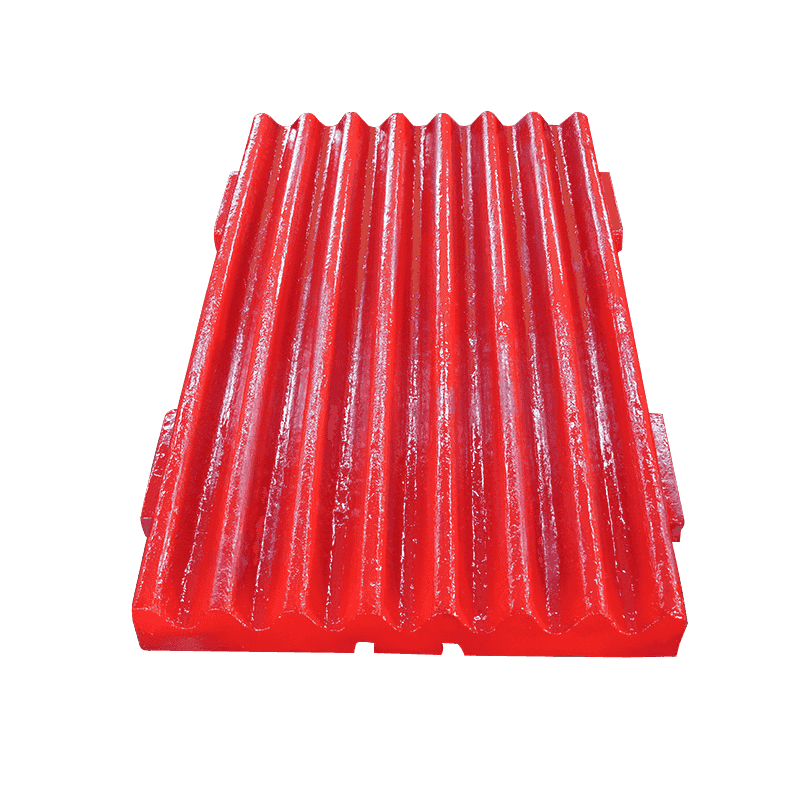
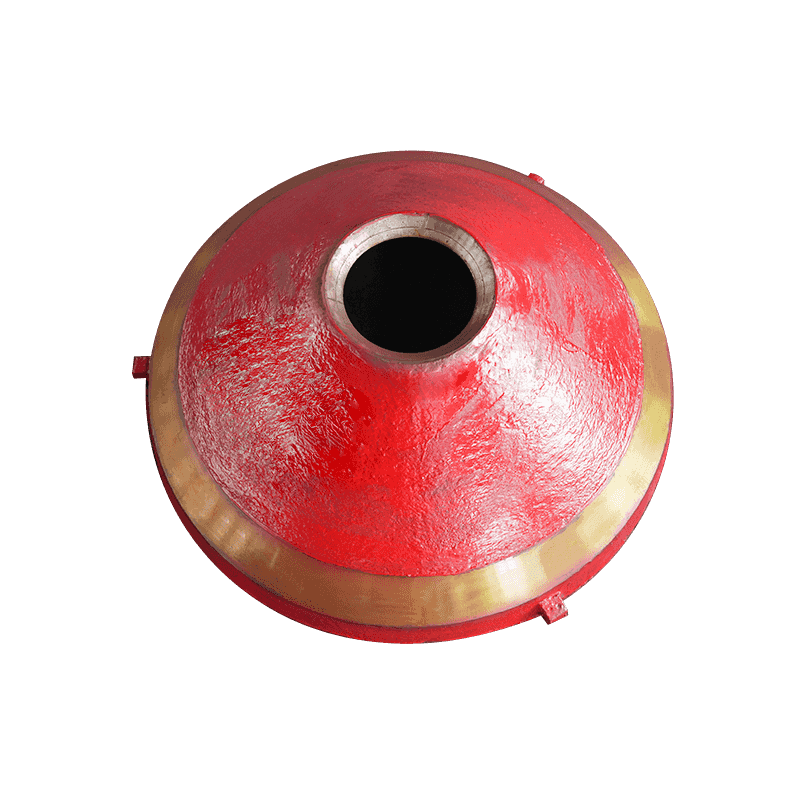 Cone Crusher High Manganese Steel Crushing WallHigh Chrome Plate Hammer for Impact CrusherView Product →
When you review the crushing wall, check the profile and alloy together. A thicker section cast in the wrong alloy will not match the original fit or wear life. Conversely, a precise alloy in a poorly machined casting can create stress concentrations during operation.
What to Verify Before Buying Commercial 50% Cone Crusher Spare Parts
Commercial spare parts are not automatically lower quality than OEM parts, but they are only as good as the foundry that makes them. Before you confirm an order, ask for verifiable details.
- Part number and equipment model: The crushing wall and mortar wall must match the exact cone crusher model, because the mounting geometry differs among manufacturers.
- Dimensional tolerances: Critical seating surfaces need to be checked against drawings, not assumed from a catalogue photo.
- Alloy certificate: Look for the percentages of manganese, chromium, molybdenum, and carbon. A certificate is not optional if you plan to standardise the part.
- Heat treatment evidence: High manganese steel must be water-quenched after casting to dissolve carbides and promote austenite. Ask how the foundry proves this step.
- Weight and wall thickness: Underweight castings can mean thin sections that fail early, so compare the net weight with the reference part.
- Inspection method: Ultrasonic testing, hardness testing, and chemical analysis show a supplier is serious about consistency.
This verification is especially important for commercial 50% cone crusher spare parts because the order is usually placed against a schedule. A bad batch discovered after the old liner is too worn leaves no time to source an alternative.
Cost and Downtime: The Real Financial Impact
Replacing a liner at 50% wear may seem early, but the true cost of a cone crusher spare part is not the invoice price. It is the cost per ton produced and the cost of lost production. If a crushing wall fails one week before the planned change, you pay for the replacement wall, the emergency logistics, the idle screen and conveyor, and the crew that stands by.
Ordering commercial 50% cone crusher spare parts at the halfway point gives you a buffer equal to roughly half of the liner's remaining life. If the current liner lasts 200 hours, a 50% order point leaves 100 hours for manufacturing, freight, and installation planning. That is usually enough for a foundry to cast, machine, and ship a replacement.
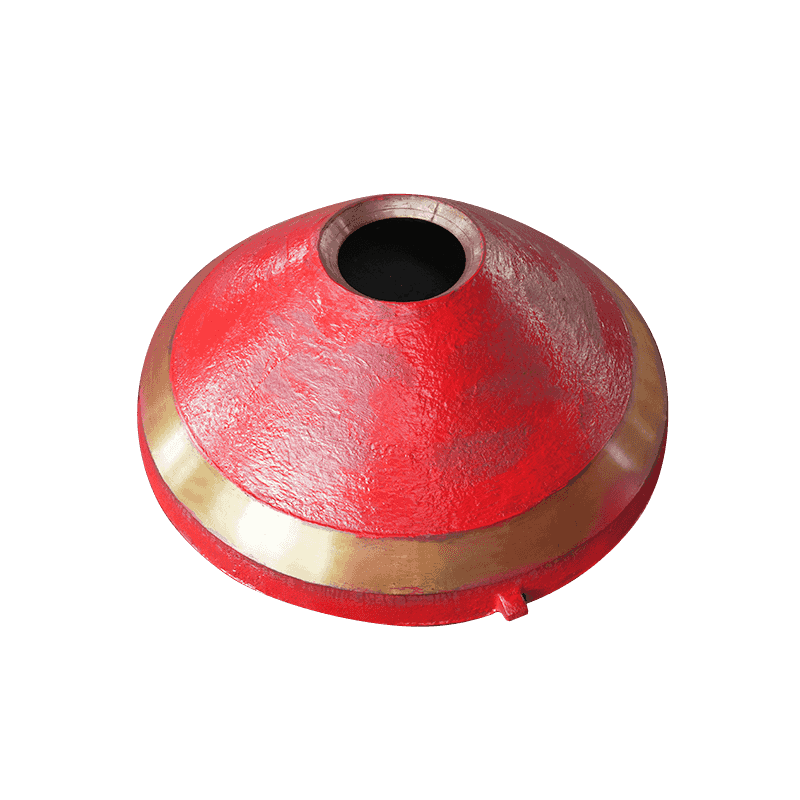
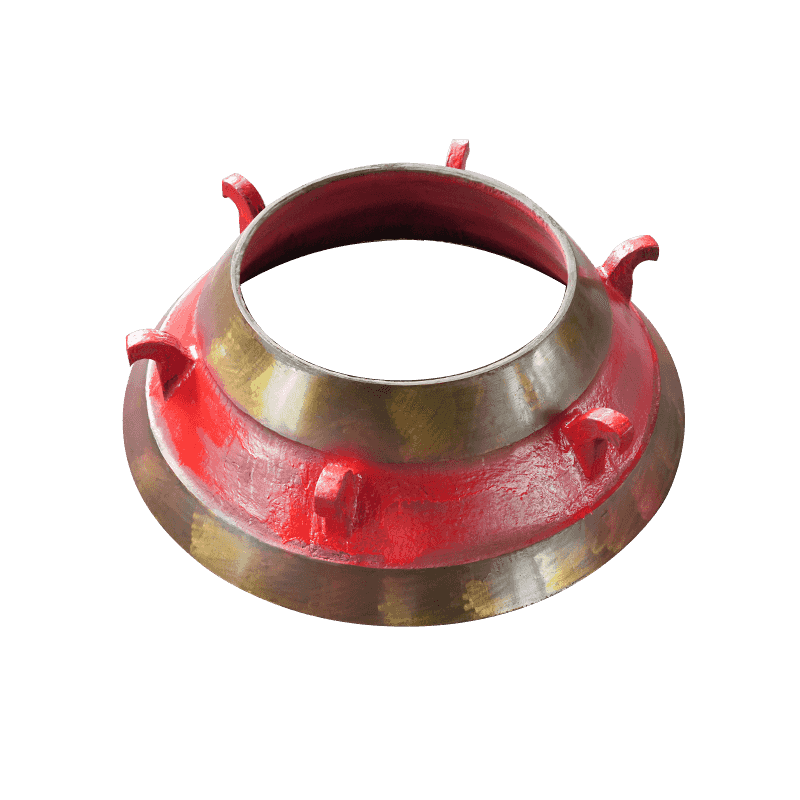 Cone Crusher High Manganese Steel Mortar WallHigh Chrome Plate Hammer for Impact CrusherView Product →
The mortar wall, often called the concave or bowl liner, wears together with the crushing wall. If you replace one but not the other, the chamber shape becomes unbalanced and the crusher may lose capacity or produce an irregular product. A commercial 50% cone crusher spare parts programme should always plan both parts as a set when wear is similar.
Source Directly From a Foundry That Understands Wear Parts
For many operations, buying commercial 50% cone crusher spare parts directly from a casting foundry is more reliable than going through a generic trader. A foundry controls the pattern, the melt, the heat treatment, and the machining. That control makes it easier to trace a defect back to a specific process step.
Nantong Haoshun Casting has worked with high manganese steel castings for over 20 years and exports wear parts to more than ten countries. Its product range includes cone crusher high manganese steel crushing walls and mortar walls, along with jaw crusher and impact crusher wear parts. The company also publishes technical discussions on wear-resistant alloys, including the self-hardening wear-resistant technology used in cone crusher crushing walls. A supplier with this kind of focused documentation is easier to audit than one that offers every possible wear part without explaining its metallurgical approach.
Practical Steps for a Commercial 50% Cone Crusher Spare Parts Order
Setting up a reliable purchasing habit is simpler than it sounds. The following steps turn the 50% wear point into a planned event.
- Record the current part number and the cone crusher model when the liner is new.
- Inspect the liner periodically and mark the 50% wear point based on wear profile and remaining thickness.
- Send the part number, reference drawing or dimensions, and required alloy grade to the foundry.
- Ask for the chemical certificate, hardness range, and delivery lead time before you place the order.
- Confirm whether the crushing wall and mortar wall should be changed together.
- Keep one commercial 50% cone crusher spare parts set in stock once you have a repeatable cycle.
The last point matters more than it seems. Once the first 50% order proves itself, the second and third orders become routine. You no longer need to call suppliers in a panic because the spare part is already waiting at the warehouse.
Commercial 50% cone crusher spare parts are not a mystery product or a special metallurgy. They are the spare parts you order at the halfway point of a liner's life, in the right alloy and with the right paperwork. If you make that simple habit part of your crusher maintenance plan, you reduce downtime, protect the crusher frame, and turn liner changes from emergencies into scheduled maintenance. The only real cost of waiting beyond 50% is the risk you no longer need to take.
Previous Post
No previous article
Next Post
Why do they put manganese in steel: Practical Applications, Selection, Performance, and
Related Products

-
- Phone:
-
+86 182 6058 7168
+86 (0)513 6890 5666
-
- Email:
- [email protected]
-
- Address:
- Wanghao Industrial Park, Haimen City, Nantong City, Jiangsu Province, China
-
- Media:

