
 English
  русский
  عربى
عربى Home / News / Industry News / Why do they put manganese in steel: Practical Applications, Selection, Performance, and
Why do they put manganese in steel: Practical Applications, Selection, Performance, and
When a batch of new crusher liners is delivered to a quarry, the receiving inspection sheet usually lists the chemical composition. A melt of "Mn 13, C 1.15, Si 0.6" does not look especially impressive on paper: the hardness printed on the certificate may say only 210 HB. Two months later, the same liners are still crushing hard granite while an ordinary steel part would have worn out in less than half that time. The material that makes this possible has been used for over 140 years, and it is a nickel-free, low-cost alloy built around manganese.
Manganese is not a trace element in steel. Steelmaking absorbs an estimated 85 to 90 percent of the manganese mined worldwide, and a single ton of steel commonly contains 5 to 15 kilograms of the element, while special wear-resistant grades carry far more. The question "why do they put manganese in steel" deserves a careful answer because the metal is doing several different jobs at once: it purifies the steel during melting, it controls how the steel responds to heat treatment, it strengthens the final product, and at high concentrations it generates a phenomenally hard surface through the work that the part itself performs in service. This article explains each of those roles and shows how that knowledge translates into better buying decisions for wear parts in crushing and grinding equipment.
The Short Answer: Five Jobs Manganese Performs in Steel
If you reduce the entire metallurgy to a single statement, manganese is added to steel to make the steel cleaner, stronger, more responsive to heat treatment, and, in special grades, enormously more resistant to impact-abrasive wear. Breaking that statement down gives five distinct functions:
- Deoxidation. Manganese combines with dissolved oxygen in the molten steel bath, forming manganese oxide that moves into the slag. It is used together with silicon and aluminium to produce a clean, sound casting or ingot.
- Sulfur neutralization. Manganese has a strong chemical affinity for sulfur. It forms manganese sulfide particles, preventing the formation of the low-melting iron sulfide that would otherwise cause hot shortness and cracking during hot handling or severe service.
- Hardenability improvement. Manganese is an austenite stabilizer. It slows the transformation of austenite to pearlite during cooling, which allows steel to form martensite to a greater depth when quenched.
- Solid-solution strengthening. Manganese atoms dissolve in the iron lattice and raise the strength of the steel without a large sacrifice in ductility, which makes it the most cost-effective strengthener in ordinary carbon steels.
- Work hardening. In high-manganese steels containing about 12 to 14 percent manganese, the austenitic structure strain-hardens at the surface under repeated impact. The hardness of the working face can rise from roughly 200 HB to more than 500 HB, and the material keeps doing this as fast as the old surface is worn away.
The weight carried by each role varies with the steel family. A structural beam uses manganese mainly for deoxidation, sulfur control, and strength. A quenched-and-tempered gear uses manganese for hardenability. A jaw crusher plate uses manganese almost entirely for the work-hardening phenomenon. Understanding which role matters in your application tells you which grade to order and how to judge whether the foundry delivered what you paid for.
Manganese as a Deoxidizer and Sulfur Neutralizer
Steel is made by refining liquid iron in an oxygen environment. By the time the carbon has been blown down to the target level, the melt carries a significant amount of dissolved oxygen. If that oxygen remains in the steel when it solidifies, it forms gas pores and brittle oxide inclusions that ruin the mechanical properties. Manganese reacts with oxygen according to the equilibrium reaction Mn + FeO -> MnO + Fe. The manganese oxide that forms is insoluble in steel and rises into the slag layer, where it is discarded. Manganese alone is not a strong enough deoxidizer for fully killed steel, so it is normally used ahead of silicon and aluminium. The sequence has a practical advantage: the oxide inclusions formed by manganese combine with those of silicon and aluminium to produce glassy inclusions that are far less harmful than sharp, brittle alumina particles. Steelmakers call this controlled deoxidation, and it is especially important for castings because inclusion shape determines whether a casting cracks during solidification shrinkage.
Sulfur arrives in the blast furnace feed from coke and ore. During refining, most of it can be removed by calcium-based slag treatments, but many steel grades end up with residual sulfur in the range of 0.005 to 0.05 percent. If that sulfur were allowed to remain as free iron sulfide, it would segregate at the austenite grain boundaries on cooling. Iron sulfide has a melting point of roughly 985 degrees Celsius, which is below the temperature at which the steel is still being hot-worked. The grain boundaries would melt locally, and any rolling, forging, or even minor thermal stress would tear the steel apart. This failure mode is called hot shortness.
Manganese's affinity for sulfur is much higher than iron's. When manganese is present, it captures the sulfur and forms manganese sulfide instead. MnS has a high melting point and a certain amount of plasticity at hot-working temperatures, so the steel can be rolled and forged safely, and the sulfide particles end up harmlessly dispersed through the matrix. The sign of a properly deoxidized and sulfur-neutralized steel appears in the manganese-to-sulfur ratio. Steelmakers commonly aim for a ratio of at least 10:1, and many specifications require 20:1, which explains why even the cheapest structural carbon steel contains a minimum of 0.30 to 0.60 percent manganese regardless of any strength requirement.
The invisible functions of manganese take effect before the metal ever reaches a heat treatment furnace or a crusher chamber. Without them, the steel would be pitted by gas pores, ruptured by grain-boundary films, and too brittle to survive even normal handling.
Typical manganese ranges and their jobs
| Manganese range | Steel family | Primary function |
|---|---|---|
| 0.30-0.60% | Plain carbon steels | Deoxidation, sulfur control, basic strength |
| 0.60-1.00% | Higher-strength carbon steels | Strength, hardenability, toughness |
| 1.00-2.00% | Low-alloy steels | Hardenability and fatigue resistance |
| 3.00-12.00% | Medium-manganese advanced steels | Retained austenite, transformation-induced plasticity |
| 11.00-14.00% | Hadfield austenitic manganese steel | Work-hardening wear resistance under impact |
| 14.00-16.00% | High-alloy manganese steel (ASTM A128 D) | Maximum work hardening for extreme impact |
Manganese and Hardenability
Hardenability is the property that determines how deeply a steel hardens when quenched. It is not the same as maximum hardness. A steel with high hardenability can be cooled slowly enough to avoid distortion and cracking while still transforming to martensite in the center of a thick section. Manganese is one of the most cost-effective hardenability agents there is.
Manganese stabilizes austenite and lowers the critical cooling rate. It does this by slowing the formation of pearlite and ferrite during cooling, giving the diffusionless martensite reaction a chance to win the race. In continuous cooling transformation diagrams, adding manganese moves the pearlite and ferrite nose to longer times. The practical consequence is that a carbon-manganese steel such as AISI 1040 with a manganese content of 0.60 to 0.90 percent can be quenched in oil; a similar steel with only 0.20 percent manganese needs a severe water quench to achieve the same hardness on the surface and will remain soft in the core.
The effect is exploited systematically in alloy steel design. AISI 4140, a standard chromium-molybdenum steel, contains about 0.75 to 1.10 percent manganese. AISI 8620 contains about 0.70 to 0.90 percent manganese plus nickel and chromium. Even in these multi-alloy grades, manganese is the workhorse that carries much of the hardenability while chromium, nickel, and molybdenum fine-tune the toughness, tempering resistance, and core properties.
For wear-resistant castings, hardenability plays a less direct role. High-manganese steel is not hardened by martensite transformation; it is hardened by mechanical work. But the foundry still needs to control the cooling path during heat treatment. In thick-section castings, slow cooling in the central zone can allow pearlite or grain-boundary carbides to form, destroying the austenitic structure. Molybdenum is often added to high-manganese castings precisely to improve the transformation kinetics in thick sections, in the same intellectual family as its role in quenched-and-tempered alloy steels.
Strength and Toughness: Manganese as a Solid-Solution Strengthener
In ordinary structural steels, manganese's most visible contribution is strength. The atoms of manganese, being close in size to iron atoms but not identical, distort the body-centred cubic ferrite lattice. Dislocations moving through the lattice encounter additional resistance from the strain fields around each manganese atom. This raises the stress required to produce plastic deformation, which is exactly what yield strength is.
Manganese also refines the pearlite in carbon steels. At the eutectoid composition, manganese lowers the temperature at which pearlite forms and decreases the spacing between the ferrite and cementite lamellae. A finer pearlite is both stronger and tougher than a coarse pearlite, so manganese improves an inherently conflicting pair of properties at the same time. That is unusual: most alloying elements improve strength at the cost of toughness.
The toughness benefit extends to low-temperature performance. Plain carbon steels are limited by a ductile-to-brittle transition temperature; at cold temperatures, a mild steel that behaves perfectly well at room temperature can shatter. Increasing the manganese content from 0.30 percent to around 1.00 percent pushes the transition temperature downward, which is why specifications for Arctic-grade structural steels and ship plates demand manganese concentrations at the upper end of the range.
In modern automotive and structural research, the medium-manganese family of steels has attracted attention precisely because manganese stabilizes retained austenite. A steel containing 3 to 12 percent manganese and a moderate carbon level develops a mixture of ferrite and austenite; when the part is deformed, the austenite transforms locally into hard martensite, absorbing energy and delaying fracture. This transformation-induced plasticity behaves in some ways like the work hardening of Hadfield steel, but at a completely different scale of manganese content and intended use.
High Manganese Steel: The Hadfield Discovery
Ordinary steel contains less than one percent manganese. A completely different material appears when the addition rises to around 12 percent. This is the classic Hadfield manganese steel, developed by Robert Hadfield in Sheffield and covered by his 1883 patent. Hadfield was not looking for a wear-resistant alloy when he started; he was systematically studying the effect of large alloy additions on iron. When he reached roughly 12 to 14 percent manganese with about 1.0 to 1.3 percent carbon and quenched the steel from around 1050 degrees Celsius, he found a material that was completely austenitic, non-magnetic, ductile, and capable of being work-hardened to an extraordinary degree.
Hadfield steel is almost always delivered as a casting rather than a wrought product. After casting, the microstructure contains large amounts of brittle grain-boundary carbides, and the part would shatter in service if used in the as-cast condition. The foundry reheats the casting to roughly 1050 to 1100 degrees Celsius, holds it long enough for all the carbon to dissolve into the austenite, and then quenches it in water rapidly enough to prevent the carbon from precipitating. This heat treatment is called water toughening.
In the water-toughened condition, a Hadfield steel part is relatively soft. Typical hardness values are 180 to 230 HB. It feels like a piece of ordinary mild steel to a hardness tester. The part is, however, extremely tough, so it does not crack when a massive rock drops onto it. That combination of softness and toughness confuses buyers who have been taught that a good wear part must be extremely hard at delivery. High-manganese steel breaks that rule on purpose.
The hardness appears during service. Every time a rock strikes the surface of a manganese steel jaw plate or crushing wall, the impact deforms the austenite and triggers a work-hardening response. The deformation is confined to the surface and the near-surface zone, where the strain is highest. There the hardness climbs from about 200 HB to 450, 500, or even 550 HB, and the surface becomes extremely wear resistant. Below the hardened layer, the material remains austenitic and tough. When the hard surface finally wears away, the next layer is already work-hardening in its turn. The material is, in effect, self-maintaining.
This behavioral contrast is why the same steel can be impossible to machine in a crusher liner that has been in service and beautifully machinable when supplied as a new casting. It is also why scrap dealers can tell a manganese steel casting from ordinary steel merely by the fact that a grinder produces long, tough sparks and the metal cannot be cut with a carbon steel drill.
How Work Hardening Works in High-Manganese Austenite
The work-hardening phenomenon of Hadfield steel is a specific consequence of its austenitic structure and its low stacking fault energy. Austenite is a face-centred cubic phase. Dislocations in such a crystal normally move on one of the closely packed slip planes and can readily cross-slip to another plane when they meet an obstacle. In high-manganese austenite, the stacking fault energy is low, which means that the perfect crystal with its normal layer sequence is not much more favorable than a crystal containing a stacking mistake. Dislocations therefore split into partial dislocations with a wide stacking fault ribbon between them, and cross-slip becomes difficult.
When an impact deforms the surface, the lack of cross-slip forces dislocations to pile up on the primary slip planes. The steel responds by generating more dislocations and, at higher strains, by forming mechanical twins. Twinning changes the orientation of the crystal lattice in localized bands and creates new barriers to dislocation motion. The result is an extremely rapid increase in flow stress, much larger and more sustained than the strain hardening of ferritic steels. In some manganese steel variants, strain-induced transformation to martensite also takes place in the deformed volume, adding another hardening mechanism.
Because all of these mechanisms operate only where intense plastic deformation occurs, the work-hardened zone stays close to the surface. Metallographic sections through used crusher liners often show a hard, deformed layer of a few millimetres to more than a centimetre, with the bulk of the material still containing the equiaxed, unstressed austenitic grains that were present after heat treatment. A crack initiated by an exceptionally violent impact will enter the tough core and be stopped far more effectively than in a through-hardened wear material, which is why manganese steel parts are chosen for the most severe-impact positions in a crushing circuit.
There is one critical condition for the whole system to work: the impact energy must be sufficient. A manganese steel plate that merely receives a gentle stream of abrasive sand, with no real impact, will never work-harden. Its surface remains soft, and it can wear out quickly, often faster than a properly selected high-chromium alloy. Conversely, in a jaw crusher where large stones are compressed with enough force to deform the plate surface, the material performs exactly as designed. Matching the alloy to the wear mode is the single most important engineering decision in the selection of crusher wear parts.
Manganese Steel Grades and Standards
High-manganese steel is not a single composition. The international reference specification is ASTM A128, which defines five principal grades that differ in manganese level and the addition of chromium or molybdenum. The Chinese national standard GB/T 5680 uses the designation ZGMn13-1 through ZGMn13-4, with similar ranges of carbon and manganese and an optional addition of molybdenum or titanium in the later grades.
| Grade | Mn (%) | Alloy additions | Typical application |
|---|---|---|---|
| A | 11.0-14.0 | None | Jaw plates, impact hammer heads, cone liners for general duty |
| B | 11.0-14.0 | 1.5-2.5% Cr | Gyratory and cone crusher mantles, severe abrasion with moderate impact |
| C | 11.0-14.0 | 1.8-2.1% Mo | Thick-section cone and gyratory liners, wear caps and impact hammers |
| D | 14.0-16.0 | None | Railway crossings, extreme-impact wear parts |
| E | 11.0-14.0 | 1.2-2.0% Mo | Very severe impact service, mantles for large gyratory crushers |
Chromium is added to raise the initial hardness of the austenite, which improves performance when the impact level is moderate but the feed contains sharp, hard particles. Molybdenum improves the response to heat treatment in thick cross-sections by delaying the formation of grain-boundary carbides during quenching, and it also refines the structure. In both cases, the additions must be balanced so the steel remains fully austenitic after water toughening.
Carbon is as important as manganese. A carbon content on the order of 1.0 to 1.3 percent is necessary to stabilize the austenite against transformation to ferrite and pearlite during cooling. Too much carbon, however, increases carbide precipitation, and foundries therefore keep carbon at the lower end of the range when producing thin castings and at the upper end for thick castings with very heavy impact. Silicon is normally held at 0.3 to 1.0 percent as a deoxidizer, while sulfur and phosphorus are clamped well below 0.05 percent each to preserve toughness. A buyer who needs a detailed understanding of these alloys should start with the composition and heat-treatment requirements described in this practical guide to high manganese steel castings, properties, and grades, which walks through the limits and the reasons behind them.
Manganese Steel in Crushing and Grinding Wear Parts
The largest single use of high-manganese steel in the mining and aggregate industry is in the wear parts of crushers and grinding mills. The alloy's work-hardening behavior matches almost perfectly the loading conditions inside these machines.
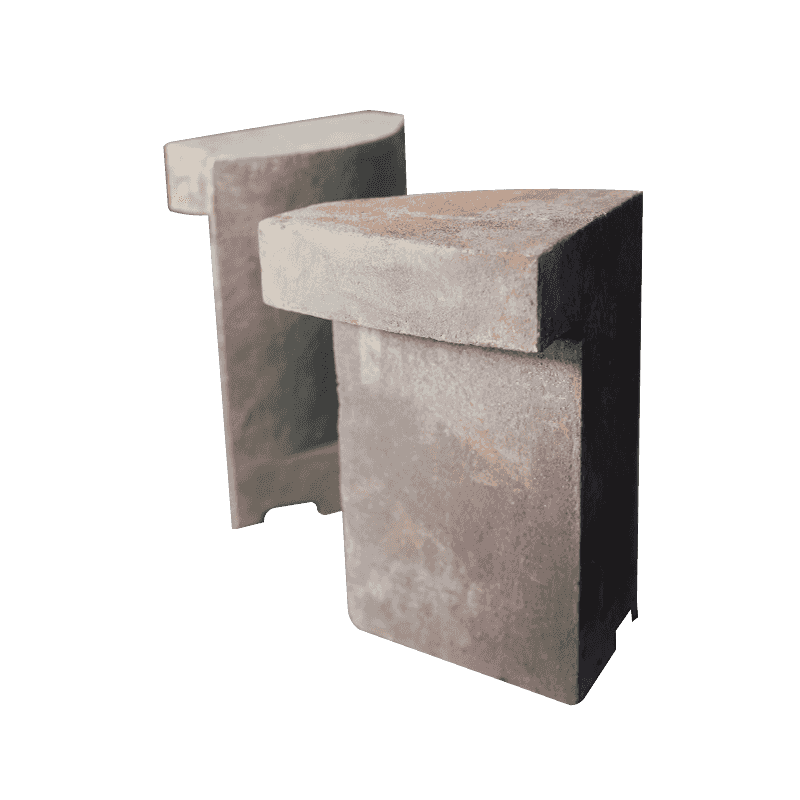
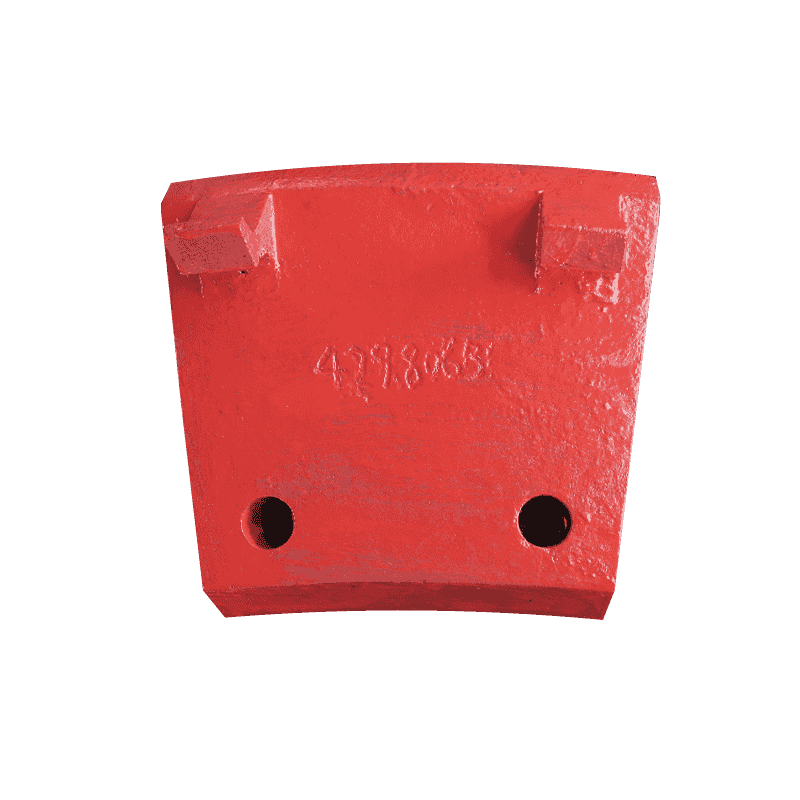
In a jaw crusher, the fixed and movable jaw plates bear the full compressive force of the rock. Large feed material, usually between 200 and 1000 mm, is nipped between the plates and broken by compression. The pressure at the contact points is sufficient to indent the manganese surface and drive the work-hardening reaction. A fixed jaw plate made from high-manganese steel begins service at roughly 200 HB; after a few hours of crushing, the working face rises to 450 HB or more, while the back face and the area around the bolt holes remain tough. The result is a lining that resists abrasion where it counts and resists cracking where it must. Most foundries offer a standard fixed jaw plate in ASTM A128 Grade A or the equivalent Chinese ZGMn13-2 composition, with optional chromium for applications where the feed is abrasive but not extremely coarse.
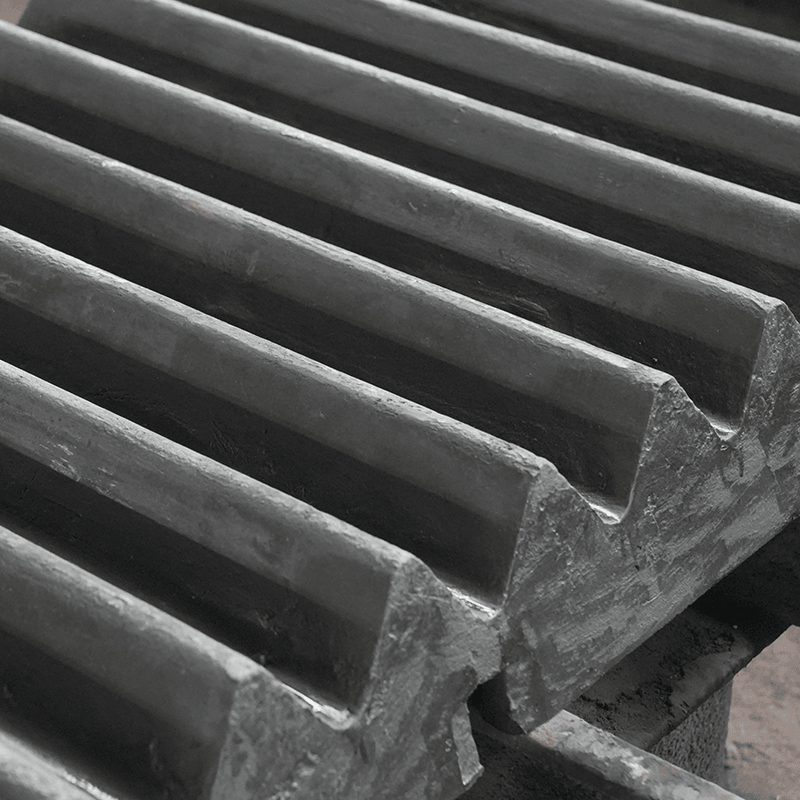 Jaw Crusher High Manganese Steel Fixed Jaw PlateThis fixed jaw plate suits coarse crushing duties where the working face work-hardens to over 450 HB while the back stays tough, helping resist abrasion and cracking in heavy service.View Product →
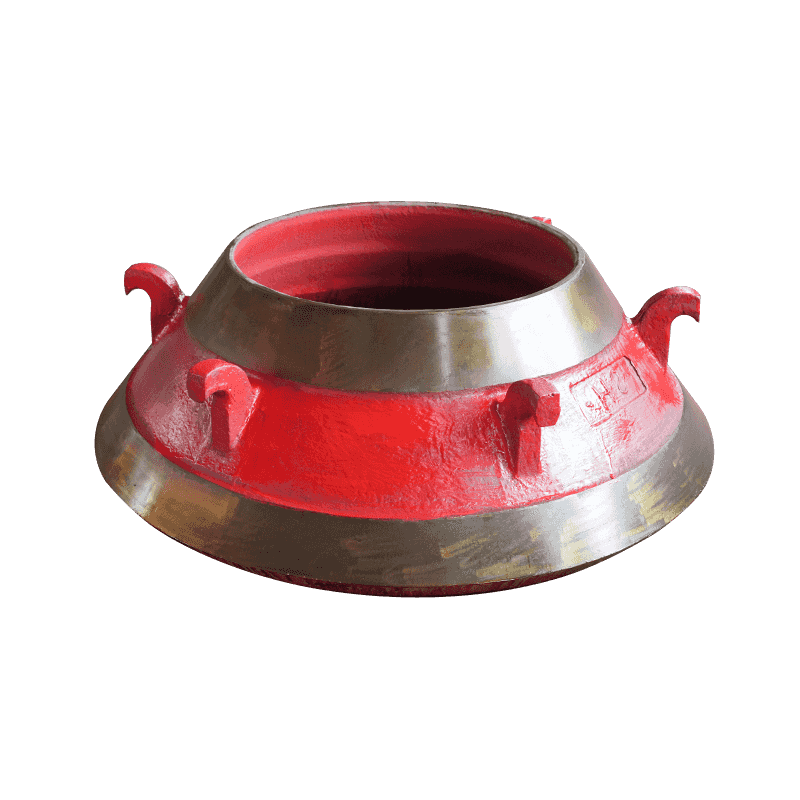
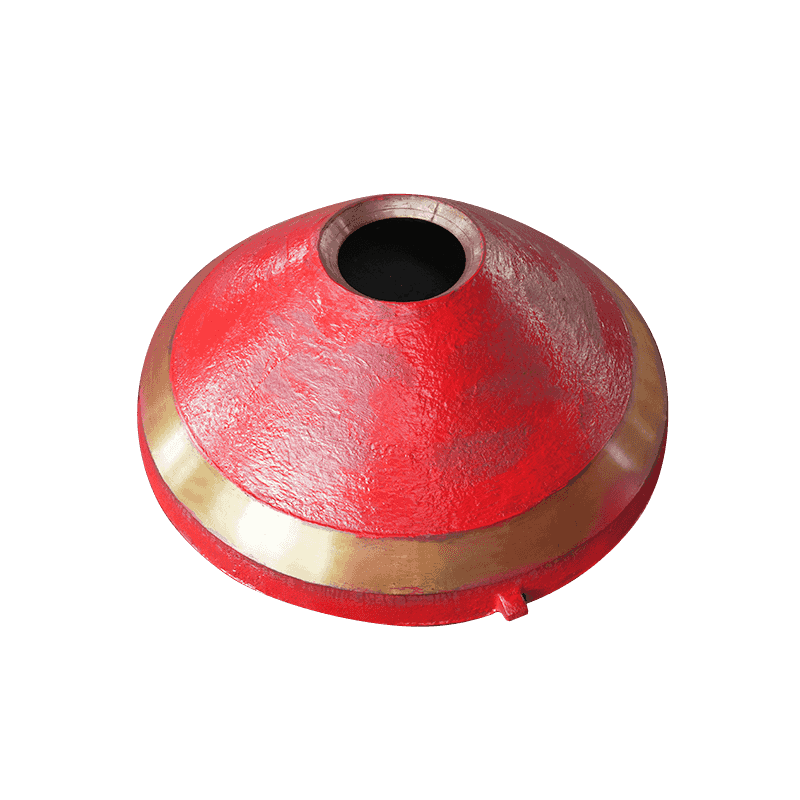
Cone crushers subject their wear parts to a continuous sliding-compression action. The crushing wall and the mortar wall compress the rock in the crushing chamber while the mantle gyrates. Manganese steel is the industry standard for both parts. For heavy-duty coarse crushing in a large cone, a molybdenum-alloyed grade such as A128 Grade C is preferred because the section thickness of the mantle can be very large and the deep interior must remain austenitic after quenching. For finer chambers where some chromium helps maintain a sharper cross-section, grades with small chromium additions are used.
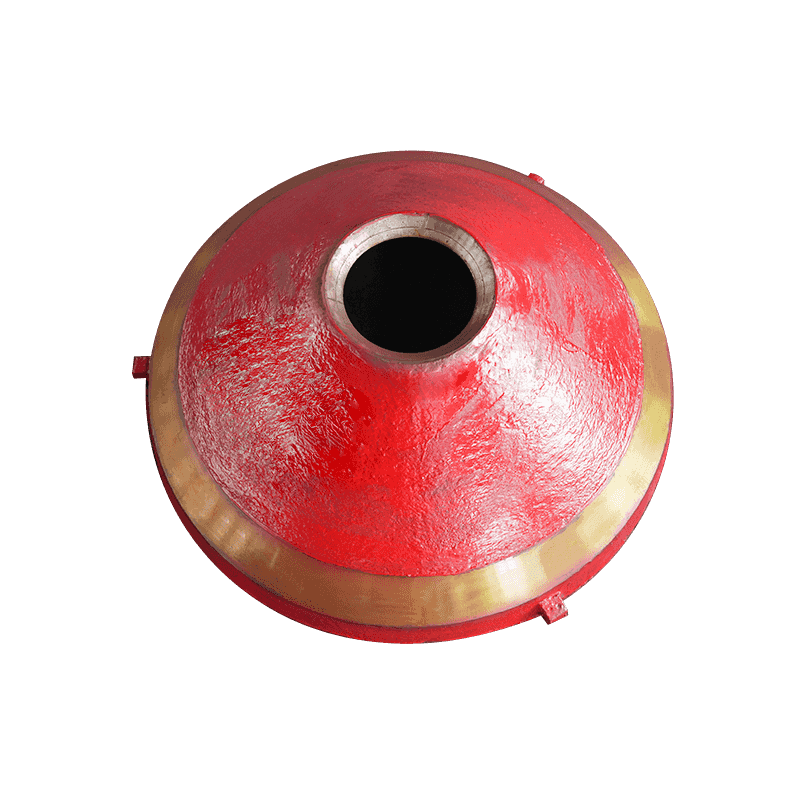 Cone Crusher High Manganese Steel Crushing WallDesigned for sliding-compression crushing in cone crushers, this crushing wall uses manganese steel that work-hardens under pressure, with molybdenum-alloyed options for thick coarse-crushing mantles.View Product →
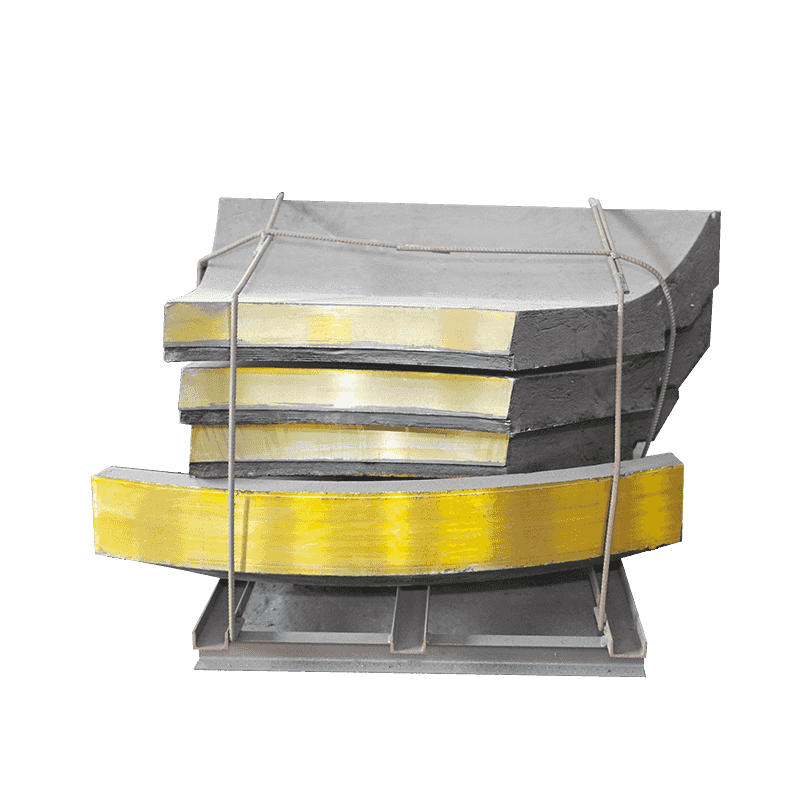
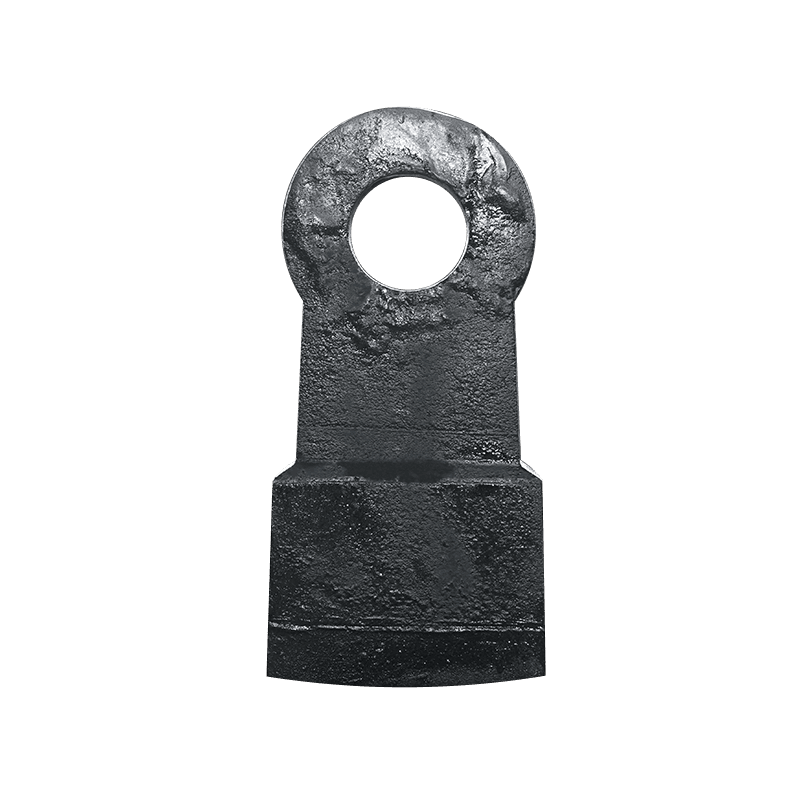
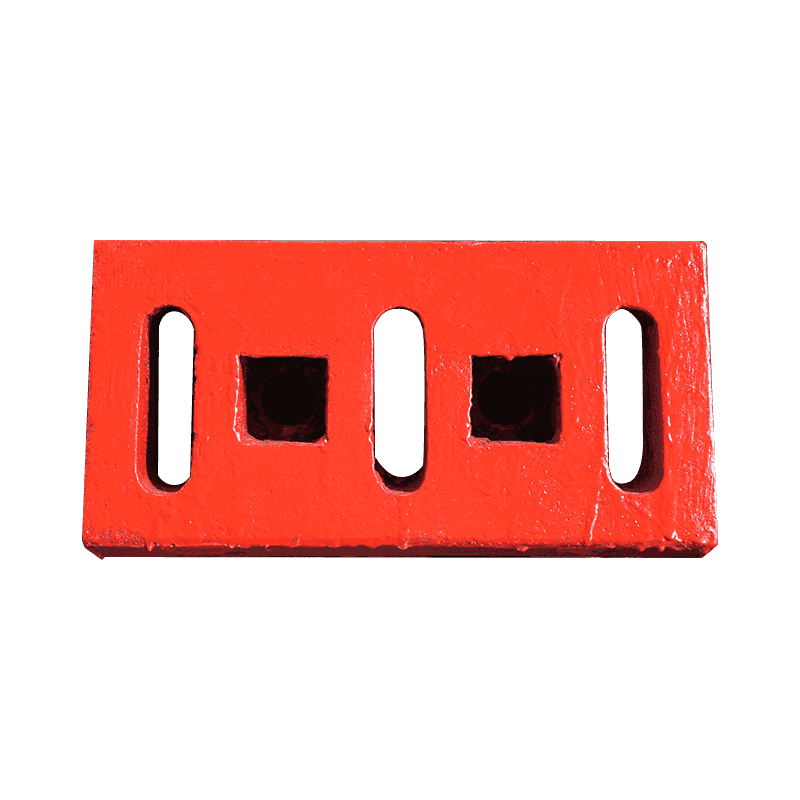
In impact crushers, the hammers and lining plates receive a different kind of loading: the rotor throws the rock against the liners at high speed, and the hammer faces themselves take the initial blow. On the hammer face, manganese steel work-hardens to a high hardness and, because the wear rate is highest on the leading edge, the self-hardening behavior keeps the edge sharp. In many deep-cavity impact crushers, the high-manganese steel lining plates on the breaker plates outperform low-alloy steel liners by a wide margin when the feed has sufficient size and weight to deform the surface. For very small feed and low-energy conditions, however, a higher-hardness material may be more cost-effective; the decisive comparison is discussed in the next section.
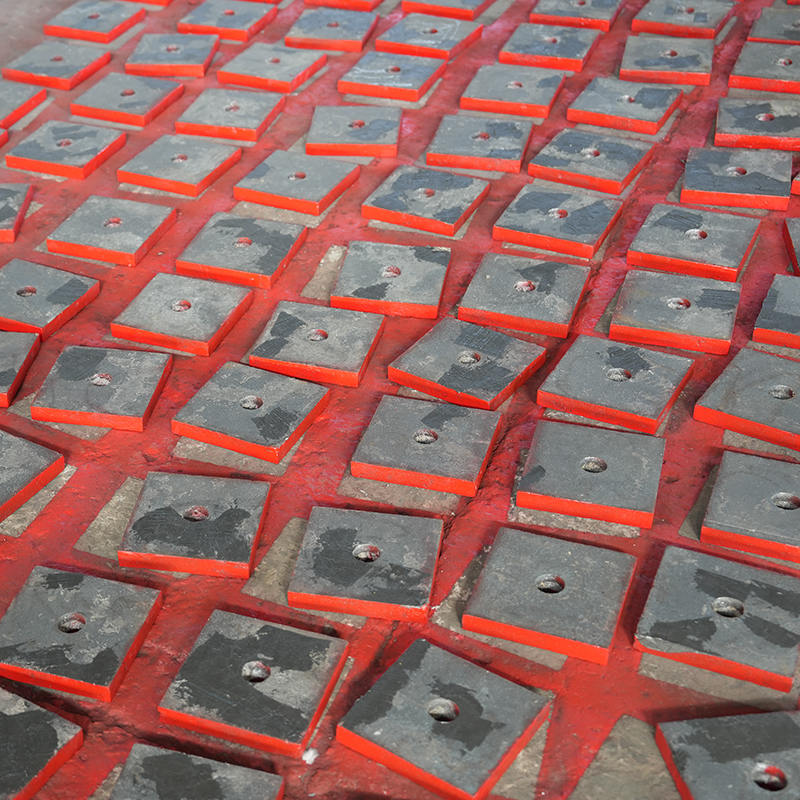 Impact Crusher High Manganese Steel Lining PlateThis lining plate for impact crushers work-hardens on impact to keep a sharp edge and outperform low-alloy liners in deep-cavity applications with sufficient feed size and energy.View Product →
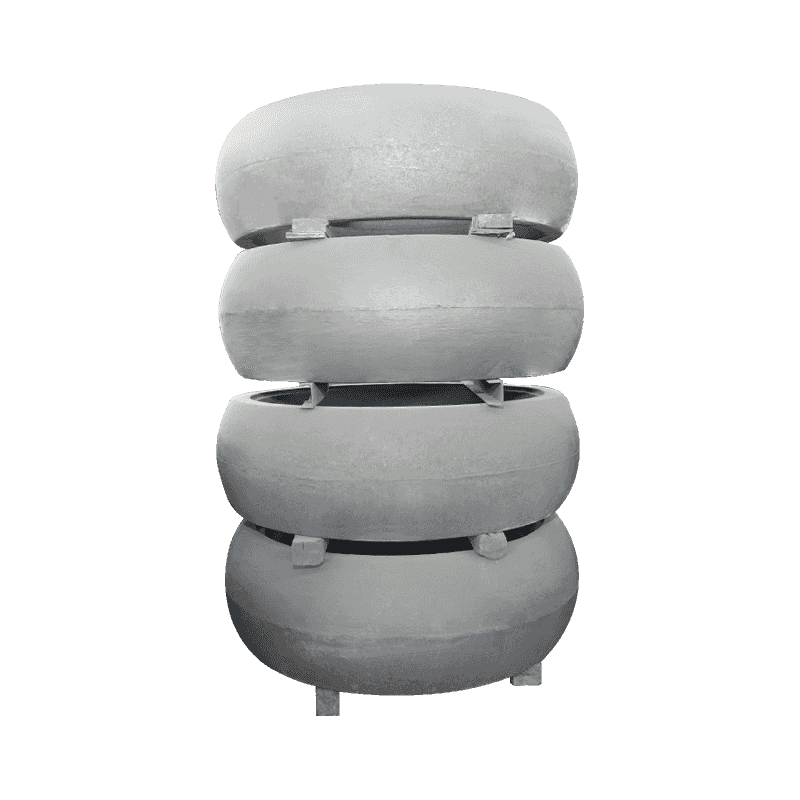
Grinding mills also use manganese steel liners in the high-impact zones. In a ball mill, the charge of steel balls and ore is lifted by the liners and falls back onto the mill shell. The falling balls strike the liner surface with a high local impact. A manganese steel lifter bar will work-harden on the top face and retain a tough body, making it a common choice for the first chamber of cement mills and for semiautogenous grinding mills. In the second chamber, where fine material rubs rather than impacts, high-chromium or chrome-moly alloy liners are frequently preferred.
When a foundry catalogs its product line by both alloy and equipment type, the selection logic reveals the underlying physics. Jaw crusher parts are almost always high-manganese steel. Cone crusher parts are high-manganese steel, sometimes modified with molybdenum. Impact crusher liners are sold in both manganese and high-chromium versions. The choice depends entirely on the size of the feed and the amount of impact energy delivered per particle.
Manganese Steel versus High-Chromium and Low-Alloy Alternatives
The question "why do they put manganese in steel" is often followed by another question: "why not use a harder material?" High-chromium white iron, for example, has an initial hardness of 550 to 800 HB, far above the as-delivered hardness of manganese steel, and it is exceptionally resistant to low-stress abrasion. The answer is that hardness is only one dimension of wear resistance. Toughness and the ability to work harden determine how a part survives the particular loading of a crusher.
| Material | Initial hardness | Work-hardening response | Toughness | Best application |
|---|---|---|---|---|
| Austenitic manganese steel | 180-230 HB | Rapid, up to 500+ HB under impact | Very high | Jaw plates, cone mantles, impact hammers, mill lifters |
| High-chromium white iron | 550-800 HB | Negligible | Low | Low-impact abrasion: plate hammers, flow channels, fine-grinding liners |
| Low-alloy steel castings | 300-500 HB | Limited | Medium | Moderate abrasion with structural loading, hammers for fine feed |
| Chrome-molybdenum steel | 250-450 HB | Slight | Medium-high | Grinding mill liners, second-chamber applications |
High-chromium iron contains 11 to 28 percent chromium and a large volume fraction of hard chromium carbide. It is a superb material where particles slide across a surface with little bending or impact, for example in the flow channels of a vertical shaft impact crusher. It is an inappropriate material for a jaw plate, where a single uncrushable piece of steel or a poorly fed rock can snap the plate in half.
Low-alloy steel castings occupy a middle ground. They are heat-treated to a hardness of 300 to 500 HB and have good toughness, but they cannot regenerate a hard surface. In high-impact applications, their wear rate accelerates as soon as the initial hardness is lost, while manganese steel remains at service hardness throughout its life. In low-impact applications, a manganese steel part may stay at 200 HB and wear faster than a low-alloy steel part at 400 HB.
The practical rule of thumb is simple. If the particles are large enough to deform the surface of the wear part, manganese steel wins. If the particles are small and the dominant mechanism is sliding abrasion, a high-chromium or low-alloy steel is likely to be the better economic choice. A fuller comparison of the two families is available in this analysis of high manganese steel versus chromium castings, written for exactly the kind of decision a maintenance planner faces every few months.
Practical Considerations When Buying Manganese Steel Wear Parts
Because the performance of high-manganese steel depends as much on heat treatment as on chemistry, a buyer should look at three things before placing an order: composition, heat treatment evidence, and casting quality.
The chemical composition must be verified with a spectrometer certificate from the foundry. A typical specification for a jaw plate is 11.5 to 13.5 percent manganese, 1.0 to 1.3 percent carbon, 0.3 to 0.8 percent silicon, below 0.05 percent sulfur, and below 0.06 percent phosphorus. If the part is for a thick-section cone liner, molybdenum in the range of 1.2 to 2.1 percent is normal. Chromium-modified grades contain 1.5 to 2.5 percent chromium.
The heat treatment must be a genuine water toughening followed by rapid quenching. A certificate that lists only a hardness value is not enough, since a manganese steel part can be supplied in the as-cast condition with a misleading hardness. The part should be water-quenched from 1050 to 1100 degrees Celsius, and the final hardness on the machined surfaces should be in the range of 170 to 230 HB. If the delivered part measures above roughly 250 HB with high hardness variation from section to section, the foundry has likely skipped the full austenitizing hold or allowed the part to cool slowly between the furnace and the quench tank.
Metallographic quality is best verified on a sample from the production lot. The microstructure should be essentially single-phase austenite, with no continuous network of carbides at the grain boundaries and no significant pearlite. Grain-boundary carbides are the most common cause of premature breakage in manganese steel crusher parts, and they are entirely invisible in a hardness test. A casting with heavy carbide networks can pass a hardness test and then fail after a few days of service by cracking along the grain boundaries.
Casting soundness is also critical. Shrinkage porosity, sand inclusions, and hot tears concentrate stress and can initiate the type of fracture that work hardening cannot blunt. For large jaw plates and cone mantles, ultrasonic or radiographic inspection of the highly stressed sections is worth the added cost, and the foundry should be able to show its inspection records on request.
The supplier's experience matters because these process variables are empirical. A foundry that has cast high-manganese steel for many years, controls its pouring practice, uses suitable risering and gating, and maintains documented heat treatment equipment is far more likely to deliver a consistent product. Nantong Haoshun Casting, a foundry with 21 years of experience in manganese and chromium wear castings and an export record that spans more than ten countries, is one example of a supplier organized around these disciplines. Its product range is built by equipment type:
- Jaw crusher manganese steel fixed jaw plates, movable jaw plates, and side guards;
- Cone crusher manganese steel crushing walls and mortar walls;
- Impact crusher manganese steel lining plates and high-chromium plate hammers;
- Vertical shaft impact crusher high-chromium flow channel plates and dividing cones;
- Vertical grinding mill high-chromium roller sleeves and liners.
Each of these product groups responds to the same physics described in this article: manganese for impact-dominated wear, chromium for abrasion-dominated wear, and careful process control for both.
So why do they put manganese in steel? The short and accurate answer is that manganese makes steel manufacturable, heat-treatable, and strong, and at high concentration it gives the steel a unique ability to become harder exactly where it is being beaten. It removes oxygen during melting, locks up sulfur so the steel does not tear itself apart, deepens the hardening response during quenching, strengthens the ferrite without sacrificing ductility, and in 12 to 14 percent additions creates the austenitic Hadfield steel that has been crushing rock for more than a century.
For a purchasing engineer, the practical takeaway is to treat manganese steel as an engineered material with precise process requirements, not as a commodity. Verify the chemistry, demand evidence of correct heat treatment, check the microstructure, and choose a foundry with real casting experience. When those conditions are met, a manganese steel wear part repays its cost many times over in service life, safety, and predictable maintenance intervals.
Previous Post
No previous article
Next Post
Chromium Coating on Iron: Definition, Process, Properties, and Applications
Related Products


-
- Phone:
-
+86 182 6058 7168
+86 (0)513 6890 5666
-
- Email:
- [email protected]
-
- Address:
- Wanghao Industrial Park, Haimen City, Nantong City, Jiangsu Province, China
-
- Media:

