
 English
  русский
  عربى
عربى Home / News / Industry News / Why are Impact Crusher High Chromium Castings Essential for Heavy-Duty Ore Processing?
Why are Impact Crusher High Chromium Castings Essential for Heavy-Duty Ore Processing?
In the demanding environment of mineral processing and aggregate production, the durability of wear parts determines the operational lifespan of the machinery. Among these components, Impact Crusher High Chromium Castings have emerged as the gold standard for high-stress applications. But what makes high-chromium alloys so effective in resisting the abrasive forces found in modern crushing chambers?
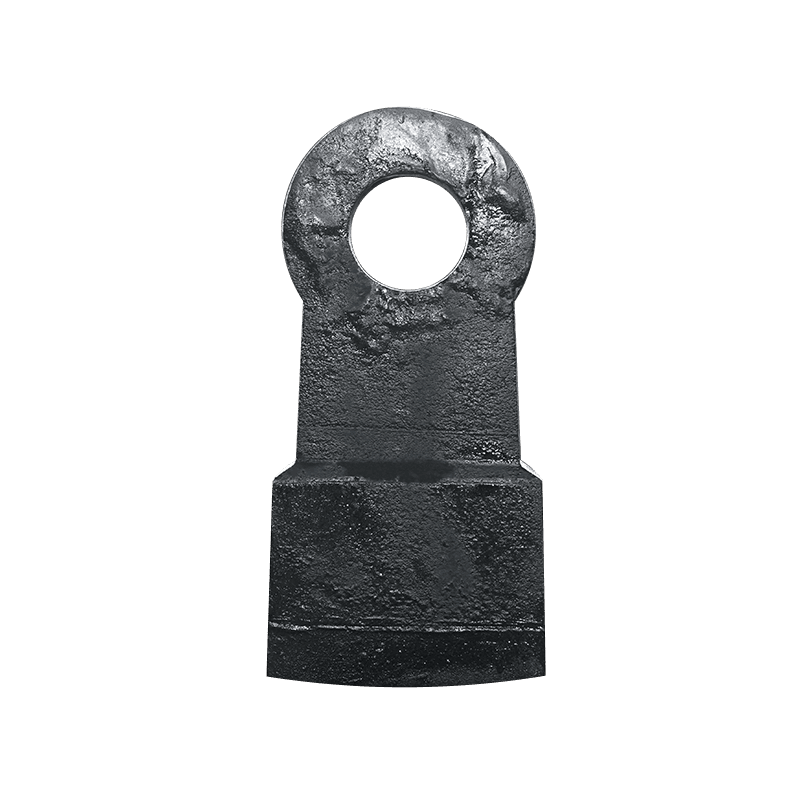
The primary advantage of these castings lies in their microstructural composition. By integrating a high concentration of chromium, typically ranging from 23% to 30%, manufacturers produce a material that possesses an exceptional balance of hardness and toughness. This specific alloy allows the High Chrome Plate Hammer for Impact Crusher to withstand the repeated high-velocity impacts required to break down hard materials like granite, basalt, and limestone.
What is the Significance of the 23%-30% Chromium Content in Plate Hammers?
When discussing the performance of a High Chrome Plate Hammer for Impact Crusher, the chemical composition is the first point of technical scrutiny. Why is the 23%-30% range of chromium (Cr) considered the "sweet spot" for wear resistance?
-
How does chromium affect carbide formation? During the casting process, chromium reacts with carbon to form hard chromium carbides (M7C3). These carbides are significantly harder than traditional iron carbides found in standard steel hammers, providing a "shield" against abrasive particles.
-
Does it improve impact resistance? Yes. While extreme hardness often leads to brittleness, the controlled addition of 23%-30% Cr ensures that the matrix remains tough enough to absorb the energy of high-speed collisions without catastrophic fracturing.
Below is a technical specification table detailing the typical properties of these high-performance castings:
|
Parameter |
Specification / Value |
|---|---|
|
Material Name |
High Chromium Cast Iron |
|
Chromium (Cr) Content |
23% - 30% |
|
Hardness (HRC) |
58 - 65 |
|
Impact Toughness (ak) |
≥ 5 J/cm² |
|
Microstructure |
Martensite + M7C3 Carbides |
|
Application |
Primary and Secondary Impact Crushers |
|
Surface Design |
Optimized Arc or Deformable Surface |
How Does the Arc-Shaped Surface Design Improve Crushing Energy Conversion?
Beyond metallurgy, the physical geometry of the hammer plays a pivotal role in efficiency. Why is the impact surface of a modern High Chrome Plate Hammer for Impact Crusher usually designed to be arc-shaped or gradually deformed?
Traditional flat-faced hammers often suffer from uneven wear, where the edges degrade faster than the center, leading to a rapid loss of crushing precision. By contrast, an arc-shaped surface ensures that the contact between the material and the hammer is more uniform. This design facilitates a more effective transmission of the impact force, ensuring that the kinetic energy from the rotor is delivered directly into the core of the rock or ore.
When the material strikes the arc-shaped surface, the energy conversion is optimized. Rather than a glancing blow that wastes energy as heat or vibration, the hammer's unique structural form "grips" the material momentarily, allowing for a deeper penetration of the impact force.
Can an Optimized Impact Angle Reduce Equipment Energy Consumption?
One of the most critical factors in modern crushing is the "angle of attack." How does the optimized impact angle of Impact Crusher High Chromium Castings influence overall production costs?
In traditional designs, materials often bounce off the hammer in an uncontrolled manner, known as rebound loss. This means the rotor has to work harder to re-engage the same material multiple times. However, the specialized design of the high-chromium hammer features a reasonable impact angle that enables the material to be better split and crushed upon the very first collision.
-
Does it reduce the power demand? By ensuring each strike is as productive as possible, the equipment requires less torque and electrical current to maintain the rotor's speed. Especially in large-scale production, this translates to a significant reduction in kilowatt-hours per ton produced.
-
How does it prevent uneven crushing? A calibrated impact angle prevents the "shuffling" effect where smaller particles bypass the crushing zone while larger ones become trapped. This leads to a more consistent output size and reduces the need for secondary screening.
Why is Unique Structural Form Important for Multiple Impact Cycles?
Crushing is rarely a single-event process; it happens in a split second across multiple contact points within the chamber. How does the unique structural form of the High Chrome Plate Hammer for Impact Crusher increase the frequency of effective impacts?
As the material is struck by the hammer, it is thrown against the impact plates (linings) and then rebounds back toward the rotor. The optimized surface of the high-chromium hammer is designed to intercept these rebounding materials at the perfect trajectory. This increases the "crushing count"—the number of times a piece of rock is hit before it exits the machine. By increasing the number of hits within a single rotation cycle, the overall crushing efficiency is dramatically improved without increasing the rotor's RPM.
How Does the Casting Process Ensure the Longevity of the Hammer?
The manufacturing of Impact Crusher High Chromium Castings is as important as the design. Why is the heat treatment process vital for these hammers?
The raw casting of a 23%-30% Cr alloy is not immediately ready for use. It must undergo a sophisticated quenching and tempering process to transform the austenite into a hard martensitic matrix. This transformation is what gives the hammer its high Rockwell C (HRC) hardness rating.
-
How is internal stress managed? Tempering cycles remove the internal stresses that could lead to cracking during the high-speed operation of the impact crusher.
-
Is the consistency of the casting checked? High-quality castings undergo ultrasonic and magnetic particle testing to ensure there are no internal air pockets or "sand holes" that could act as failure points under the stress of 500+ RPM rotations.
Can High Chromium Hammers Lower Production Costs in Large-Scale Operations?
When evaluating the cost-benefit analysis of wear parts, the initial price is often secondary to the "cost per ton." How do Impact Crusher High Chromium Castings deliver value in high-volume environments?
While high-chromium hammers may have a higher acquisition cost than standard manganese or low-alloy steel, their wear life is often three to five times longer. This means fewer shutdowns for maintenance, fewer labor hours spent on hammer rotations or replacements, and a more stable production schedule.
Furthermore, by reducing the rebound loss and energy demand, the high-chromium hammer effectively reduces the energy consumption of the equipment. In a plant processing 1,000 tons per hour, even a 5% increase in energy efficiency or a 10% reduction in downtime results in massive operational savings over a fiscal year.
How Does Uniform Contact Prevent Premature Hammer Failure?
Uneven wear is the enemy of any rotating equipment. Why is the uniform contact provided by optimized High Chrome Plate Hammer for Impact Crusher designs so important for the rotor's balance?
If a hammer wears unevenly, the rotor can become unbalanced, leading to excessive vibration. This vibration can damage bearings, shafts, and the structural frame of the crusher. The arc-shaped or gradually deformed impact surface of high-chromium hammers ensures that the wear pattern stays consistent across the width of the hammer. This uniform degradation maintains the rotor's balance for a longer period, protecting the more expensive mechanical components of the crusher from secondary damage.
Is the Material Splitting Capability Enhanced by High Chrome Alloys?
Crushing is not just about pulverizing; it is about efficient splitting. How does the high-chromium material facilitate better material "splitting" rather than just grinding?
Grinding creates excess fines (dust), which is often a waste product. Impact crushing aims to split the rock along its natural cleavage planes. The extreme hardness of the Impact Crusher High Chromium Castings allows the hammer to maintain a sharp "leading edge" for longer. This sharp edge acts as a wedge, splitting the material more cleanly. Standard steel hammers round off quickly, turning the impact process into a grinding process, which consumes more power and produces lower-quality aggregate.
What are the Practical Benefits of Gradual Deformation Surfaces?
Some high-chromium hammers feature a "gradually deformed" surface. What is the logic behind this specific structural form?
A gradually deformed surface is engineered to account for the change in the material's velocity as it moves from the center of the hammer toward the tip. By varying the geometry of the impact face, the design ensures that regardless of where the material makes contact, the transmission of force remains optimized. This specialized consideration is what separates premium Impact Crusher High Chromium Castings from generic replacements.
Why is Impact Resistance Just as Critical as Wear Resistance?
It is a common misconception that hardness is the only metric for a hammer's success. Why must a High Chrome Plate Hammer for Impact Crusher be tested for impact resistance?
In many recycling or mining applications, "unbreakable" objects like rebar or tramp iron can accidentally enter the crusher. A hammer that is only hard will shatter like glass when it hits a piece of steel. The 23%-30% chromium alloy is specifically engineered to retain enough ductility to survive these "shocks." This "impact toughness" is the insurance policy for the crushing plant, preventing a single foreign object from destroying a full set of hammers.
Previous Post
Why Are Cone Crusher High Manganese Steel Castings the Preferred Choice for Harsh Mining Operations?
Next Post
Guardians of the Crushing Heart: Comprehensive Analysis of Cone Crusher High Manganese Steel Castings and Mortar Wall Technology
Related Products

-
- Phone:
-
+86 182 6058 7168
+86 (0)513 6890 5666
-
- Email:
- [email protected]
-
- Address:
- Wanghao Industrial Park, Haimen City, Nantong City, Jiangsu Province, China
-
- Media:

