
 English
  русский
  عربى
عربى Home / News / Industry News / How Does the High Chrome Dividing Cone Optimize Material Distribution in Vertical Shaft Impact Crushers?
How Does the High Chrome Dividing Cone Optimize Material Distribution in Vertical Shaft Impact Crushers?
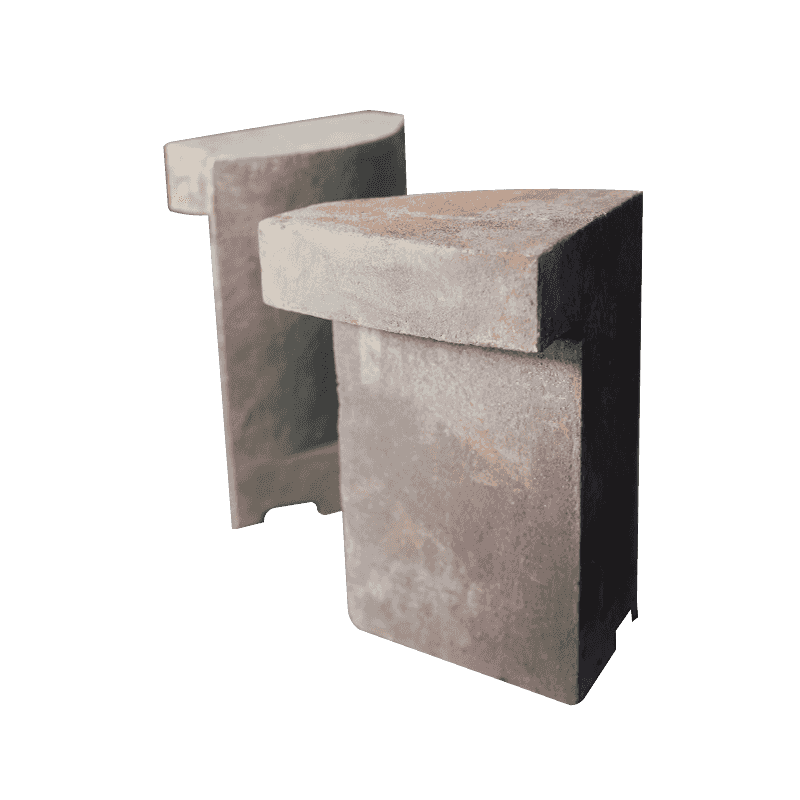
In the mechanical ecosystem of stone and ore processing, the efficiency of a machine is often determined by its smallest but most critical components. Vertical Shaft Impact Crusher High Chromium Castings represent the pinnacle of wear-resistant technology, specifically designed to withstand the brutal environment inside a high-speed rotor. Among these components, the Vertical Shaft Impact Crusher High Chrome Dividing Cone stands out as the primary "traffic controller" of the crushing chamber. By leveraging a specialized streamlined design and the inherent hardness of high-chromium alloys, this component ensures that material flow is not just managed, but mathematically optimized for maximum impact.
Why is the Streamlined Design of the High Chrome Dividing Cone Critical?
The geometry of the internal components in a VSI crusher directly dictates the velocity and direction of the material. Why has the structural design of the Vertical Shaft Impact Crusher High Chrome Dividing Cone moved toward a progressive, streamlined shape?
How does the "wide-to-narrow" structure facilitate material flow? The upper part of the dividing cone is engineered to be wide, capturing the bulk material as it falls through the feed hopper. As the cone tapers downward, it forms a progressive material guiding channel. This narrowing effect accelerates the material slightly before it enters the rotor ports, preventing the "bottleneck" effect common in flat or poorly angled traditional cones. This specific design ensures that the material entering the crusher is evenly distributed to various areas of the crushing chamber, rather than clustering in a single quadrant.
Can this design prevent the accumulation of abrasive materials? Yes. In traditional designs, uneven material entry often leads to "dead zones" where damp or fine materials accumulate, causing imbalance in the rotor. The optimized Vertical Shaft Impact Crusher High Chrome Dividing Cone eliminates these dead zones by maintaining a constant kinetic energy in the material stream. By avoiding the accumulation phenomenon, the crusher maintains its rotational balance, which is vital for the longevity of the main shaft and bearings.
How Does Optimized Material Guiding Improve Crushing Efficiency?
Crushing efficiency is a measurement of how much energy is successfully transferred from the machine to the rock. How does the guiding function of Vertical Shaft Impact Crusher High Chromium Castings facilitate this transfer?
Is the contact between material and hammers improved? The primary goal of the dividing cone is to guide material efficiently to the hammer or impact plate on the rotor. When the material is distributed evenly, every hammer or "shoe" in the rotor engages with an equal volume of rock. This ensures that the material is fully in contact with the crushing components, preventing "air strikes" where the rotor spins without hitting sufficient material.
Does uniform distribution lead to a more consistent final product? By ensuring a uniform material flow process, the crusher produces a much more consistent grain shape and size distribution (gradings). When the material is guided correctly via the high-chrome dividing cone, the "rock-on-rock" or "rock-on-iron" impact occurs at the optimal angle, resulting in a superior cubical shape which is highly valued in concrete and asphalt production.
What are the Mechanical Advantages of High Chromium Castings?
Material science is the backbone of equipment durability. Why is high chromium the preferred alloy for Vertical Shaft Impact Crusher High Chromium Castings?
How does high-chrome material maintain stability under impact? High-chromium cast iron contains a high volume of hard chromium carbides embedded in a supportive martensitic matrix. This allows the Vertical Shaft Impact Crusher High Chrome Dividing Cone to maintain its shape and structural integrity even under high-intensity and high-impact working conditions. Unlike standard steel which might deform or "mushroom" under stress, high-chrome castings remain rigid, ensuring the guiding geometry stays perfect throughout the part's lifecycle.
Can the wear resistance extend the service life of the equipment? Wear resistance is directly proportional to the uptime of the production line. Because the dividing cone is the first point of contact for high-velocity falling stone, it experiences extreme abrasive wear. High-chrome materials provide a sacrificial surface that wears down at a much slower and more predictable rate than manganese or low-alloy steels. This reduces local wear of the equipment and significantly extends the service life of the entire rotor assembly.
|
Component Feature |
Technical Benefit |
Impact on Production |
|---|---|---|
|
Streamlined Cone Profile |
Progressive material guiding channel |
Prevents feed port blockage |
|
High Chromium Alloy |
Superior hardness and abrasion resistance |
Reduces maintenance frequency |
|
Optimized Guiding Angle |
Even distribution to rotor hammers |
Improves crushing ratio |
|
Balanced Mass Design |
Reduced vibration during high-speed rotation |
Extends bearing and shaft life |
|
High Impact Toughness |
Stability under high-intensity workloads |
Prevents catastrophic part failure |
How Does the Dividing Cone Reduce Energy Waste?
In any industrial operation, energy efficiency is a key component of economic benefit. How does the internal flow management of Vertical Shaft Impact Crusher High Chromium Castings reduce the power draw?
Can a reduction in local overload save electricity? When material distribution is uneven, some rotor ports become overloaded while others are under-utilized. This causes the motor to work harder to overcome the resulting mechanical imbalance and friction. An optimized Vertical Shaft Impact Crusher High Chrome Dividing Cone effectively reduces the unevenness of the material flow process, avoiding local overload caused by excessive material in specific areas. A balanced rotor draws a steady, lower current, directly reducing energy waste.
Is there a correlation between material guiding and throughput? Yes. High-efficiency guiding enables the crusher to achieve a higher processing capacity without increasing the speed of the rotor. By ensuring that every millisecond of rotor rotation is used to impact material, the "tons-per-hour" metric increases, effectively lowering the energy cost per ton of finished product.
Why is Uniform Wear Important for Rotor Longevity?
Uneven wear is the enemy of high-speed rotating machinery. How do Vertical Shaft Impact Crusher High Chromium Castings address this?
How does the dividing cone prevent local wear of the rotor? If the dividing cone fails to distribute material evenly, one side of the rotor will wear down faster than the others. This leads to a vibration-induced shutdown. The uniform distribution design of the Vertical Shaft Impact Crusher High Chrome Dividing Cone ensures that all wear-protected surfaces—such as the backup plates and wear plates—deteriorate at the same rate. This allows for synchronized maintenance cycles where all parts can be replaced at once, rather than stopping for individual components.
Does it protect the internal "dead bed" of the crusher? In many VSI crushers, a "stone-lined" chamber relies on a stable bed of material to protect the outer shell. Proper distribution from the dividing cone ensures that this protective stone layer is replenished evenly. Without the guiding function of the high-chrome cone, certain areas of the shell could be exposed to direct impact, leading to expensive repairs to the crusher's frame.
How Does the High-Chrome Dividing Cone Perform in Mining and Metallurgy?
Mining and metallurgy involve some of the hardest materials on earth, such as iron ore and granite. How does the equipment hold up?
Can the dividing cone handle high-intensity abrasive ores? In mining operations, the feed material is often highly abrasive and hard. The Vertical Shaft Impact Crusher High Chrome Dividing Cone is specifically designed for these high-intensity conditions. The high-chromium castings provide the necessary "micro-hardness" to resist the cutting action of sharp ore particles, maintaining the guiding channels' efficiency over hundreds of hours of operation.
Does it improve the economic benefits of the production line? By reducing downtime for part changes and increasing the yield of the desired fraction of ore, the optimized dividing cone directly improves the economic benefits. In industries like cement and metallurgy, where production lines run 24/7, the reliability of Vertical Shaft Impact Crusher High Chromium Castings translates to significantly higher annual processing volumes and lower operational costs.
What Role Does Geometric Precision Play in Casting Performance?
Is the effectiveness of the Vertical Shaft Impact Crusher High Chrome Dividing Cone only about the material, or does the casting process matter?
Is the accuracy of the guiding channel important? The casting process for high-chromium components must be extremely precise. Any deviation in the "wide-to-narrow" channel can cause turbulence in the material flow. Modern casting techniques ensure that the surface of the Vertical Shaft Impact Crusher High Chromium Castings is smooth and the dimensions are exact, allowing for a seamless fit into the rotor and an immediate improvement in material guiding upon installation.
How is the stability of the part tested under working conditions? Before deployment, these high-chrome components undergo rigorous testing to ensure they can maintain stability under the centrifugal forces of a VSI rotor, which can reach speeds of over 60 meters per second. The combination of structural design and high-grade chromium alloy ensures that the dividing cone does not crack or shift, providing a stable, reliable guiding path for every ton of rock that enters the system.
Previous Post
Guardians of the Crushing Heart: Comprehensive Analysis of Cone Crusher High Manganese Steel Castings and Mortar Wall Technology
Next Post
Can a Vertical Shaft Impact Crusher with High Chromium Castings Revolutionize Industrial Crushing Efficiency?
Related Products

-
- Phone:
-
+86 182 6058 7168
+86 (0)513 6890 5666
-
- Email:
- [email protected]
-
- Address:
- Wanghao Industrial Park, Haimen City, Nantong City, Jiangsu Province, China
-
- Media:

