 English
  русский
  عربى
عربى What Quenching Is and Why It Matters for Wear-Resistant Castings
Quenching is a rapid cooling heat treatment in which a metal, most commonly steel or cast iron, is heated to a precisely defined elevated temperature and then cooled very rapidly by immersion in water, oil, air, or polymer solution, transforming the metal's crystal structure in ways that dramatically increase hardness, wear resistance, and in some alloy systems, toughness. The word quenching comes from the Old English term for extinguishing, reflecting the dramatic and rapid nature of the temperature drop involved.
For wear part and foundry engineers, quenching is not simply a process step: it is the defining heat treatment that converts a freshly cast or forged metal component from a relatively soft, unoptimized condition into a high-performance wear material capable of resisting the abrasion, impact, and erosion that industrial grinding, crushing, and materials handling operations impose. Without quenching, high chrome white iron and high manganese steel castings would not achieve the hardness and toughness that make them commercially valuable.
The two dominant wear casting categories that depend on quenching for their commercial properties are High Chromium Castings (high chrome white iron) and High Manganese Steel Castings, but the quenching mechanisms, metallurgical transformations, and functional outcomes are fundamentally different in each material:
- High Chromium Castings: Quenching (called destabilization heat treatment in high chrome iron) transforms the austenite matrix to martensite, producing hardness of 58 to 66 HRC throughout the bulk of the casting combined with hard M7C3 chromium carbides that provide excellent abrasion resistance for grinding media, pump liners, and crusher liners.
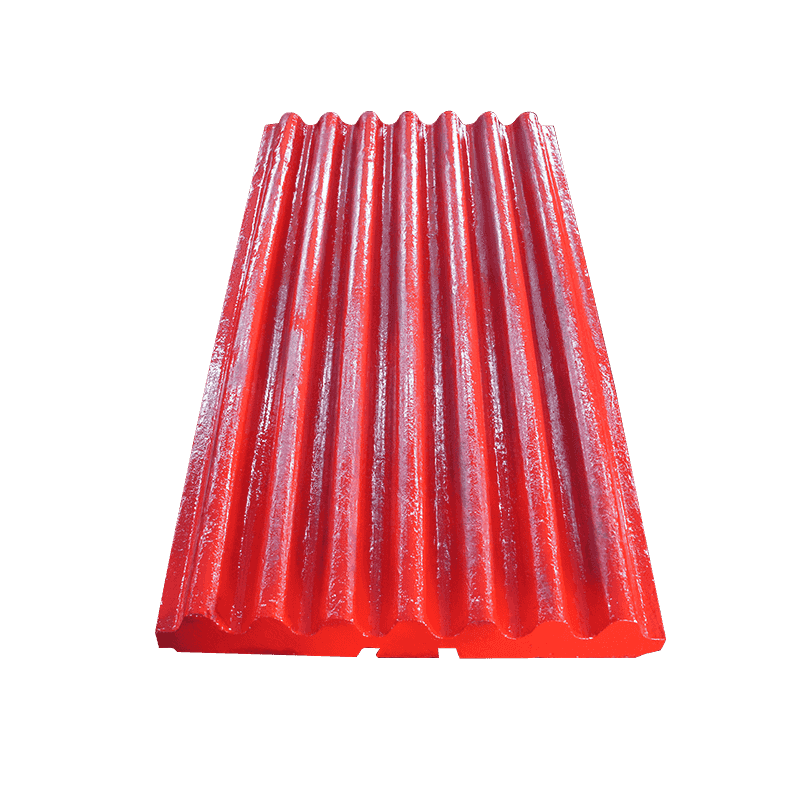
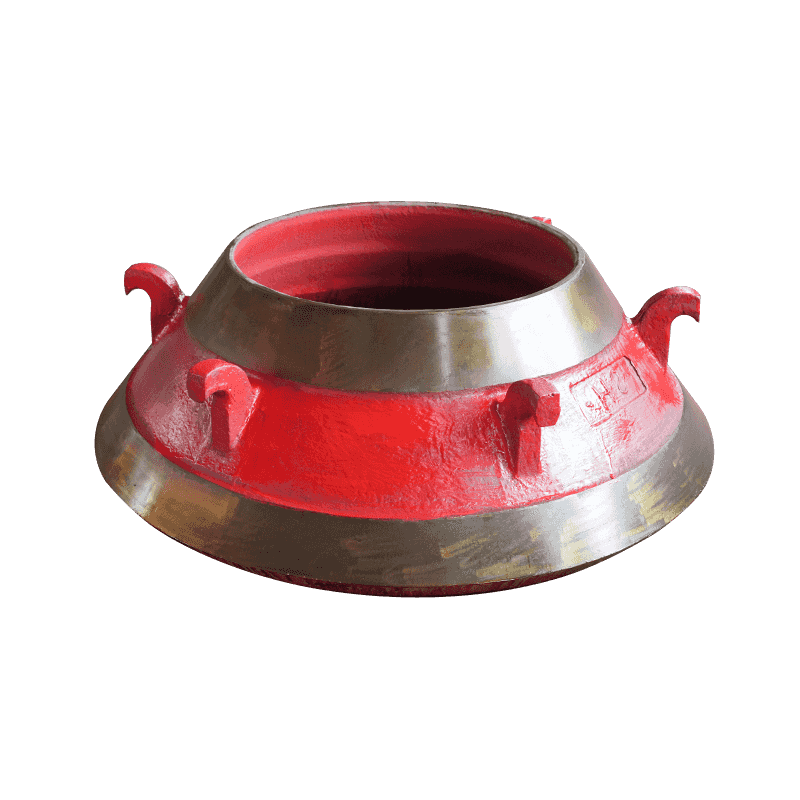
- High Manganese Steel Castings: Quenching (called solution annealing and water quenching) transforms the as-cast structure (which contains brittle grain-boundary carbides) to a fully austenitic structure free of carbides, producing a tough, ductile material that work-hardens dramatically under impact loading for jaw plates, cone mantles, and railway crossings.
What Is Quenching: The Metallurgical Science Behind Rapid Cooling
What is quenching at the atomic and microstructural level is a question about phase transformation kinetics and the iron-carbon phase diagram. To understand what is quenching and why it works, it is necessary to understand what happens to steel's crystal structure as temperature changes, and how the rate of cooling controls which phase structure the metal ends up with at room temperature.
The Iron-Carbon Phase Diagram and Austenite
Iron exists in different crystal forms at different temperatures. Above approximately 912 degrees Celsius (and up to 1,394 degrees Celsius), iron adopts a face-centered cubic (FCC) crystal structure called austenite or gamma-iron. At room temperature, iron normally exists as body-centered cubic (BCC) ferrite or alpha-iron. The FCC austenite structure has significantly more interstitial space between iron atoms than the BCC ferrite structure, which allows it to dissolve considerably more carbon in solid solution: up to 2.14 weight percent carbon in austenite versus only 0.02 weight percent in ferrite at their respective maximum temperatures.
When steel (an alloy of iron and carbon, with carbon typically between 0.1% and 2.1%) is heated above the critical transformation temperature (called Ac1 or Ac3 depending on the carbon content), it fully transforms to austenite with all the carbon dissolved in the FCC iron lattice. This high-temperature austenitic condition is the starting point for quenching. The fundamental purpose of heating before quenching is to create this homogeneous austenitic condition where all carbon is in solution, rather than existing as iron carbide precipitates separate from the iron matrix.
What Happens During Rapid Cooling: Martensitic Transformation
When austenitic steel is cooled slowly (as in annealing or normalizing), the iron atoms have sufficient time to reorganize from the FCC austenite structure to the BCC ferrite structure, and the carbon atoms have time to diffuse out of solution and form iron carbide (cementite, Fe3C) precipitates. This diffusion-controlled transformation produces a relatively soft microstructure of ferrite and pearlite (alternating layers of ferrite and cementite).
When the same austenitic steel is rapidly quenched, the cooling rate is so fast that carbon atoms cannot diffuse out of the iron lattice before the iron atoms begin to transform from the FCC to BCC arrangement. The BCC structure that forms cannot accommodate the dissolved carbon that was stable in the FCC austenite, so the carbon is trapped in the iron lattice in a strained, supersaturated solid solution. This trapped-carbon condition distorts the BCC unit cell into a body-centered tetragonal (BCT) structure called martensite, where the c-axis of the tetragon is expanded relative to the a-axis by the trapped carbon atoms.
Martensite is the hardest phase that can form in the iron-carbon system. Its hardness depends on the carbon content of the austenite from which it transformed: at 0.2% carbon, martensite reaches approximately 40 HRC; at 0.6% carbon, approximately 58 HRC; at 1.0% carbon and above, martensite hardness plateaus at approximately 65 to 67 HRC because the martensite lattice distortion cannot increase proportionally beyond this carbon content due to retained austenite formation and lattice stability limits.
Quenching Media and Cooling Rates
The choice of quenching medium determines the cooling rate, which in turn determines whether the quench successfully suppresses diffusion-controlled transformation and produces martensite throughout the component cross-section. Different quenching media produce different cooling rates:
| Quenching Medium | Cooling Rate (Relative) | Typical Application | Risk of Distortion or Cracking |
|---|---|---|---|
| Brine (10% salt water) | Fastest | Plain carbon steels with low hardenability | Highest |
| Water (20 degrees Celsius) | Fast | Low to medium alloy steels, manganese steel | High |
| Polymer solution (PAG) | Moderate to fast | Alloy steels, adjustable by concentration | Moderate |
| Oil (mineral or synthetic) | Moderate | Medium to high alloy steels, high chrome iron | Lower |
| Forced air (blower) | Slow | High alloy steels and high chrome iron with high hardenability | Lowest |
| Still air (natural cooling) | Slowest | Very high alloy compositions only | Minimal |
Quenching Steel: Process Parameters, Critical Temperatures, and Practical Considerations
Quenching steel in practice requires careful control of three primary process parameters: the austenitizing temperature (the temperature to which the steel is heated before quenching), the holding time at that temperature (to ensure homogeneous austenitization throughout the section), and the quenching medium and agitation level (which determine the actual cooling rate experienced by the part). Incorrect control of any of these parameters produces a quenched steel part that does not achieve the intended microstructure and properties.
Austenitizing Temperature for Quenching Steel
The austenitizing temperature for quenching steel must be above the Ac3 temperature (the temperature above which all ferrite and pearlite have transformed to austenite) to ensure a fully austenitic starting condition. Ac3 temperature varies with steel composition: for a plain 0.4% carbon steel it is approximately 830 degrees Celsius; for tool steels with higher carbon and alloying elements it may be 1,000 to 1,100 degrees Celsius. Quenching steel from below the Ac3 temperature produces incomplete hardening because untransformed ferrite regions do not convert to martensite and remain soft in the final quenched microstructure.
The austenitizing temperature must also not be excessively high above the Ac3 because overheating causes:
- Austenite grain growth: Above the Ac3, austenite grains grow progressively larger with increasing temperature and time. Coarse austenite grains produce coarser martensite lath structures after quenching, which have lower toughness than fine-grained martensite of equivalent hardness.
- Decarburization: At high temperatures in non-protective atmospheres, carbon diffuses from the steel surface into the atmosphere, creating a decarburized surface layer that is softer than the bulk after quenching.
- Scale formation: Severe surface oxide scale that must be removed by shot blasting or machining after quenching adds process cost and removes material from dimensional surfaces.
Hardenability: Why Alloying Elements Matter for Quenching Steel
Hardenability is the ability of a steel to harden (form martensite) throughout its cross-section during quenching. It is not the same as maximum achievable hardness (which is determined by carbon content): hardenability describes how large or thick a section can be hardened through its full cross-section with a given quenching medium. Plain carbon steels have low hardenability and require very fast water quenching to harden even moderate section thicknesses. Alloying elements including chromium, manganese, molybdenum, and nickel slow the rate of diffusion-controlled transformations in the time-temperature-transformation (TTT) diagram, effectively shifting the "C-curves" to longer times and allowing martensite to form at slower cooling rates. High chromium steels and cast irons can achieve full martensite formation with air quenching alone because the very high chromium content delays all competing transformations for many hours, giving air cooling the time advantage needed to reach martensite start temperature.
Tempering After Quenching Steel: Essential for Most Applications
As-quenched martensite in steel is extremely hard but also extremely brittle: it contains very high residual stresses from the volumetric expansion that accompanies the austenite-to-martensite transformation, and the distorted BCT crystal structure is inherently less tough than tempered martensite. For most engineering applications, quenching steel must be followed immediately by tempering: reheating the quenched steel to a temperature between 150 and 650 degrees Celsius (well below the Ac1 temperature where austenite would re-form) for a defined time, then cooling to room temperature.
Tempering allows the supersaturated carbon to begin precipitating as very fine carbide particles within the martensite laths, relieving the lattice distortion and reducing the brittleness of as-quenched martensite while sacrificing some hardness. The hardness-toughness trade-off is controlled by tempering temperature: lower tempering temperatures (150 to 200 degrees Celsius) retain most of the quench hardness while providing minimal stress relief; higher tempering temperatures (400 to 650 degrees Celsius) sacrifice significant hardness (from 60 HRC to 30 to 40 HRC typically) in exchange for very high toughness suitable for impact-loaded components.
Quenching Metal Beyond Steel: Cast Iron, Aluminum, and Non-Ferrous Applications
Quenching metal as a general metallurgical concept extends beyond steel to include other metallic materials where controlled rapid cooling modifies microstructure and properties. Understanding quenching metal across different alloy systems prevents the common error of assuming that quenching always produces the same type of hardening effect regardless of the base metal.
Quenching Cast Iron: Different Metallurgy, Similar Process
Cast iron contains more carbon than steel (above 2.1 weight percent by definition) and crystallizes differently from steel during solidification. The most important form of quenching metal in the cast iron category for wear applications is the destabilization heat treatment of high chrome white iron, which is detailed in the High Chromium Castings section below. For grey and ductile cast iron, quenching metal follows similar principles to steel but must account for the graphite phase (which does not transform) and the compositional differences that affect hardenability and martensite start temperature.
Quenching Metal in Aluminum Alloys: Solution Treatment and Age Hardening
In aluminum alloys, quenching metal has a fundamentally different mechanism from ferrous alloys. Aluminum does not form martensite. Instead, quenching aluminum alloys from the solution treatment temperature (typically 450 to 560 degrees Celsius for heat-treatable alloys) prevents the equilibrium precipitation of strengthening phases (such as MgSi precipitates in 6000-series alloys or CuAl2 in 2000-series alloys) that would form during slow cooling. The rapid quench traps these elements in supersaturated solid solution, and subsequent aging at room temperature or moderate temperatures (120 to 200 degrees Celsius) causes controlled fine-scale precipitation that strengthens the aluminum matrix through coherency strain around the precipitate-matrix interface. Quenching metal in aluminum alloys is therefore the first step in a two-step hardening process: quench followed by age.
High Chrome and High Chromium Castings: Composition, Microstructure, and Heat Treatment
High Chromium Castings (also called high chrome white iron) are a family of wear-resistant cast iron alloys containing 12% to 35% chromium and 1.8% to 3.5% carbon, specifically engineered to provide maximum hardness and abrasion resistance for grinding media, pump impellers and liners, crusher liners, and other applications where fine abrasive wear is the dominant damage mechanism. The quenching process applied to High Chromium Castings is the essential step that transforms the as-cast microstructure from a tough but insufficiently hard condition into the fully hard wear-resistant product that customers receive.
Why Chromium Is the Defining Alloying Element in High Chrome
Chromium in high chrome white iron serves two simultaneous and synergistic functions that together produce the material's exceptional wear performance:
- Formation of hard M7C3 carbides: When chromium content exceeds approximately 10%, the carbide phase that forms during solidification changes from iron carbide (Fe3C, cementite, hardness approximately 800 HV) to chromium-rich M7C3 carbide (where M represents a mixture of Cr and Fe, hardness 1,400 to 1,800 HV). The M7C3 carbides are nearly twice as hard as cementite and provide the primary abrasion resistance of High Chromium Castings. Their volume fraction (typically 25% to 45% of the total microstructure) and morphology (hexagonal rods rather than the interconnected network of cementite) contribute to both hardness and toughness advantages over lower-chrome white iron.
- Extreme hardenability of the iron matrix: Chromium is one of the most potent hardenability-enhancing elements in ferrous metallurgy. In high chrome iron with 15% to 30% chromium, the hardenability of the austenitic matrix is so high that the material can transform completely to martensite during air cooling from the destabilization temperature, without any need for water or oil quenching that would risk cracking the brittle cast structure. This air-hardenability makes High Chromium Castings practical to heat treat without the cracking risk that water quenching would pose for these complex, thin-section or large-mass castings.
The Destabilization Heat Treatment for High Chromium Castings
The specific quenching process for High Chromium Castings is called destabilization, and its mechanism is different from standard steel quenching even though it involves the same steps of heating and rapid cooling. The process:
- As-cast condition: When High Chromium Castings solidify, the matrix surrounding the M7C3 carbides is austenite with a very high carbon and chromium content in solution (the casting solidifies at high temperature where austenite can hold much more carbon and chromium than it can at lower temperatures). This high-carbon austenite does not transform to martensite on cooling from casting temperature because its Ms (martensite start) temperature is below room temperature due to the large amounts of carbon and chromium suppressing martensite formation.
- Destabilization heat treatment (950 to 1,050 degrees Celsius for 4 to 12 hours depending on section thickness): The High Chromium Castings are heated to the destabilization temperature. At this temperature, secondary carbides (primarily chromium carbides) precipitate from the austenite matrix, removing chromium and carbon from solution. This controlled precipitation progressively reduces the carbon and chromium content of the remaining austenite until the austenite composition reaches a point where its Ms temperature is above room temperature. The longer the destabilization hold, the more carbides precipitate and the higher the resulting Ms temperature and the more complete the subsequent martensite transformation will be.
- Air quenching to room temperature: After the destabilization hold, the High Chromium Castings are removed from the furnace and air-cooled (in most compositions) or fan-cooled. The modified austenite now transforms progressively to martensite as it cools through the Ms and Mf (martensite finish) temperature range. Because the chromium hardenability is so high, air cooling is sufficient to achieve complete martensite transformation throughout the section without water or oil quenching, which would risk thermal shock cracking.
- Tempering (200 to 300 degrees Celsius, 2 to 4 hours): After quenching to room temperature, the High Chromium Castings are tempered to relieve transformation stresses, convert any remaining retained austenite, and stabilize the martensite against unpredictable dimensional changes in service. Tempering at this temperature range reduces hardness only minimally (1 to 2 HRC typically) while significantly improving stress state and resistance to quench cracking on installation and in service.
High Chromium Castings: Composition Grades and Their Properties
| Grade | Cr Content (%) | C Content (%) | As-Heat-Treated Hardness | Primary Application |
|---|---|---|---|---|
| 12Cr (Low Cr) | 11 to 14 | 2.4 to 3.0 | 55 to 60 HRC | Pump liners, fine abrasive grinding |
| 15Cr (Medium Cr) | 14 to 18 | 2.2 to 3.2 | 58 to 63 HRC | Ball mill liners, grinding balls |
| 20Cr (Standard High Cr) | 18 to 23 | 2.0 to 3.0 | 60 to 65 HRC | Slurry pumps, classifier liners |
| 28Cr (High-Cr High-C) | 25 to 32 | 1.8 to 2.6 | 58 to 65 HRC | Corrosive-abrasive slurry service |
Applications of High Chromium Castings in Industry
High Chromium Castings serve abrasion-dominated applications across mining, cement, and processing industries where the combination of hard M7C3 carbides (1,400 to 1,800 HV) in a martensitic matrix (700 to 800 HV) provides wear life significantly exceeding lower-alloy alternatives:
- Grinding balls and ball mill liners: High Chromium Castings grinding balls achieve wear rates of 30 to 80 grams per tonne of ore processed in copper, gold, and iron ore ball mills, compared to 100 to 200 grams per tonne for low-chrome cast iron alternatives
- Slurry pump impellers, liners, and throatbushes: The combination of hardness and corrosion resistance from chromium makes High Chromium Castings appropriate for acidic or alkaline slurry environments where neither pure hard iron nor rubber can provide adequate service life
- Impact crusher blow bars and apron liners: High Chromium Castings for impact crushing applications use higher-toughness grades (often with added nickel or molybdenum for additional impact resistance) to balance the excellent abrasion resistance against the impact loading from rock contact
- Coal pulverizer grinding elements: The relatively low-silica, low-impact abrasion environment of coal pulverization is particularly well-suited to High Chromium Castings where the high hardness provides excellent service life without the impact loading that challenges brittle high-chrome iron in harder rock crushing
High Manganese Steel Castings: Solution Annealing, Water Quenching, and Work-Hardening
High Manganese Steel Castings represent an entirely different philosophy of wear resistance from High Chromium Castings. Where high chrome iron relies on the inherent hardness of its martensite matrix and carbides in the as-heat-treated condition, High Manganese Steel Castings are deliberately delivered in a fully soft (approximately 180 to 220 HB) austenitic condition and rely on the progressive work-hardening that occurs as the austenite surface transforms under impact loading to develop the wear-resistant surface hardness (450 to 550 HB) needed in service.
The Water Quenching Process for High Manganese Steel Castings
The heat treatment of High Manganese Steel Castings is called solution annealing and water quenching, and unlike the quenching processes for steels and high chrome iron that are intended to produce a hard phase, the quenching of manganese steel is intended to prevent hardening and instead preserve a fully austenitic, carbide-free microstructure:
- As-cast condition and why it fails in service: When High Manganese Steel Castings solidify from the liquid state, the high manganese content (11% to 14%) and carbon content (1.05% to 1.35%) cause carbides to precipitate along austenite grain boundaries during solidification and subsequent cooling. These grain boundary carbides are brittle, and High Manganese Steel Castings in the as-cast condition fracture catastrophically under the impact loading of crusher service because cracks propagate rapidly along the embrittled grain boundaries.
- Solution annealing at 1,050 to 1,100 degrees Celsius: The castings are heated to a temperature where all carbides dissolve back into the austenite matrix, leaving a homogeneous austenitic solid solution throughout the casting cross-section. Complete solution annealing requires sufficient time at temperature for all carbides to dissolve and the carbon and manganese to redistribute uniformly: typically 2 to 4 hours minimum for most sections, with additional time required for sections above 75 mm thickness.
- Water quenching: After solution annealing, the High Manganese Steel Castings are immediately transferred to a water quench tank and fully immersed. The rapid water quenching prevents carbide re-precipitation as the casting passes through the temperature range below approximately 750 degrees Celsius where carbides would otherwise form during slow cooling. The quenched casting is fully austenitic, soft (180 to 220 HB), and tough throughout its cross-section, with no embrittling carbides. Correct water quenching of High Manganese Steel Castings must achieve a cooling rate fast enough to cool the slowest-cooling point in the casting (the geometric center of the thickest section) below 400 degrees Celsius before carbide precipitation can occur, typically requiring less than 5 to 8 minutes total quench time for most jaw plate and cone mantle sections.
Why High Manganese Steel Castings Work-Harden Under Impact
The fundamental mechanism that makes High Manganese Steel Castings effective as wear materials is the work-hardening of the austenite surface under impact stress. When the austenitic surface of a jaw plate or cone mantle contacts hard rock during crushing, the impact stress exceeds the yield strength of the austenite locally and causes plastic deformation. This deformation transforms the austenite in the deformed zone by two mechanisms that together produce the progressive surface hardening:
- Mechanical twinning: The crystal structure of the austenite develops twins (regions where the lattice is locally reflected in orientation) at high dislocation densities, creating obstacles to further dislocation motion and increasing the local strength.
- Strain-induced martensite formation: In some manganese steel compositions and at sufficient deformation levels, austenite transforms locally to epsilon or alpha martensite in the heavily deformed surface zone, producing a hard martensitic surface layer that progressively thickens as wear removes the outer surface and exposes the underlying austenite to repeated impact.
The net effect of these mechanisms is that the working surface of High Manganese Steel Castings progressively hardens from the initial 180 to 220 HB to 450 to 550 HB over the first weeks of service as the work-hardening accumulates. This dynamic surface hardening is what makes High Manganese Steel Castings so valuable in impact-dominated applications: the harder the surface becomes, the greater the resistance to further wear, creating a self-optimizing wear behavior that high chrome iron (which starts at its maximum hardness and only degrades from that point) cannot replicate.
High Chromium Castings vs High Manganese Steel Castings: Which to Choose
| Criterion | High Chromium Castings | High Manganese Steel Castings |
|---|---|---|
| Hardening mechanism | Destabilization quench to martensite plus hard M7C3 carbides | Solution anneal and water quench to austenite, then work-hardening in service |
| As-delivered hardness | 58 to 66 HRC (maximum from start) | 180 to 220 HB (soft, hardens in service) |
| Best wear mechanism | Abrasion-dominated (fine abrasive) | Impact-abrasion (large rock, heavy impact) |
| Impact toughness | Moderate to low (brittle under heavy impact) | Very high (100 to 200 J Charpy) |
| Tramp metal tolerance | Poor (can fracture from sudden overload) | Excellent (absorbs shock without fracture) |
| Weldability for repair | Difficult (requires special procedures) | Limited (heat above 300°C causes embrittlement) |
| Primary applications | Grinding balls, pump parts, coal pulverizers | Jaw plates, cone mantles, railway crossings |
Quality Control for Quenched Wear Castings: Testing and Verification
Verifying that quenching and heat treatment have produced the correct microstructure and properties in High Chromium Castings and High Manganese Steel Castings requires a combination of destructive and non-destructive testing methods. Hardness testing alone is insufficient to confirm that the correct metallurgical condition has been achieved, because different microstructures can produce similar hardness values while having very different toughness and wear performance characteristics.
Hardness Testing for Quenched Castings
Hardness testing provides the most rapid and commercially useful quality check for quenching process effectiveness. The correct test method must be matched to the material and the expected hardness range:
- Rockwell HRC scale: Appropriate for High Chromium Castings after heat treatment (expected range 58 to 66 HRC). Rapid, simple, and widely available, but not appropriate for High Manganese Steel Castings in the as-quenched austenitic condition where the hardness is below the reliable HRC range.
- Brinell HB scale: Appropriate for High Manganese Steel Castings in the as-quenched condition (expected range 180 to 220 HB). A Brinell hardness above 250 HB on solution-annealed High Manganese Steel Castings indicates incomplete solution treatment with retained carbides, which dramatically reduces toughness and causes premature brittle fracture in service. This out-of-specification result requires re-treatment before the casting can be accepted for use.
- Vickers HV scale: Used for research and detailed microstructural characterization, including measurement of individual phase hardness in High Chromium Castings (carbide hardness versus matrix hardness), which requires indentation forces too small for Rockwell or Brinell testing.
Metallographic Examination of Quenched Castings
Metallographic examination (optical microscopy of polished and etched cross-sections) provides definitive confirmation of the microstructure produced by quenching and heat treatment. For High Chromium Castings, correct destabilization should produce a predominantly martensitic matrix with fine secondary carbide precipitates and no retained austenite patches visible at 100x to 500x magnification. For High Manganese Steel Castings, correct solution annealing and water quenching should produce a uniformly austenitic matrix with no carbides visible at grain boundaries at 100x magnification.
This metallographic examination is typically conducted on test blocks (coupons of the same composition and section size as the production castings, heat treated together with the production batch) rather than on the production castings themselves, to avoid destruction of saleable components. The test blocks must be representative of the most thermally critical (thickest or geometrically complex) section of the production casting to ensure that the verification sample represents the worst-case thermal condition rather than the most favorable condition.
Frequently Asked Questions
1. What is quenching in simple terms and what does it achieve?
What is quenching in simple terms is heating a metal to a specific elevated temperature and then cooling it very rapidly, usually by plunging it into water, oil, or directing forced air over it. The rapid cooling changes the metal's internal crystal structure in a way that is impossible with slow cooling, locking in a configuration that is harder, stronger, or in the case of manganese steel, tougher than would result from slow cooling. What is quenching achieving in practical terms depends entirely on the metal: for most steels it produces martensite (extremely hard and wear resistant); for High Chromium Castings it produces martensite plus preserved hard carbides; for High Manganese Steel Castings it produces a fully austenitic condition free of embrittling carbides, enabling the subsequent work-hardening that makes the material useful for impact-dominated wear applications.
2. What is the difference between quenching steel and quenching High Chromium Castings?
Quenching steel in the conventional sense means cooling from the austenite region to produce martensite throughout the steel cross-section, typically using water, oil, or polymer quench. Quenching High Chromium Castings (called destabilization) involves first heating the casting to a temperature where secondary carbides precipitate from the austenite matrix, changing the austenite composition to a point where it can transform to martensite on subsequent cooling. The cooling medium for High Chromium Castings is typically forced air or fan air (not water or oil) because the very high chromium content provides enough hardenability for complete martensitic transformation during air cooling, while water or oil quenching would impose thermal shock stress that could crack the brittle casting structure.
3. Why is water quenching used for High Manganese Steel Castings but not for High Chromium Castings?
Water quenching is used for High Manganese Steel Castings because the objective is to prevent carbide precipitation during cooling: the fast cooling rate of water quenching is needed to suppress carbide formation as the casting passes through the temperature range below approximately 750 degrees Celsius. High manganese steel has much lower hardenability than high chrome iron, so slower cooling rates would allow embrittling carbides to form at grain boundaries before the casting reaches room temperature. High Chromium Castings are not water quenched because the extremely high hardenability from chromium makes air cooling sufficient for full martensitic transformation, and because the high hardness and lower ductility of the high chrome iron casting make it vulnerable to thermal cracking from the steep thermal gradients that water quenching creates in large, complex cast sections.
4. How do I know if quenching has been done correctly on a wear casting?
Correct quenching on a wear casting is verified by three methods that should all be performed. First, hardness testing: High Chromium Castings should measure 58 to 66 HRC after destabilization quenching and tempering; High Manganese Steel Castings should measure 180 to 220 HB after solution annealing and water quenching, with any result above 250 HB indicating incomplete treatment. Second, metallographic examination of test coupons heat treated with the same batch: the microstructure should show predominantly martensite for high chrome iron, and fully austenitic structure with no grain boundary carbides for manganese steel. Third, bend or Charpy impact testing of test bars: correctly treated High Manganese Steel Castings should sustain significant plastic deformation before fracture; brittle fracture with no plastic deformation indicates retained grain boundary carbides from incomplete solution annealing or insufficient quench rate.
5. What happens if High Manganese Steel Castings are heated above 300 degrees Celsius in service?
If High Manganese Steel Castings are heated above approximately 300 degrees Celsius in service or during welding repair, carbides begin to precipitate at austenite grain boundaries from the solid solution, recreating the embrittled microstructure that the solution annealing and water quenching heat treatment was intended to eliminate. This carbide precipitation is initially very fine and invisible to unaided inspection but significantly reduces the toughness of the casting, making it prone to brittle fracture under the impact loading of crusher service. Welding repairs to manganese steel castings must use low inter-pass temperature controls (below 260 degrees Celsius typically) to prevent this sensitization. Castings that have been inadvertently overheated above 300 degrees Celsius may need full re-solution annealing and water quenching to restore their correct microstructure and toughness.
6. What quenching medium is used for high-performance tool steels?
High-performance tool steels (including D2, M2, H13, and similar compositions with high alloy content) use oil quenching or forced air quenching rather than water quenching because their high hardenability means that oil or air cooling is sufficient to produce full martensite transformation without the cracking risk of water quenching. H13 hot-work tool steel (used for die casting molds, extrusion dies, and High Chromium Castings cavity inserts) is typically air or gas quenched from 1,000 to 1,060 degrees Celsius using positive-pressure nitrogen or argon in a vacuum furnace, which produces excellent hardness uniformity, minimal surface contamination, and very low distortion compared to liquid quenching. D2 cold-work tool steel is typically oil quenched or air quenched depending on the section size and the precision of the finished tool, with thicker sections generally requiring oil to ensure martensite formation throughout the cross-section.
7. Can High Chromium Castings be re-hardened if they soften from service temperatures?
Yes, High Chromium Castings can theoretically be re-destabilized and air quenched to restore hardness if they have been softened by exposure to elevated temperatures in service (above approximately 550 degrees Celsius, where over-tempering occurs). In practice, re-hardening of used castings is rarely economically justified for most wear parts because the cost of re-heat treatment approaches the cost of replacement with new castings, and the geometry of worn castings means re-treated parts have shorter remaining service life than new parts at equivalent treatment cost. Re-hardening is more commonly justified for expensive or large High Chromium Castings used in premium equipment where the casting geometry is preserved despite surface wear.
8. What is the role of molybdenum in High Chromium Castings heat treatment?
Molybdenum additions of 0.5% to 3.0% to High Chromium Castings serve two important functions related to the destabilization quenching process. First, molybdenum significantly increases the hardenability of the austenite matrix, ensuring that even thick-section castings transform fully to martensite during air cooling without requiring faster (and more crack-risky) liquid quenching. Second, molybdenum suppresses a type of high-temperature embrittlement called temper embrittlement that can occur in some high-chromium white iron compositions when the destabilization temperature is held too long or the cooling rate through the 400 to 600 degree Celsius range is insufficient, causing segregation of tramp elements to grain boundaries. Molybdenum-containing High Chromium Castings are more tolerant of process variation in the destabilization heat treatment and maintain better toughness properties at equivalent hardness compared to molybdenum-free versions of the same chrome composition.
9. How does section thickness affect quenching effectiveness in wear castings?
Section thickness directly affects quenching effectiveness because the center of a thick section cools more slowly than the surface regardless of the quenching medium used, and if the center cools too slowly it may not achieve the martensite transformation needed for full hardness (in high chrome iron) or may form carbides before the austenite is stabilized (in manganese steel). For High Chromium Castings, thick sections above approximately 150 mm in 20Cr grade may require molybdenum additions or increased chromium content to maintain sufficient hardenability for full martensite formation at the slow-cooling section center. For High Manganese Steel Castings, thick sections require extended solution annealing times to ensure complete carbide dissolution throughout the section before quenching begins, and the quench tank must provide sufficient water circulation to cool the section center below 400 degrees Celsius within the critical time window before carbides can precipitate.
10. What is the practical difference between what is quenching and what is tempering?
What is quenching and what is tempering are two sequential steps in a complete heat treatment cycle that together produce the optimum combination of hardness and toughness in most hardened steels. What is quenching achieves: heating to austenitize and rapid cooling to convert austenite to martensite, producing maximum hardness (60 to 67 HRC in high-carbon steel) at the expense of maximum brittleness and high internal stress. What is tempering achieves: reheating the quenched steel to a temperature below the austenite formation range (typically 150 to 650 degrees Celsius depending on the target properties) for a defined time, which allows controlled precipitation of fine carbides within the martensite, relieving internal stress and converting retained austenite to tempered martensite and carbide. The result is lower hardness (25 to 55 HRC depending on tempering temperature) but dramatically higher toughness and resistance to brittle fracture. For High Chromium Castings, tempering is performed at low temperature (200 to 300 degrees Celsius) to relieve quench stress with minimal hardness reduction. For most engineering steels, tempering temperature is selected to achieve the specific hardness-toughness balance required by the application.